Wisdom tooth pain: the signs it needs to come out.
The third molar is dentistry’s awkward tenant: arriving last, fitting worst, and causing four distinct kinds of trouble — the swollen-gum flare, the sideways push, the unreachable cavity, and the quiet damage to the neighbour everyone forgets to watch. Which pains mean removal, which genuinely don’t, and what the extraction honestly involves.
By Baro Dental Clinic, Seomyeon · August 2026 · 13 min read
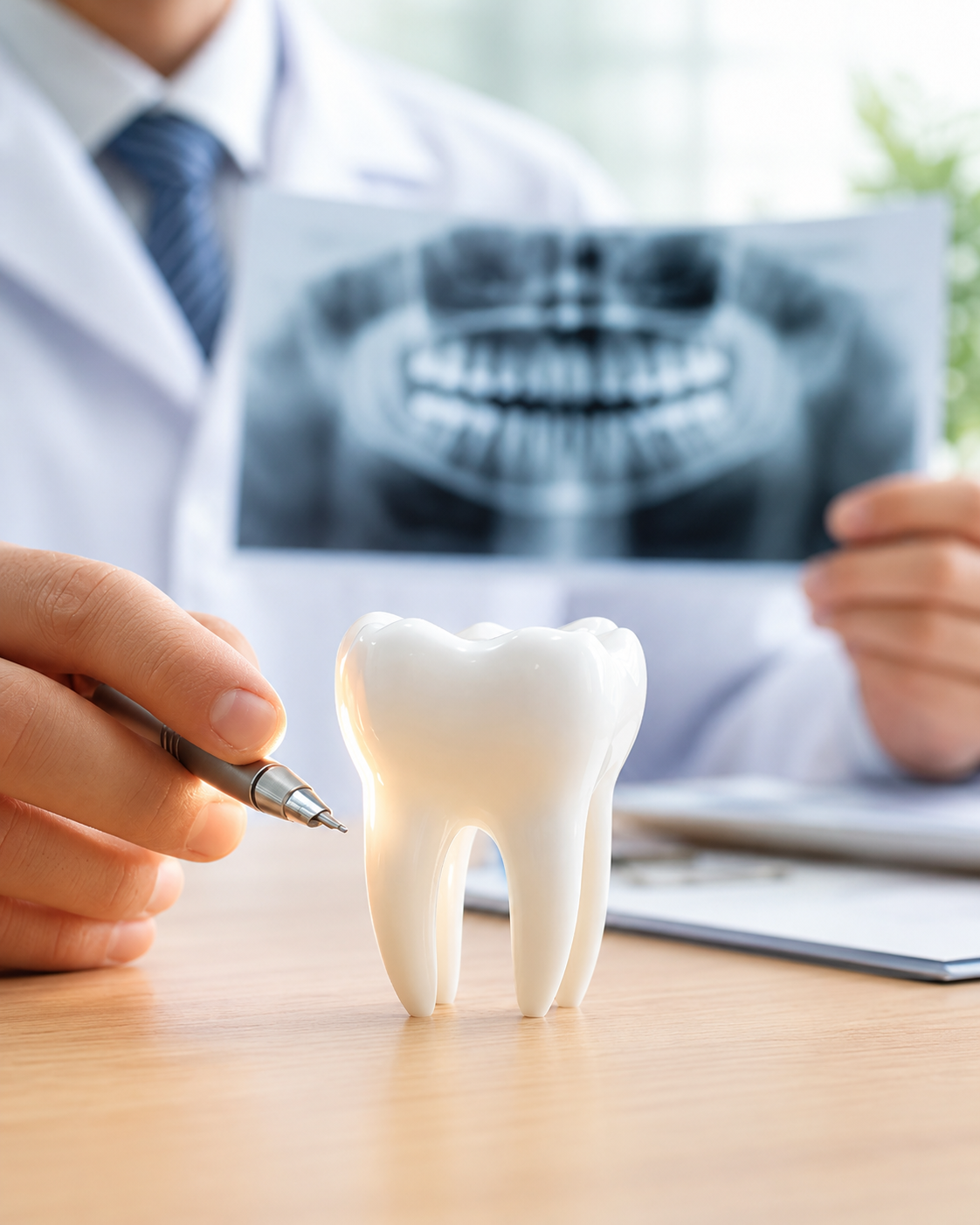
The honest sorting: wisdom teeth earn removal when they flare with pericoronitis (the swollen-gum infections around a partly-through tooth), sit impacted against the neighbour, harbour decay no brush can reach, or damage the second molar beside them — and they earn the right to stay when they’ve erupted fully upright, meet a partner tooth, and clean like any other molar. Extraction is billed on Korea’s national insurance schedule — your written figure at the visit, with complexity as the honest variable — and the panoramic image at the ₩40,000 examination answers in seconds what months of on-and-off aching only hints at. This guide decodes the four troubles, names the keep-it cases honestly, and walks the removal as it actually happens.
What wisdom-tooth sufferers actually ask
- The gum over my back tooth swells up every few months — why does it keep coming back?
- My wisdom teeth don’t hurt — do they still need to come out?
- Is the extraction as bad as everyone’s stories?
- Can it wait until after my trip / exams / wedding?
- Why does my other tooth hurt if the wisdom tooth is the problem?
The four kinds of trouble, decoded in Busan
Trouble one, the classic: pericoronitis — the recurring infection around a partly-erupted tooth. A wisdom tooth that’s broken partway through the gum leaves a flap of tissue over itself, and the pocket under that flap is a food-and-bacteria trap no brush empties: it flares into swelling, throbbing, a bad taste, sometimes difficulty opening or swallowing — then settles with rinsing and time — then flares again. The pattern is the diagnosis: each flare is the same trap refilling, the intervals typically shorten, and the honest fix is removing the trap, because the anatomy that built it doesn’t change on its own.
Trouble two: impaction — the tooth that never had room, lying tilted or horizontal against the second molar, fully or partly buried. Impacted teeth ache dully and vaguely (pressure against the neighbour, especially in growth spurts and stressful clenching seasons), and many don’t ache at all — which is why they’re so often discovered on the panoramic image rather than by symptoms. Trouble three: the unreachable cavity — even a reasonably-positioned wisdom tooth sits where brushes barely turn, and decay there is common, fast, and pointless to restore in a tooth with no working future: the routing ladder that saves other molars honestly skips one that was never going to earn its keep.
Trouble four, the expensive one nobody watches: the neighbour. A tilted wisdom tooth presses a plaque trap against the second molar’s back surface — a spot invisible in mirrors and unreachable by floss — and the cavity that forms there is the second molar’s , a genuinely valuable working tooth now facing the crown ladder or worse because of a neighbour that contributed nothing. When this page argues for removing quiet wisdom teeth, this is the argument: the risk isn’t mainly to the wisdom tooth; it’s to the tooth beside it.
And the referred-pain footnote that explains half the confusing symptoms: wisdom-tooth trouble borrows other addresses — earache, jaw-joint ache, pain seemingly in the tooth ahead, headaches on that side — because the nerves of the region share wiring. An ear that aches with no ear problem and a back gum that’s tender on the same side is a pattern worth one panoramic image before anyone treats the ear.
Keep it or remove it — the honest sorting
The keep-it case, stated first because it’s real: a wisdom tooth that erupted fully upright, meets a partner tooth above or below it, and sits where you can genuinely clean it is just a molar — it chews, it behaves, and removing it serves nothing. This clinic’s save-or-pull guide calls wisdom teeth “the standing exception” to the fight-for-the-tooth default, but the exception has its own exception: a working, cleanable third molar earns its place, and the examination says so plainly when it’s true.
The remove-it cases, sorted by urgency: recurring pericoronitis (each flare is a rehearsal for a worse one — and a flare with facial swelling or difficulty swallowing is a same-day matter, per the emergency honesty); decay in the wisdom tooth itself (restoring the unrestorable postpones the same extraction at a higher price); radiographic impaction against the neighbour (the second-molar argument above, strongest while the neighbour is still undamaged); and the orthodontic or prosthetic plan that needs the space or the peace — the orthodontic guides’ territory, coordinated rather than improvised.
The genuinely contested middle: the quiet, fully-buried, symptom-free impacted tooth. Honest dentistry splits here — removal prevents troubles that may never come; watching defers surgery that may never be needed — and the deciding variables are your age (younger extractions heal easier and roots are shorter, which is why the decision rewards being made in the twenties rather than discovered in the fifties), the tooth’s position relative to the nerve canal, and the neighbour’s condition. This clinic’s honest pattern: watch with scheduled imaging or remove by informed choice — both are legitimate; drifting without a decision is the only wrong option.
And the timing honesty for the wait-until-after crowd: a wisdom tooth that has flared once will usually grant you a scheduling window — but it chooses its own moments, and exam weeks, weddings and long-haul trips are precisely when clenching, fatigue and distance make a flare most likely and least convenient. The honest calendar move is removal in a quiet season before the important one — or at minimum the examination now, so the decision is made with the image on screen rather than mid-flare at the worst possible time.

What removal honestly involves — and what it costs
The procedure, demystified: simple extractions of erupted teeth take minutes under local anaesthesia — pressure, not pain, is the honest sensation report — while surgical extractions of impacted teeth involve opening the gum, sometimes sectioning the tooth to remove it in pieces, and closing with stitches: longer, but equally anaesthetised, and routinely done in a normal chair visit. The panoramic image (and where roots sit near the nerve canal, targeted imaging) determines which version yours is before anything is scheduled — no surprises mid-procedure is the house rule’s surgical form.
The pricing grammar: extraction pricing runs on the national insurance schedule — per the price-list guide — with the written figure at your visit reflecting the honest variable: complexity. Simple removals sit at the modest end; surgical impactions higher; and the quote arrives before the appointment, in writing, like every figure at this clinic. The ₩40,000 examination-and-imaging layer opens the whole conversation, and it’s the only cost of finding out where you stand.
Recovery, without the folklore: the honest arc is a few days of swelling peaking around day two or three, manageable soreness on ordinary analgesics, soft foods early, and stitches (where placed) out or dissolving within a week or two — with the one rule that actually matters: protect the clot. The healing socket’s blood clot is the repair scaffold, and losing it (vigorous rinsing, straws, smoking in the first days) causes dry socket — the intensely sore, slow-healing complication behind most of the horror stories. Follow the aftercare sheet’s first-72-hours rules and the odds move heavily in your favour; smoke, and they move the other way, stated plainly.
The travellers’ version: a simple extraction fits a Busan trip with days to spare; a surgical impaction wants the honest conversation about your flight date — swelling peaks around the time you’d be boarding if you cut it close, and the flying guide’s territory applies. The thread maps procedure type against your dates before anything books, and sometimes the honest answer is “the exam and image this trip, the extraction next trip or at home” — a real answer, given freely, per house habit.
Gum over the back tooth swelling again? Which side and how it behaves, in two sentences — the honest read comes back free: flap, push, or image-settles-it. Message us on WhatsApp →
The decoder, in one honest table
Four troubles, their signatures, and the honest verdicts:
| The trouble | Its signature | The honest verdict |
|---|---|---|
| Pericoronitis (the flap) | Recurring swelling over a partly-through tooth — flares, settles, returns closer together | Settle the flare, then remove the trap — the anatomy won’t change on its own |
| Impaction (the push) | Dull vague ache or nothing at all — found on the panoramic more often than felt | Remove when pressing the neighbour; watch-by-choice with scheduled imaging where truly quiet |
| The unreachable cavity | Decay where brushes barely turn — often silent until deep | Extraction — restoring a tooth with no working future postpones the same removal at higher cost |
| The neighbour’s damage | The second molar’s hidden back wall — the expensive file | Remove the cause early; check the neighbour after healing while repairs are still small-rung |
| The keep-it case | Fully erupted, upright, partnered, cleanable | It’s just a molar — keep it, clean it, and let it work |
| Every case’s first step | Months of hints — or none | The ₩40,000 panoramic look that answers in seconds |
Extraction is insured-schedule care: written figure at your visit with complexity as the honest variable. Flares with facial swelling or difficulty swallowing are same-day matters — message first, come in today.
The neighbour’s case — why the second molar is the real stakes
This section exists because it reframes the entire keep-or-remove debate: the most expensive outcome of a problem wisdom tooth is usually not the wisdom tooth’s bill — it’s the second molar’s. The tilted third molar presses against the second’s back surface below the gumline, creating a trap that concentrates plaque exactly where no brush, floss pick or good intention reaches — and the resulting cavity starts on a surface invisible to mirrors and often silent until deep.
Run the arithmetic honestly: the wisdom tooth’s removal is an insured-schedule line; the second molar’s rescue, once its back wall is decayed, runs the full restoration ladder — and a second molar lost entirely opens the ₩800,000-plus implant conversation on a tooth that did nothing wrong. The wisdom tooth is the cheapest character in its own story; the neighbour carries the stakes — which is why “it doesn’t hurt yet” is such an expensive standard for a tilted tooth pressing on a good one.
The panoramic image reads this risk in seconds: the angle of the third molar, the contact point against the second, early shadowing on the second’s surface where trouble has started — findings visible years before symptoms, which is the whole argument for imaging quiet wisdom teeth once in the twenties even when nothing aches. A single ₩60,000 look either retires the worry for years or catches the neighbour’s problem while it’s still a small-rung repair.
And the follow-through note for the already-extracted: a second molar that spent years against an impacted neighbour deserves one focused check after the extraction heals — the trap is gone, but anything it started needs finding while it’s cheap. The extraction closes the wisdom tooth’s file; the neighbour’s file stays open one more visit.
How it runs at our Busan Seomyeon clinic — and your next step
The path from ache to answer: the ₩40,000 examination with panoramic imaging puts all four troubles on screen at once — eruption state, angle, the neighbour’s back wall, root position relative to the nerve canal — and the verdict arrives with its reasons: keep-and-clean, watch-with-scheduled-imaging, or remove, with the extraction’s complexity class and its insured-schedule figure in writing before anything is booked. Flare cases get the same-day honesty: active pericoronitis is settled first (irrigation, the infection conversation where genuinely indicated), with the definitive removal scheduled for calm tissue.
The house rules in their surgical form: no mid-procedure surprises — the imaging determines simple-versus-surgical before scheduling, and the rare on-the-day upgrade is explained before it happens, not billed after; both honest options offered in the contested middle — watch or remove, argued in both directions, decision free to leave the building; and the aftercare thread — the same WhatsApp line for “is this swelling normal” at whatever hour day three delivers it, which is when that question actually arrives.
The scheduling layer working people need: extractions book on the evening-and-Saturday grid, the recovery arc plans around your actual week (the honest advice is a quiet next-day, not a heroic meeting schedule), and students’ vacation windows — the classic wisdom-teeth season — get the plan-ahead treatment: examination early in the break, extraction with maximum healing runway before term.
One message starts it: which side and how it behaves — the recurring swelling, the vague ache, the ear that’s wrong — a photo if the gum shows something, your dates if travelling or facing a deadline season. Back comes the honest pre-read: sounds like the flap, sounds like the push, or sounds like the ₩60,000 image should simply settle it. The tooth arrived last and negotiates worst; the service is ending the negotiation on your schedule, not its own.
- The pattern is the diagnosis: recurring flares over a partly-through tooth = the trap refilling — remove the trap, not just the flare.
- The real stakes are the neighbour’s: a tilted third molar’s most expensive damage lands on the second molar’s hidden wall.
- “Doesn’t hurt” isn’t “doesn’t need looking”: impactions are found on images, not felt — one ₩60,000 look in the twenties settles years.
- The keep-it case is real: upright, partnered, cleanable third molars are just molars — and get told so plainly.
- Protect the clot: the first 72 hours’ rules — no straws, no smoking, gentle rinsing — are most of what separates easy recoveries from the horror stories.
The dentists behind every guide on this site


FAQ
Honestly, no: each flare is the same food-and-bacteria trap under the gum flap refilling, and the anatomy that built the trap — a partly-erupted tooth with tissue over it — doesn't change by itself. Flares typically return at shortening intervals, and each is a rehearsal for a worse one. The pattern earns two appointments: settling the current flare, then removing the trap on calm tissue. A flare with facial swelling or trouble swallowing is a same-day matter — message first, come in today.
Not automatically — and the honest answer needs one panoramic image to give: fully-erupted, upright, partnered, cleanable third molars are just molars and stay with this clinic's blessing. The concern is the quiet impacted tooth pressing a plaque trap against your second molar's hidden back wall — damage that starts silently on a genuinely valuable tooth. The ₩40,000 look sorts you in seconds: keep-and-clean, watch-with-scheduled-imaging, or remove by informed choice. Drifting without the image is the only poor option.
The stories are mostly dry socket — the complication where the healing clot is lost in the first days — and it's substantially preventable: no straws, no smoking, gentle rinsing for 72 hours. The procedure itself is anaesthetised throughout (pressure, not pain, is the honest sensation), simple extractions take minutes, surgical ones are longer but routine, and the normal arc is a few days of swelling peaking around day two-three on ordinary analgesics. Which version yours would be is read off the image before anything books — no mid-procedure surprises is the rule.
A tooth that's flared once will usually grant a window — but it picks its own moments, and clenching-heavy, fatigue-heavy seasons (exactly your exams and travel) are when flares are most likely and least convenient. The honest calendar move: remove in a quiet season before the important one, or at minimum get the ₩40,000 image now so the decision is made on screen rather than mid-flare at the worst time. For travellers, surgical extractions also want daylight between procedure and flight — the thread maps it against your actual dates.
Two honest mechanisms: referred pain — the region's nerves share wiring, so wisdom-tooth trouble borrows addresses (the tooth ahead, the ear, the jaw joint, that side's headaches) — and real damage, where the tilted tooth's plaque trap has started a cavity on the second molar's hidden back surface. The panoramic image distinguishes them in seconds, which matters: one is the wisdom tooth's file, the other opens the neighbour's — and the neighbour's is the file worth catching early.
Wisdom Tooth Extraction
The full clinical page — simple and surgical, honestly sorted.
Examination & Imaging
The ₩40,000 panoramic look that settles the question.
Crowns in Busan
Where the neglected neighbour's story too often ends.
Root Canal in Busan
The other file a damaged second molar can open.
Save it or pull it? Root canal vs extraction
Related guide in this series.
Toothache mid-trip: handling dental pain in Korea
Related guide in this series.
What a Busan dentist can genuinely do in one day
Related guide in this series.
End the negotiation with the awkward tenant. One image settles what months of aching hints at.
Two sentences about which side and how it behaves start the free read; the ₩40,000 panoramic puts all four troubles on screen; the verdict — keep, watch, or remove — arrives with its reasons and its written figure.
Medical information in this guide is provided for general education and does not replace an individual examination and diagnosis. Prices shown are current at the time of writing; insured-schedule items follow Korea's national fee schedule and are quoted in writing at your visit. This clinic does not provide 24-hour service. Individual results vary.