Resin filling or inlay? Where each one belongs.
The smallest restoration decision in dentistry, and the one made most often: direct resin (₩50,000–150,000 by surface area) placed in the chair, or a lab-made E-max inlay (₩300,000, event ₩250,000) manufactured to your cavity’s shape. The honest boundary is size and geometry — and the routing runs downhill by default — decided on screen, with your own walls casting the vote.
By Baro Dental Clinic, Seomyeon · August 2026 · 13 min read
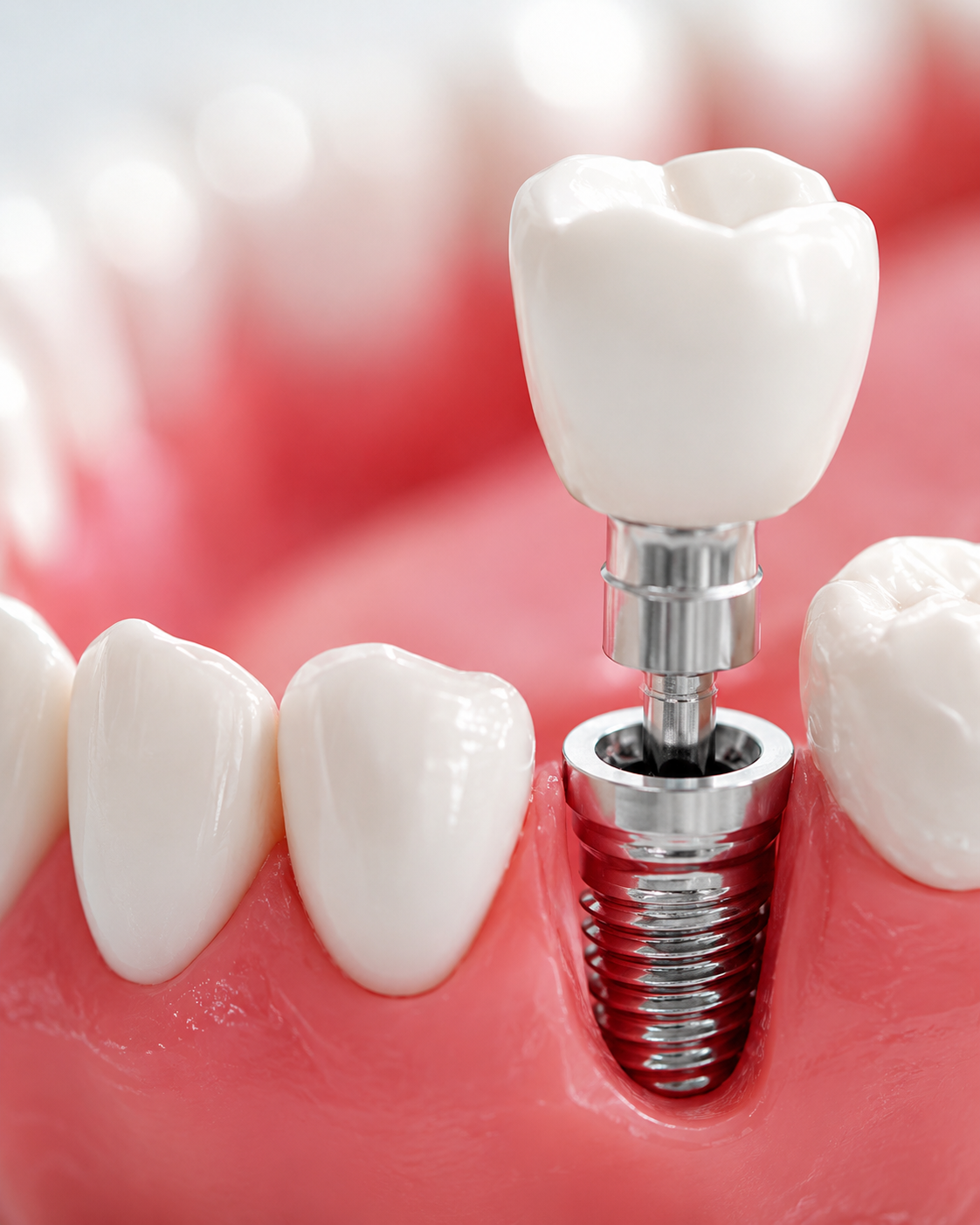
The honest boundary: small-to-medium cavities with sound surrounding walls are resin territory (₩50,000–150,000 by surface area, placed and finished in one visit) — while larger cavities, replaced cusps and failed old fillings whose geometry outgrows direct placement earn the E-max inlay or onlay (₩300,000, currently ₩250,000 event price), manufactured to your tooth and bonded at a second visit. The routing principle is the same one running this whole site: price follows preparation, downhill by default. This guide draws the boundary honestly — what each restoration is, where each genuinely belongs, the longevity truths, and the escalation logic when a tooth outgrows both.
- Two restorations, honestly defined in Busan
- The size-and-geometry boundary — where the routing actually runs
- The longevity and money arithmetic, honestly run
- The comparison, in one honest table
- When a tooth outgrows both — the honest escalation ladder
- Finding your rung in Busan Seomyeon — the route to a written answer
What cavity patients actually ask
- My dentist said the cavity is “too big for a filling” — is that real or an upsell?
- Why pay ₩250,000 for an inlay when resin starts at ₩50,000?
- How long does each actually last?
- Can an old failed filling just be refilled?
- What’s the difference between an inlay and an onlay anyway?
Two restorations, honestly defined in Busan
Direct resin is dentistry’s workhorse: composite placed soft into the cleaned cavity, sculpted against your tooth’s anatomy, light-cured hard, and polished — start to finish in one sitting, ₩50,000–150,000 depending on the surface area involved (cervical seals at the gumline sit at the low end). Its virtues are speed, conservation (minimal extra preparation beyond the decay itself), and repairability; several cavities can share one appointment when positions allow, which is exactly how the same-day guide’s visitors batch them.
The E-max inlay is the manufactured answer: your prepared cavity is impressed, a lithium-disilicate piece is fabricated to its exact geometry at the lab, and the finished restoration is bonded at a fitting visit — ₩300,000, currently ₩250,000 at the event price, running the lab-tier rhythm visitors already know. An onlay is the same idea extended over one or more cusps — partial-coverage armour where a corner of the chewing surface itself needs replacing; same published line, same logic.
Why manufacture at all, when resin cures in the chair? Geometry and physics: resin shrinks slightly as it cures, is sculpted freehand, and performs beautifully at small scale — but as a cavity widens, deepens, or crosses onto cusps, freehand sculpting meets its limits: contact points with neighbours, chewing-surface anatomy, and shrinkage stresses all get harder to control in bulk. The lab-made piece sidesteps every one: fabricated at leisure, fitted as a unit, bonded with the adhesive partnership E-max is optimised for.
So the comparison was never rivals at the same job — it’s one repair strategy that scales down brilliantly and one that scales up honestly, meeting at a boundary your tooth’s findings locate. The next section draws that boundary the way the examination does.
The size-and-geometry boundary — where the routing actually runs
The variables the screen shows you, in the order they vote. Cavity size relative to the tooth: a cavity occupying a modest fraction of the tooth’s width is resin’s home game; as the excavated space approaches a large share of the distance between cusps, bulk-cured freehand composite starts fighting physics, and the manufactured piece earns its interval. Wall and cusp integrity: sound walls all around argue resin; an undermined or missing cusp argues the onlay’s partial armour — and walls thin enough to flex under load start the crown conversation, next section’s territory.
Location and load: molars grinding at full force ask more of any restoration than premolars do; a borderline cavity on a heavy-load molar tips toward the inlay sooner than the same cavity forward. The failed-old-filling question, since it’s the most common trigger: yes, old fillings can often simply be replaced with resin — but each replacement excavates a little more tooth (decay margins plus old material), so a filling on its second or third failure has frequently grown its cavity into inlay territory. “Just refill it” is sometimes right and sometimes the false economy that returns with interest; the screen, not the habit, says which.
The routing direction, stated as policy because it’s the guide’s spine: downhill by default. Where damage honestly fits resin, resin is the recommendation — from ₩50,000 against ₩250,000, one visit against two, and the incentive disclosure our crown cost guide makes applies here at smaller scale: the cheaper routing costs this clinic revenue every time it lands, and it lands constantly. “Too big for a filling” is a real clinical finding — and it’s also a claim you’re entitled to see made on your own scan, walls and margins pointed at, before any figure is written.
And the boundary’s honest fuzziness, admitted: a genuine middle band exists where either restoration would serve defensibly. There the consultation prices both, argues the trade — resin’s conservation and repairability against the inlay’s bulk-scale precision and longevity — and lets the decision leave the building, per house rule. Fuzzy boundaries are where written options beat confident salesmanship; this site was built on that sentence, and the borderline cavity is its smallest, most frequent test.
The longevity and money arithmetic, honestly run
The lifespan truths, stated without brochure rounding: well-placed resin in correctly-sized cavities serves for many years — and its failure mode is gentle: marginal staining, wear, chipping that’s often repairable by adding new composite rather than starting over, one of direct resin’s quietly underrated virtues. E-max inlays in their correct territory serve longer still on average — the manufactured piece’s fit, the material’s wear behaviour and the adhesive bond all compound — with a failure mode that’s rarer but terminal: fracture or debond means remake, not patch.
The per-year arithmetic that makes the comparison honest rather than sticker-shocked: ₩50,000–150,000 across resin’s honest service life and ₩250,000 across the inlay’s longer one land closer per year than the 3× sticker gap suggests — which is precisely why the routing runs on geometry rather than price: in resin’s territory resin wins both columns; in the inlay’s territory the “cheap” refill that fails early and re-excavates its way toward a ₩450,000 crown was the expensive choice wearing a bargain costume.
What moves either restoration’s real-world lifespan more than the material does — the maintenance sentence this site repeats because it keeps being true: the mouth around the restoration. Decay at margins, not material fatigue, ends most fillings and inlays alike; the ₩60,000 recall habit that catches marginal trouble early is the highest-yield longevity purchase in either column, and it costs less than a tenth of the cheaper restoration — arithmetic that holds whether your mouth carries one filling or fifteen.
The insurance footnote for completeness, per the price-list guide’s two-tier grammar: both figures here are non-covered, published, passport-blind tier-two lines — written before treatment like everything else. Where decay has reached the nerve and root canal work precedes any restoration, that’s insured-schedule territory, quoted in writing at the visit with canal count as the honest variable.
Got a cavity verdict you’re not sure about? Send the photo — or the other clinic’s quote — and the honest ladder-read comes back free: resin rung, inlay rung, or genuinely borderline. Message us on WhatsApp →
The comparison, in one honest table
Both restorations, their territories and their truths side by side:
| Dimension | Direct resin | E-max inlay / onlay |
|---|---|---|
| Published figure | ₩50,000–150,000 by surface area (cervical included) | ₩300,000 — currently ₩250,000 event price |
| Visits | One — placed, cured, polished same sitting; batches well | Two — impression, then lab-made piece bonded at fitting (lab-tier rhythm) |
| Home territory | Small-to-medium cavities, sound walls, cervical seals | Larger cavities, cusp replacement (onlay), failed fillings that outgrew refilling |
| Physics | Freehand-sculpted, cure-shrinkage managed at small scale | Manufactured to exact geometry; adhesive bond; bulk-scale precision |
| Failure mode | Gentle — wear and chips often repairable by addition | Rarer but terminal — fracture or debond means remake |
| Escalates when | Cavity outgrows freehand control → inlay territory | Walls flex, cusps undermine, or root-canal history → crown territory |
Both lines tier-two: published, passport-blind, written before treatment. Root canal work preceding any restoration is insured-schedule, quoted at the visit. Routing runs downhill by default — the cheaper honest answer wins.
When a tooth outgrows both — the honest escalation ladder
The full ladder, so this comparison sits in its context: resin → inlay/onlay → crown, each rung replacing more tooth than the last, each priced accordingly (from ₩50,000 → ₩250,000–300,000 → ₩450,000+), and the crown cost guide’s “price follows preparation” principle governing every step. A tooth outgrows the inlay when walls thin toward flexing, cusps undermine beyond partial coverage, or a root canal history argues for full-coverage protection — the “graduation” principle that page names.
The two escalation errors, flagged in both directions per house style. Under-treating: stretching resin (or an inlay) over a tooth that needed the next rung buys a remake with interest — flexing walls stress margins, margins leak, and the redo excavates further up the ladder. Over-treating: crowning a tooth an inlay would serve, or inlaying what resin handles, spends healthy enamel and money the findings never asked for — and a clinic whose every cavity earns its biggest restoration is reading its revenue, not your scan. The defence against both is the same screen: your walls, your cusps, your margins, pointed at, before any figure exists.
Where the ladder starts even lower, for completeness: the earliest lesions sometimes want no drill at all — remineralisation support and watchful recall for surface-level demineralisation is a legitimate rung zero, offered where findings honestly permit it, with the recheck date written down like every other figure here. A routing system that can say “nothing yet, recheck in six months” is the same system you can trust when it says “inlay” — the credibility is one machine.
And the ladder’s scheduling face for visitors: rung one is same-day tier(resin batches into any trip), rung two is lab-tier (impression early, fitting before the flight, the interval spent being in Busan), and rung three follows the crown guide’s identical rhythm — so the honest answer to “can my trip hold this” depends on the rung, and the thread maps it against your dates before anything books.
Finding your rung in Busan Seomyeon — the route to a written answer
It runs in one visit: the ₩40,000 examination — imaging where genuinely indicated, findings on screen — locates your cavity on the ladder with the walls and margins making the argument visibly; the recommendation lands downhill by default, with the incentive running against the clinic and stated as much; and the answer leaves as a written figure: same-visit resin from ₩50,000 where that’s the honest rung, the ₩250,000 event inlay with its two-visit rhythm where geometry earned it, or the escalation conversation where the tooth outgrew both.
For the borderline cases — the genuine middle band — both options arrive priced with the trade argued in each direction, and the decision leaves the building freely. For the “my old filling keeps failing” cases, the history question gets asked honestly: how many rounds has this cavity already grown through, what did each round excavate, and is the next refill genuinely a repair or merely a postponement wearing a repair’s clothes? The screen answers with the excavation history visible; the refill habit, however comfortable, doesn’t get a vote.
For visitors, the batching arithmetic one more time because it’s this comparison’s happiest logistics: resin work folds into any itinerary same-day, several cavities per sitting where positions allow, anaesthesia shared across the batch; inlay work wants the impression early in the stay and rewards telling the thread everything you’re considering up front, so lab intervals run in parallel per the same-day guide’s sequencing note. One message with your dates and the full list of what you’re considering shapes the whole plan at once.
And the closing sentence the whole ladder stands on: the cheapest durable answer is the correct answer here, by policy — which means the resin recommendation you’ll most often hear isn’t modesty, it’s the routing working, and the ₩250,000 recommendation, when it comes, arrives with your own geometry on screen making the case. Send a photo; start the honest read. The smallest decision in restorative dentistry deserves the same daylight as the largest — and here, by construction, it gets it.
- The boundary is size and geometry: sound-walled small cavities = same-visit resin from ₩50,000; outgrown geometry = ₩250,000 event inlay.
- “Too big for a filling” is real — and showable: you’re entitled to see the claim made on your own scan before any figure.
- Per-year, the gap narrows: the inlay’s longer service closes most of the 3× sticker spread — in its correct territory.
- Old fillings grow their cavities: each refill excavates more — the second or third failure has often crossed the boundary.
- Downhill by default: the cheaper durable answer wins by policy — which is why the routing can be trusted uphill too.
The dentists behind every guide on this site


FAQ
A real clinical category — bulk resin fights cure-shrinkage and freehand limits as cavities widen and cross cusps — and simultaneously a claim you should see demonstrated: your scan, the walls, the margins, pointed at. An honest clinic makes the case visually and prices both rungs where it's genuinely borderline. If the verdict arrived without imaging or with a same-breath discount pitch, a second opinion with your X-rays is cheap due diligence — and something this thread reads for free.
You wouldn't, in resin's territory — and the routing here says so by policy. The inlay earns its figure where geometry outgrows freehand placement: manufactured fit at bulk scale, adhesive retention, longer average service. Run per-year instead of per-sticker and the gap narrows sharply in the inlay's correct territory — while a "cheap" refill in that same territory tends to fail early and excavate its way toward a ₩450,000 crown, the expensive choice in a bargain costume.
Honest ranges, not promises: correctly-sized resin serves many years, with a gentle failure mode — wear and chips often repairable by adding composite rather than replacing. E-max inlays in their territory average longer, with a rarer-but-terminal failure mode (fracture or debond means remake). The bigger variable than either material: the mouth around them — marginal decay ends most restorations, and the ₩60,000 recall habit is the highest-yield longevity purchase in either column.
Often yes — and the honest caveat is cumulative: each replacement excavates decay margins plus old material, so cavities grow with every round, and a filling on its second or third failure has frequently crossed into inlay territory. The screen decides, not the habit: sometimes "just refill it" is exactly right, sometimes it's the postponement that returns with interest. Bring the history; the examination reads which round yours is on.
Coverage: an inlay sits within the cusps — a manufactured piece filling the cavity's geometry between them — while an onlay extends over one or more cusps, replacing part of the chewing surface itself: partial armour where a corner of the tooth's working anatomy is gone. Same material (E-max), same published line, same two-visit rhythm; the findings choose which coverage your tooth's damage actually needs.
Cavity Treatment (Resin)
The from-₩50,000 workhorse — rung one's full page.
Inlay / Onlay in Busan
The manufactured answer — rung two, honestly routed.
Crowns in Busan
Rung three — where teeth graduate beyond partial coverage.
Published Prices
Every rung's figure, on the living list.
Crown and inlay costs in Busan, itemized
Related guide in this series.
Zirconia vs E-max: choosing the right ceramic
Related guide in this series.
What a Busan dentist can genuinely do in one day
Related guide in this series.
One ladder, routed downhill. Find your rung on screen.
A photo gets the free pre-read; the ₩40,000 examination locates your cavity with the walls making the argument; the figure — whichever rung — arrives in writing first.
Medical information in this guide is provided for general education and does not replace an individual examination and diagnosis. Prices shown are current at the time of writing; insured-schedule items follow Korea's national fee schedule and are quoted in writing at your visit. This clinic does not provide 24-hour service. Individual results vary.