Grinding your teeth at night? The damage and the fix.
Bruxism is the dental problem you commit while unconscious: hours of clenching and grinding at forces chewing never uses, discovered not in the act but in the evidence — tight morning jaws, flattening edges, teeth that wince at cold, a partner who’s heard it. The signs decoded, the slow-motion damage cascade laid out honestly, and what the ₩300,000 night guard genuinely buys.
By Baro Dental Clinic, Seomyeon · August 2026 · 13 min read
The honest picture: night grinding and clenching load teeth for hours at forces far beyond chewing, and the damage arrives in slow motion — flattened and chipped edges, notches at the gumline, cold-sensitive teeth, tight or clicking jaws, morning headaches — long before anything “breaks.” The standing fix is the ₩300,000 custom night guard: it doesn’t stop the grinding, and no honest clinic claims it does — it takes the wear so your enamel doesn’t. The signs are the whole diagnostic — most grinders never catch themselves in the act — and the ₩40,000 examination reads the evidence directly off your teeth: wear patterns don’t lie about what the night is doing. This guide decodes the signs, walks the damage cascade honestly (it ends at the cracked-molar chapter this series prices elsewhere), and states plainly what the guard does, what it doesn’t, and who genuinely needs one.
- The signs — reading a problem you never witness in Busan
- The damage cascade — slow motion, then sudden
- The night guard — what ₩300,000 actually buys, and doesn’t
- The signs and the response, in one honest table
- Beyond the guard — the factors that feed the grinding
- How it runs at our Busan Seomyeon clinic — and your next step
What suspected grinders actually ask
- My jaw is tight every morning — is that grinding even if I’ve never noticed it?
- My partner says I make a horrible noise at night — how bad is this?
- Will a night guard stop me grinding, or just protect the teeth?
- Can’t I just use a cheap pharmacy boil-and-bite guard?
- Is grinding why my teeth suddenly got sensitive?
The signs — reading a problem you never witness in Busan
The defining fact about bruxism: you are asleep for it. Most grinders never once catch themselves in the act, so the diagnosis runs entirely on evidence — and the evidence is rich. The morning cluster: jaw muscles tight, tired or aching on waking; temples sore; dull headaches that fade through the morning; teeth that feel vaguely “pressed” or tender in the first hour. Muscles that ache in the morning were working in the night — there is no innocent explanation for waking with a tired jaw.
The tooth-surface cluster, visible in your own mirror: front edges that look flattened, squared-off or subtly shortened; tiny chips along edges that never met an ice cube; molar surfaces polished shiny-flat where cusps used to be; and the notches at the gumline — abfraction — where years of flexing pop enamel off at the tooth’s neck, the mechanism the sensitivity guide files under cause four. The sensitivity cluster follows directly: many teeth wincing at cold without obvious recession is the grinding pattern’s signature, distinct from the one-tooth stories that point elsewhere.
The witness cluster: a partner who’s heard it — the sound is unmistakable and travels — is diagnostic gold, worth saying in the first message; snoring-app recordings occasionally catch it too. The jaw-joint cluster: clicking or popping on opening, occasional morning stiffness that limits the first yawn, tenderness in front of the ears — the joint shares every overnight shift the teeth work, and its complaints belong in the same examination conversation, mapped honestly rather than self-diagnosed off the internet.
And the daytime version this page includes because it hides in plain sight: awake clenching — jaw set tight over keyboards, in traffic, mid-deadline — loads the same structures without a sound. The self-check is disarmingly simple: right now, are your teeth touching? At rest they shouldn’t be — lips together, teeth apart is the resting position — and discovering yours are clenched as you read this sentence is exactly how most daytime clenchers find out.
The damage cascade — slow motion, then sudden
The cascade’s honest shape is years of quiet, then a bill: stage one is wear — enamel flattening measurably, edges chipping, the abfraction notches deepening at the gumline (each a future ₩50,000 cervical seal, the sensitivity guide’s quiet hero); stage two is sensitivity — thinned enamel and exposed notches wiring cold straight to the nerve across multiple teeth; stage three is structural — and it’s where the arithmetic turns serious.
Stage three, spelled out because it prices the whole page: teeth flexed and loaded nightly for years develop the cracks this series meets everywhere — the bite-and-release zing of the cracked-tooth signature, the sheared cusps of the broken-tooth guide(“classically from a tooth carrying a large old filling” — and classically in a grinder), and at the cascade’s end, the split roots that open the save-or-pull fork on teeth that were merely tired for a decade first. Restorations ride the same forces: grinders chip crowns, crack fillings and wear through work at rates that shorten every warranty conversation — the honest reason the night-guard question is asked before big restorative cases here, not after.
The arithmetic, in this series’ own figures: the guard is ₩300,000 once(with periodic replacement as it wears — wear on the guard being exactly the point); the cascade it blunts runs through ₩50,000 seals, repairs from ₩50,000, ₩450,000-plus crowns to splint cracks, insured-schedule root treatment where cracks reach nerves, and the ₩800,000-plus implant conversation where split teeth end. No single night causes any of it; every night contributes; and the guard’s value is precisely that it’s priced like stage one while protecting against stage three.
The honest uncertainty, stated because this page doesn’t oversell: not every grinder cascades — intensity varies enormously, some mouths shrug off decades, and nobody can tell you your trajectory from a website. What the ₩40,000 examination can tell you is where you already are: wear patterns, crack lines under light, notch depth, muscle and joint findings — the evidence of your actual nights, read off your actual teeth, which beats every questionnaire ever written.
The night guard — what ₩300,000 actually buys, and doesn’t
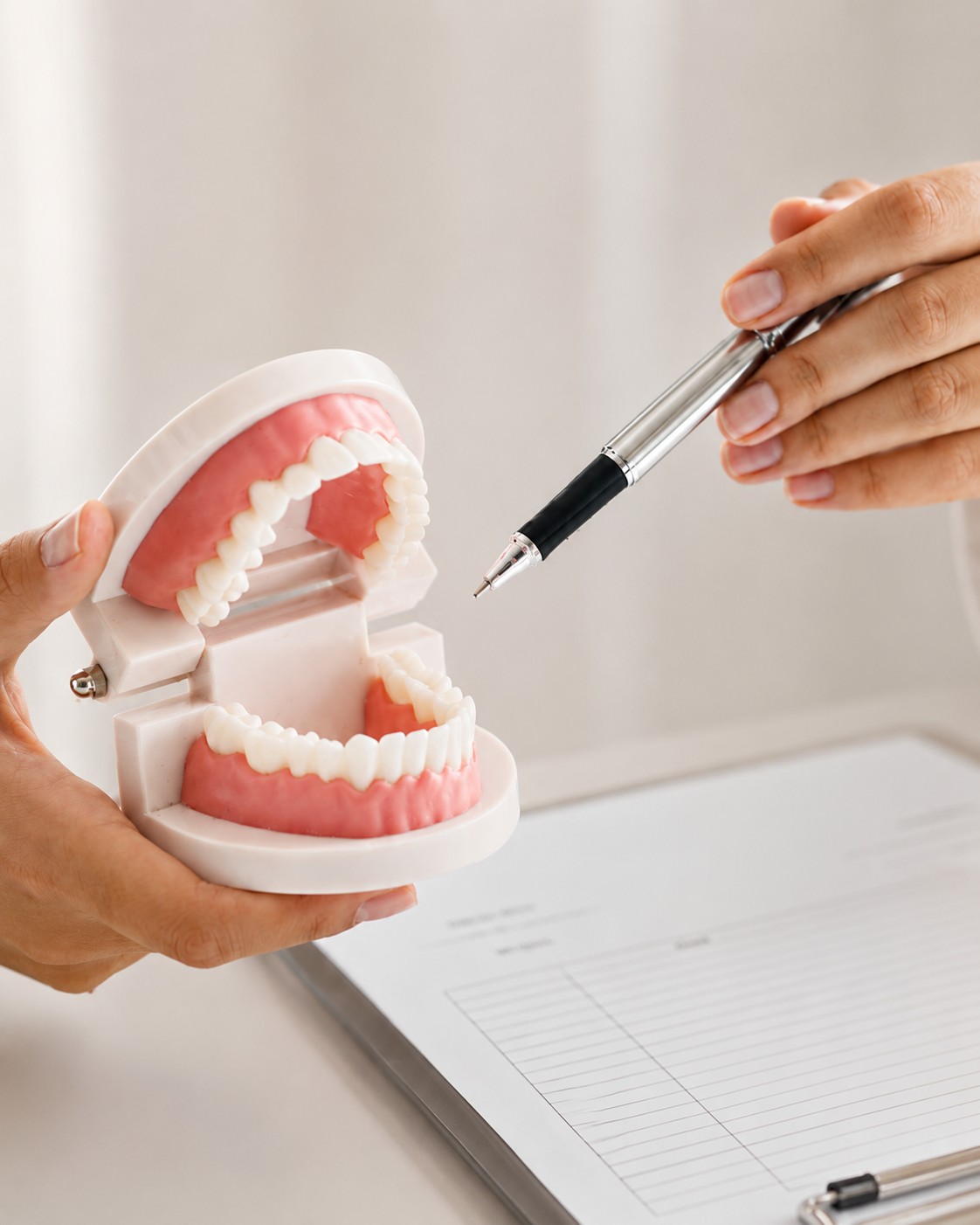
What it is: a custom-fitted appliance — impressions taken of your teeth, the guard made to seat precisely and adjusted to your bite — worn over one arch at night. What it does, honestly: it interposes a sacrificial, replaceable surface between your teeth, so the night’s forces spend themselves on the appliance instead of enamel; it spreads load across the arch rather than concentrating it on whichever teeth collide first; and for many wearers the changed contact pattern reduces muscle strain enough that morning tightness and headaches ease — a welcome, common, but honestly variable side benefit.
What it doesn’t do, stated as plainly as the sales pages won’t: it does not stop you grinding — the drive is neurological, tangled with stress, sleep quality and factors medicine still maps — and a guard marketed as a cure is a guard mis-sold. It also doesn’t repair existing damage (the seals, repairs and crowns above are their own honest chapters), and it doesn’t work from the drawer: the guard protects exactly the nights it’s worn, which makes the habit the actual purchase.
The pharmacy boil-and-bite question, answered fairly: the cheap guard is better than nothing for a short trial or a lost-guard gap — and honestly worse at everything else: bulkier (worn less), softer (some grinders chew through them; the spongy surface can even invite more clenching), and unadjusted to your bite (uneven contacts loading the jaw unevenly). As a two-week “can I sleep with something in my mouth” experiment, reasonable; as the long-term answer for a confirmed grinder, a false economy the cascade arithmetic doesn’t forgive.
The ownership honesty: a guard that’s visibly wearing is a guard doing its job — bring it to recalls, where its wear pattern doubles as a progress report on your nights; expect replacement on a some-years rhythm priced as a fresh guard; clean it daily (cool water and a soft brush — hot water warps it); and where jaw-joint symptoms dominate the picture rather than tooth wear, say so at the examination — joint-led cases get assessed on their own terms and routed honestly, rather than sold the standard guard by default.
Waking up with a tight jaw again? Your morning symptoms in two sentences — plus any partner testimony — gets the honest pattern-read free, before any chair. Message us on WhatsApp →
The signs and the response, in one honest table
Every cluster, what it’s telling you, and the honest move:
| The cluster | What it’s telling you | The honest move |
|---|---|---|
| Morning jaw tightness · temple soreness · fading headaches | Muscles worked the night shift — there’s no innocent version of waking tired-jawed | The ₩60,000 evidence-read — wear patterns confirm what mornings suggest |
| Flattened edges · mystery chips · shiny-flat molar spots | Wear stage — enamel spending faster than it should | Guard conversation now, while the cascade is still stage one |
| Gumline notches · many cold-sensitive teeth | Abfraction + thinned insulation — the sensitivity guide’s cause four | ₩50,000 seals where needed · guard to stop the tab re-opening |
| Bite-and-release zing · chipped crowns · sheared cusps | Structural stage — the expensive chapters opening | This week: the crack ladder, honestly staged — and the guard before further investment |
| Partner’s testimony · recordings | Diagnostic gold — the witnessed version of everything above | Say it in the first message; it fast-tracks the honest read |
| Clicking · popping · limited first yawn | The joint sharing the night shift | Named at examination and assessed on its own terms — not defaulted into the standard guard |
The guard (₩300,000, written beforehand) protects the nights it’s worn — it does not stop the grinding, repair existing damage, or work from the drawer. Grinding + heavy snoring or observed breathing pauses is a physician conversation too, honestly flagged.
Beyond the guard — the factors that feed the grinding
The guard protects teeth; it doesn’t touch causes — so the honest page names them. Stress is the headline correlate: deadline seasons, life upheavals and anxiety show up in jaw muscles with remarkable reliability (this series’ own wisdom-tooth guide notes flares clustering in “clenching-heavy seasons” for the same reason), and while a dental page won’t prescribe your stress management, it can say plainly that the mouth is where many people’s stress physically lands — and that wind-down routines before bed have earned their reputation.
Sleep factors, flagged honestly for the physician lane: bruxism keeps documented company with disrupted sleep and, in a meaningful subset, with sleep-disordered breathing — heavy snoring, observed pauses, gasping, unrefreshing sleep alongside grinding is a combination worth raising with a doctor, not just a dentist; the dental guard remains useful either way, but the sleep question deserves its own answer. Chemical contributors: caffeine late in the day, alcohol close to bed and tobacco all correlate with heavier grinding nights — the same evening-audit that improves sleep generally tends to quiet jaws too.
The daytime clenching programme, since the guard can’t run at noon: the awareness habit from section one (“are my teeth touching right now?”) paired with the rest-position reset — lips together, teeth apart, tongue resting on the palate — practised until it’s automatic; phone reminders genuinely help for the first weeks; and the chewing-gum caveat: hours of daily gum is voluntary jaw overtime a clencher doesn’t need. None of this is a cure either; all of it reduces the daily load the night then compounds.
And the sequencing note that protects your money: where grinding is active, the guard conversation belongs before major cosmetic or restorative spending, not after — a whitened, newly-crowned smile ground nightly without protection is the saddest arithmetic on this site, and the pre-restoration bruxism check is house standard here for exactly that reason. Protect first, then invest; the order is the whole strategy.
How it runs at our Busan Seomyeon clinic — and your next step
The route, mapped: the ₩40,000 examination reads the night’s evidence directly — wear facets and their pattern, crack lines under light, abfraction depth, muscle tenderness, joint sounds and opening — and the verdict arrives with the findings pointed at on screen: grinding-pattern-confirmed with its stage honestly named, or the genuine “your wear is ordinary; the morning tightness may be daytime clenching — here’s the programme” that this page’s honesty requires when it’s true.
Where the guard is the honest answer: impressions the same visit, the fitted guard adjusted to your bite at delivery, ₩300,000 in writing beforehand like every figure here — and the existing-damage conversation run alongside, staged sanely: seals and repairs where notches and chips already need them, the crown-to-splint conversation only where crack findings genuinely vote for it, per the escalation ladder’s downhill default. Nobody’s morning headache is leveraged into a full-mouth plan; the findings prescribe, the stages wait their turn.
For visitors, the friendly logistics: the guard is classic lab-tier work — impressions early in a trip, the fitted guard before the flight — and it travels better than almost anything this clinic makes: a protection habit you take home in your carry-on. The examination alone is also a legitimate visitor errand: the “am I actually grinding?” question answered off your enamel in one ₩40,000 sitting, with the guard decision made at leisure afterward.
One message starts it: your morning symptoms in two sentences, any partner testimony, a photo of your front edges if the flattening shows, your dates if travelling. Back comes the honest pre-read: classic-pattern-likely, worth-the-look, or the daytime-clenching read with the programme attached. The grinding happens without your permission; the protection doesn’t — and the whole question costs ₩60,000 to answer properly, evidence included.
- You’ll never catch yourself doing it: the diagnosis runs on evidence — morning jaws, flattened edges, notches, sensitivity — and evidence is enough.
- The cascade is slow motion, then sudden: wear → sensitivity → cracks — and the last stage is where this series’ expensive chapters live.
- The guard takes the wear so enamel doesn’t — it does not stop the grinding, and anyone selling it as a cure is mis-selling it.
- ₩300,000 priced like stage one, protecting against stage three — the best arithmetic on the page.
- Guard before glamour: active grinding makes the bruxism check come before any major cosmetic or restorative spend — protect first, then invest.
The dentists behind every guide on this site


FAQ
Almost all grinders are exactly you: it happens in sleep, so self-observation is off the table and the diagnosis runs on evidence — tight or tired jaw on waking, temple soreness, morning headaches that fade, flattening front edges, unexplained chips, multi-tooth cold sensitivity, a partner's testimony. The ₩40,000 examination settles it directly: wear facets, crack lines and gumline notches record what your nights actually do, and teeth don't misremember.
No — and a page that told you otherwise would be selling, not informing: the drive is neurological, tied to stress and sleep, and the guard doesn't switch it off. What it does is change what the grinding wears out: a replaceable appliance surface instead of your enamel, load spread across the arch instead of concentrated, and — commonly though variably — easier mornings as muscle strain drops. Protection, not cure, worn nightly to work at all: that's the honest product.
As a two-week experiment in whether you can sleep with an appliance, reasonably. As the long-term answer, a false economy: bulkier (so worn less), softer (heavy grinders chew through them, and the spongy surface can invite more clenching), and unadjusted to your bite. The custom guard's ₩300,000 buys precise fit, an adjusted bite, durability, and wear-pattern feedback at recalls — set against a cascade whose later rungs cost ₩450,000-plus per tooth, it's the cheapest serious option on the page.
It's one of the classic patterns: grinding thins enamel broadly and flexes teeth at their necks until enamel pops off in gumline notches (abfraction) — the result is many teeth wincing at cold without obvious gum recession, which is distinct from the one-tooth stories that point at fillings or cracks. The sensitivity guide's decoder covers the full sorting; the short version is that multi-tooth sensitivity plus tight mornings makes grinding the lead suspect, and the examination confirms it off the wear.
Not by default, honestly: clicking, popping and limited opening are joint-side findings, and while they often travel with grinding, joint-led cases deserve assessment on their own terms rather than the standard guard reflexively dispensed. Say the joint symptoms plainly at the ₩40,000 examination — opening, sounds and muscle findings get mapped, and the recommendation follows what's actually driving your picture, stated with its reasons like everything at this clinic.
Night Guard in Busan
The ₩300,000 protection line — custom-fitted, honestly scoped.
Seals & Repairs in Busan
The ₩50,000–80,000 tier where wear-stage damage gets fixed.
Crowns in Busan
The splinting chapter where cracks have already arrived.
Examination
The ₩60,000 evidence-read that answers "am I grinding?"
Why your teeth are sensitive, and what actually helps
Related guide in this series.
You broke a tooth in Busan. Here's what to do now
Related guide in this series.
Save it or pull it? Root canal vs extraction
Related guide in this series.
It happens without your permission. The protection doesn’t.
Two sentences about your mornings start the free pattern-read; the ₩40,000 examination reads the night's evidence off your enamel; the guard — if the findings vote for it — arrives fitted, adjusted, and priced in writing.
Medical information in this guide is provided for general education and does not replace an individual examination and diagnosis. Prices shown are current at the time of writing; insured-schedule items follow Korea's national fee schedule and are quoted in writing at your visit. This clinic does not provide 24-hour service. Individual results vary.