Korean dental clinic etiquette, decoded for visitors.
The unwritten rules, written down: punctuality that actually matters, the quiet waiting room, why nobody tips, when and how payment happens, what to call your dentist, mask and shoe questions answered — and the etiquette anxieties you can permanently retire.
By Baro Dental Clinic, Seomyeon · August 2026 · 13 min read
Korean dental clinic etiquette reduces to four real rules: arrive on time (five minutes early is the local standard), keep the waiting room quiet, never tip anyone, and pay after treatment at the front desk — everything else is ordinary courtesy you already have. This guide fills in the texture around those four — greetings and names, phones and masks, companions and children, question-asking culture — and retires the anxieties that don’t apply, so your first Korean clinic visit feels like a visit rather than an exam in two subjects.
- The four rules that actually matter in Busan
- Arrival — shoes, masks, greetings and the front desk
- What to call people — the two-word solution
- In the chair — questions, refusals and the consent rhythm
- The etiquette map, worry by worry
- Companions, children and the waiting-room social contract
- Gifts, goodbyes and the anxieties you can retire — in Busan Seomyeon
What first-timers quietly worry about
- Do I take my shoes off? I’ve heard Korea has shoe rules everywhere.
- Should I tip the dentist, the assistant, anyone?
- Is it rude to ask questions or to say no to a recommended treatment?
- What do I actually call the dentist — doctor? Dr. Lee? something Korean?
- When do I pay — before, after, at a machine, to a person?
The four rules that actually matter in Busan
Rule one: punctuality is real here. Korean clinics run to-the-quarter-hour schedules, and appointments start when they say they start — arriving five minutes early is the unspoken local standard, and arriving ten minutes late compresses your own visit rather than delaying everyone else’s. Running late happens to everyone; the etiquette fix is one line in the WhatsApp thread, which usually preserves your slot and always preserves goodwill.
Rule two: the waiting room runs quiet. Korean medical waiting rooms sit closer to library than café — low voices, phones on silent, calls taken outside or by the elevator. Nobody will scold a visitor who didn’t know; you’ll simply notice the ambient volume and want to match it, which is the entire skill.
Rule three: nobody tips, ever. Korea is a genuinely no-tipping country and healthcare is its strictest province — offering money to a dentist, assistant or receptionist beyond the bill creates awkwardness, not warmth. Gratitude in Korea is spoken (a “kamsahamnida” lands beautifully), or occasionally edible — more on the small-gift question below.
Rule four: payment happens after treatment, at the front desk, to a person. No pre-payment, no machines, no envelope rituals — the visit ends, you stop at reception, the itemised figure (matching what was written before treatment) is settled by international card or KRW cash, and the English receipt prints. The most anticlimactic moment in Korean healthcare, by design.
Notice what the four rules have in common: none of them is exotic. On-time, quiet, no tips, pay after — two of the four are how you already behave, one is a relief (tipping’s absence saves both money and arithmetic), and only the punctuality standard runs slightly tighter than some countries’ casual norm. The exotic-Korea etiquette content the internet loves — elaborate bows, ritual phrases, ceremonial anything — describes contexts a dental clinic simply isn’t. The rest of this guide is texture, not survival information.
Arrival — shoes, masks, greetings and the front desk
The shoe question, answered permanently: street shoes stay on at Korean dental clinics. The shoes-off rule governs homes, some traditional restaurants and certain medical settings like oriental-medicine clinics — but a modern dental clinic in a commercial building is shoes-on territory, this one included. If a clinic ever wants otherwise, slippers and signage make it unmissable; absent those, walk in as you are.
Masks: post-pandemic Korea treats masks as personal choice in most settings, and clinics are relaxed about it — wear one or don’t; you’ll remove it in the chair regardless. If you’re actively coughing or fluish, masking in the waiting room is the considerate local move, same as anywhere.
The greeting: a small nod with your hello is the whole ceremony — bowing anxiety can be retired, since the shallow nod Koreans exchange in service settings is instinctive to copy and impossible to get meaningfully wrong. At the desk, your name and appointment time (or just showing the WhatsApp thread) starts everything; registration wants your passport or ARC and roughly ninety seconds, as our what-to-bring guide details.
And the desk speaks English here — worth saying because visitors sometimes rehearse Korean phrases in the elevator. Rehearse if it’s fun; it isn’t needed.
One arrival habit worth borrowing from local patients because it’s quietly brilliant: the restroom stop before check-in. Korean clinics keep their restrooms stocked for exactly this — a mirror moment, the pre-visit brush this guide mentions later, lipstick removed if you’re wearing any (it meets dental work poorly). Ninety seconds that make the chair portion smoother, practised so universally here that the timing between check-in and being called is often designed around it.
Etiquette settled — ready to book the actual visit? One English message does it, and mentioning “first time at a Korean clinic” gets you the gentlest version of everything above. Message us on WhatsApp →
What to call people — the two-word solution
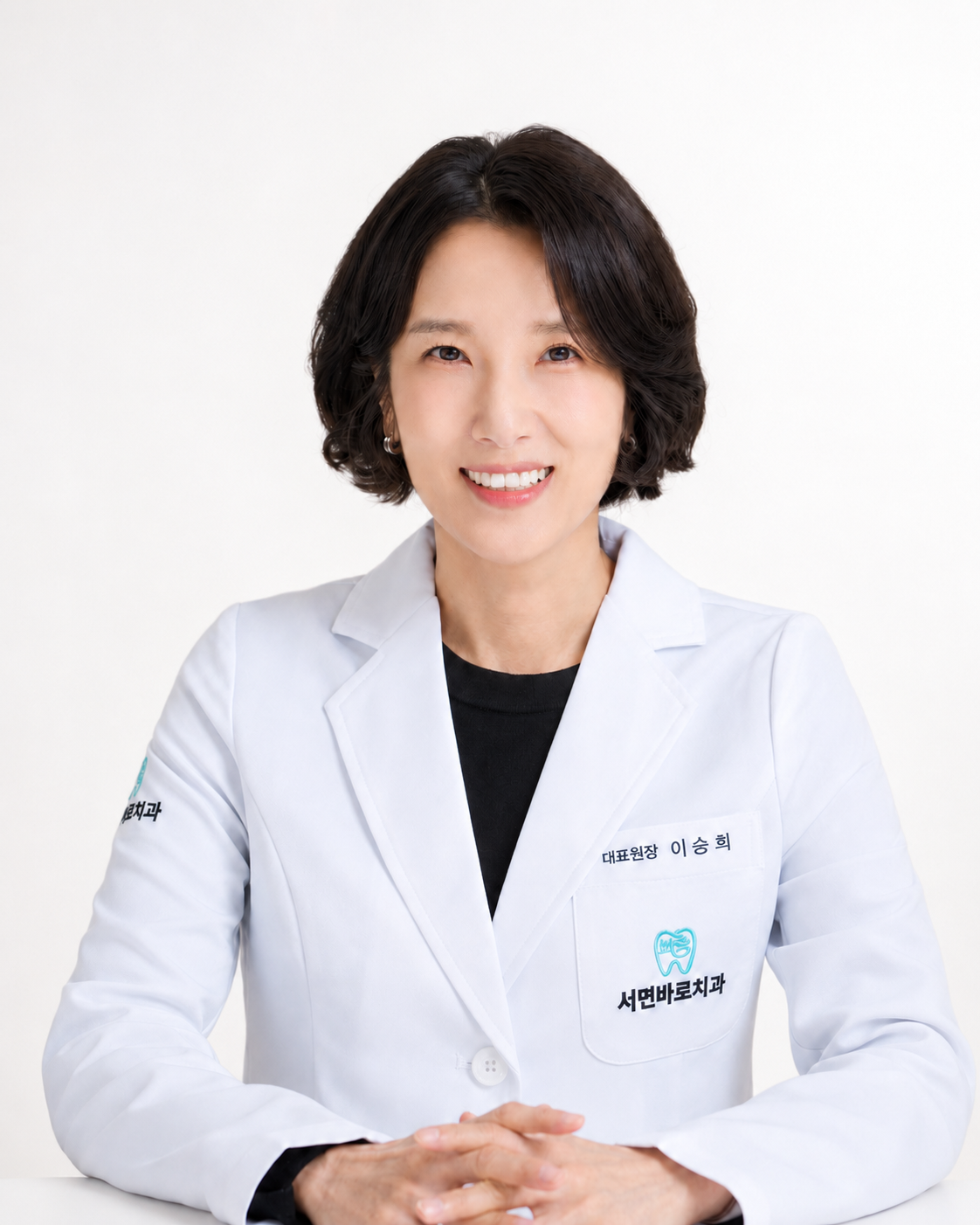
The entire naming protocol a visitor needs: “Dr. Lee” works, in English, for both directors. Korean patients say “wonjang-nim” (원장님 — roughly “director,” the honorific for a clinic’s head dentist), and you’re welcome to borrow it for instant local colour, but no one expects it and English titles land perfectly. Assistants and hygienists respond to a simple “excuse me” — no titles required.
Two texture notes that reassure over-preparers. First: Korean healthcare is warmer than its reputation for formality suggests — the register is professional-friendly, small talk exists, and a dentist explaining your X-ray is a colleague-to-adult conversation, not an audience with authority. Second: the formality that does exist runs from the clinic toward you as much as the reverse — the honorific speech, the two-handed receipt, the walk-you-to-the-elevator instinct are Korean service culture working in your favour.
The name they’ll use for you, incidentally, is whatever your registration says — usually your passport’s given name, occasionally with a charming “-nim” honorific attached. Answer to it proudly; you’ve been honorificked.
A note on language mixing, because conscientious visitors overthink it: switching between English and fragments of Korean mid-visit is completely normal here — a kamsahamnida at the end of an English consultation, a Korean hello followed by English everything — and nobody experiences it as confusion or performance. Korean service culture code-switches constantly; your version is charming, never obligatory, and the only wrong move is letting language anxiety displace the actual questions you came to ask.
In the chair — questions, refusals and the consent rhythm
The etiquette anxiety that most deserves retiring: asking questions is not rude in a Korean dental chair — at this clinic it’s the design. Findings go on screen precisely so you can interrogate them; “why,” “what if I wait,” “what would you choose” are the consultation working as intended, and the plain-English system exists for exactly this exchange. The stereotype of the unquestionable Asian doctor is decades stale in Korean dentistry generally and structurally impossible here.
Equally retirable: the fear that declining a recommendation causes offence. taking time to decide is treated here as the mark of a serious patient — consultations are built to end with a written plan that leaves the building with you and doesn’t expire. Korean patients negotiate treatment timing with their dentists constantly; you inheriting that normalcy is not a cultural violation, it’s cultural fluency.
Mid-treatment etiquette runs on signals, same as dentistry everywhere: a raised left hand pauses things, discomfort gets adjusted for without ceremony, and nobody expects stoicism — the “tell us if anything stings” invitation is genuine. The one chair courtesy worth knowing: Korean clinics appreciate the pre-visit brush (there’s a basin and often supplies in the restroom), a small ritual that says the same thing in every language.
The etiquette map, worry by worry
Every anxiety this guide has met, scored honestly — what’s a real rule, what’s optional colour, and what’s a myth to retire:
| The worry | Verdict | The honest rule |
|---|---|---|
| Arriving late | Real rule | Five minutes early is the standard; if late, one message in the thread preserves slot and goodwill |
| Quiet waiting room | Real rule | Library volume, phones silent, calls outside — match the room and you’ve mastered it |
| Tipping anyone | Real rule (inverted) | Never — Korea doesn’t tip, healthcare least of all; thanks are spoken, not paid |
| Taking shoes off | Myth — retire it | Street shoes stay on at modern dental clinics, this one included |
| Deep bowing | Myth — retire it | A small nod with your hello is the entire ceremony |
| Needing Korean phrases | Myth — retire it | The whole journey runs in English here; rehearse for fun only |
| Questions seeming rude | Myth — retire it | Questions are the consultation’s design; ask everything |
| Gifts expected | Myth — retire it | Never expected; edible-only if you insist; a review outperforms both |
| Paying — when and how | Real rule (relaxing) | After treatment, at the desk, matching the written figure — the least dramatic rule of the four |
Score: four real rules, five retired anxieties — and the four real ones are ordinary courtesy wearing Korean punctuation.
Companions, children and the waiting-room social contract
Companions are welcome and lightly rationed by furniture: one accompanying adult per patient is the comfortable norm — a partner, friend or interpreter fits naturally in the consultation, while a full entourage waits better in Seomyeon’s ten thousand cafes than in a clinic lobby. Companions can join the screen-side explanation with your say-so; consent and decisions stay yours.
Children as patients get the quiet-slot treatment our checklist guide mentions — early morning or first-after-lunch bookings when the clinic is calmest — and one calm adult beats two anxious ones by every clinical measure. Children as companions to your own appointment are workable for short visits; for longer treatments, the library-quiet waiting room and a bored five-year-old are a famously incompatible pair, and everyone including the five-year-old prefers the café plan.
Interpreters occupy a special companion niche worth one honest note: hired medical interpreters are welcome and, at this clinic, usually discover by the second explanation that the screen-plus-plain-English system has made them expensive spectators — a pattern our booking guide predicts and this guide confirms. If budgeting a Busan medical trip, the interpreter line item is one this clinic lets you honestly delete; if company simply makes you comfortable, bring whoever qualifies, credentials optional.
The waiting-room contract in full: quiet voices, silent phones, calls outside, seats for patients first, and the peculiar Korean courtesy of pretending not to see other patients — medical privacy maintained socially, by collective tactful blindness. Visitors master it in one sitting by doing what everyone else is doing, which is quietly reading their phones.
Gifts, goodbyes and the anxieties you can retire — in Busan Seomyeon
The small-gift question, since conscientious visitors ask: gifts are never expected, and edible ones are the only unawkward kind. A box of something from your country handed over at a final visit lands as warmth, not obligation — but the spoken thank-you does the identical job for free, and a five-star Google review does it with interest. Cash, however wrapped, returns to rule three: never.
Goodbyes are brief and warm — a thank-you, the nod, and reception’s two-handed receipt. If a follow-up exists, it’s booked before you leave or settled in the thread after; either is fine etiquette, and the thread means no goodbye is ever final anyway.
And the retirement list, in one paragraph, for everything this guide was asked about that isn’t real: you don’t bow deeply, you don’t remove shoes, you don’t tip, you don’t pay first, you don’t need Korean, you don’t need a gift, you don’t suppress questions, you don’t accept treatment to be polite, and you don’t apologise for your teeth — the no-lectures policy is house etiquette flowing in your direction. What remains is what you’d bring to any professional appointment at home: punctuality, quiet, courtesy. You already had the whole skill set.
The meta-rule underneath all of it, for anyone who’s ever felt etiquette anxiety abroad: systems built for international patients absorb etiquette errors by design. A clinic that books in English, explains on screens and publishes its prices has already decided that your comfort outranks ceremony — which means the cost of getting some cultural detail wrong here rounds to zero, and was always going to. Learn the four real rules because they’re useful; release the rest because the system already did.
And should you still commit some imagined faux pas — the too-loud phone call, the forgotten lunch-hour arrival, the tip attempted with the best intentions — the Korean service-culture response is a smile and a redirect, never a scene. Etiquette here is a courtesy exchanged, not a test administered; you cannot fail an exchange whose other party is rooting for you.
So retire the guidebook anxiety, keep the four rules, and spend the reclaimed worry on better questions for the dentist — the one form of preparation this clinic will never absorb for you, because it’s the one that makes your visit yours.
One last local secret as a reward for reading this far: the Korean phrase that opens every door in this building is not a phrase at all — it’s arriving five minutes early with your questions written down. Everything else, this clinic translated for you in advance.
- Four real rules: on time, quiet room, no tipping, pay after at the desk — everything else is courtesy you already have.
- Shoes stay on, bows stay small: the famous Korea rules mostly don’t apply to modern clinics.
- Questions and “no” are house etiquette: interrogate the screen, take plans home, decline freely.
- Pay after, card is fine, receipt is English: the least dramatic payment moment in your travels.
- Thanks are spoken: kamsahamnida beats cash; a review beats both.
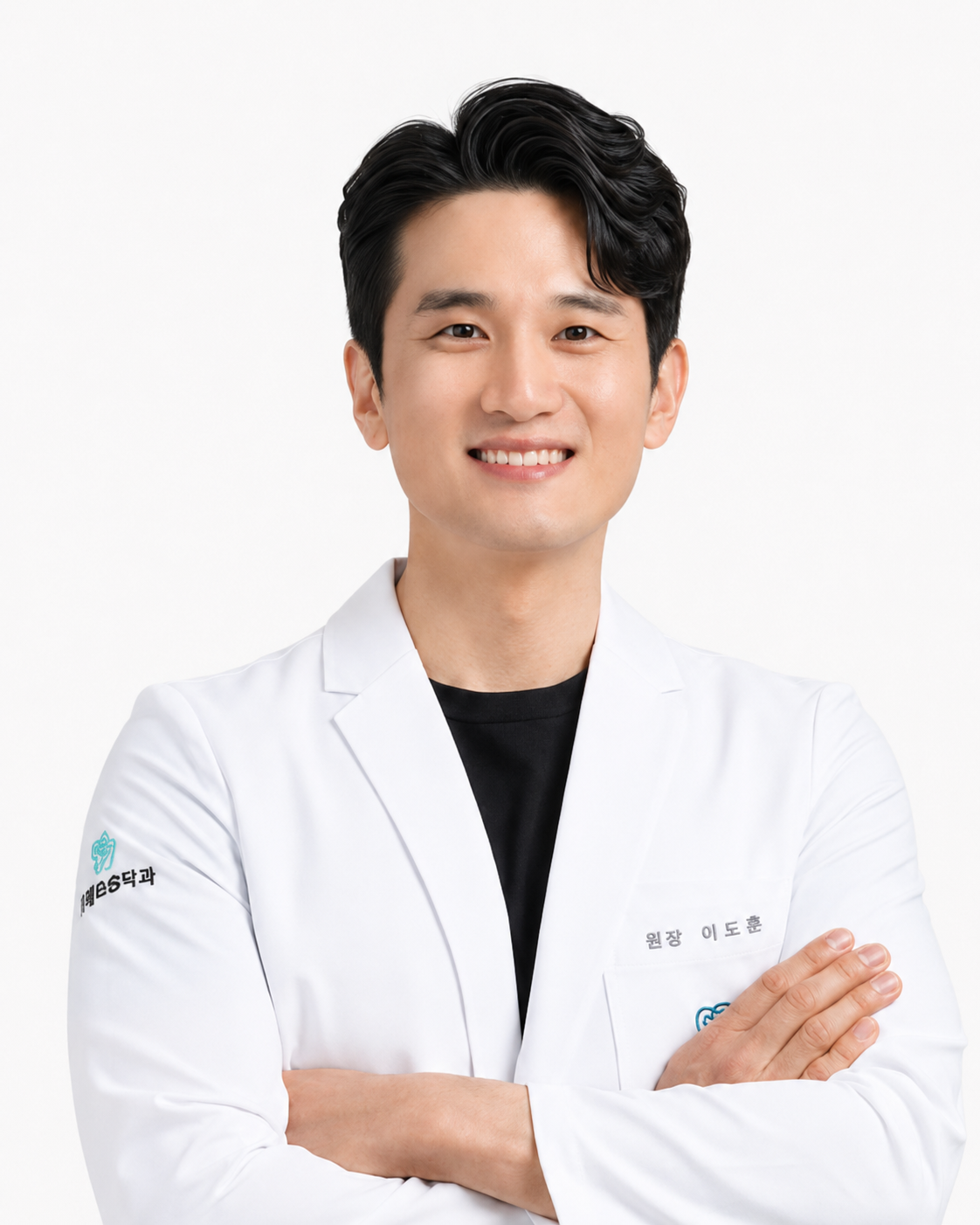
The dentists behind every guide on this site
FAQ
No — modern dental clinics in commercial buildings, this one included, are street-shoes territory. The shoes-off rule lives in homes, some traditional restaurants and certain oriental-medicine settings; anywhere it applies, slippers and signage make it impossible to miss. Absent those, walk in as you are.
Never — Korea is a no-tipping country and healthcare is its strictest zone. Offering cash beyond the bill creates genuine awkwardness rather than warmth. Gratitude is spoken (kamsahamnida works beautifully in any accent), optionally edible at a final visit, and most usefully expressed as an online review — the currency clinics actually treasure.
The opposite of this clinic’s design: findings go on screen precisely to be interrogated, “let me think about it” is a respected consultation ending, and plans leave the building without expiring. Korean patients negotiate treatment timing constantly; your questions and your “not yet” are cultural fluency, not violation.
After treatment, at the front desk, to a person: the itemised figure — matching what was written before treatment — settles by international card or KRW cash, and the English receipt prints on the spot. No pre-payment, no deposits at booking, no machines, no surprises: the design goal is a payment moment with no news in it.
“Dr. Lee” in plain English works perfectly for both directors here. The Korean honorific patients use is “wonjang-nim” (director) — borrow it for local colour if it amuses you, but nothing is expected. Assistants answer happily to “excuse me”; the entire protocol fits in this paragraph.
English-Speaking Care
The system that makes most etiquette anxiety obsolete.
Scaling & Check-up in Busan
₩60,000 — the gentlest first visit to practise the local rhythm on.
Emergency Dentist in Busan
Etiquette’s exception: urgency has its own, simpler rules.
Published Prices
The written-first rule that makes payment anticlimactic.
What to bring to a Korean dental clinic
Related guide in this series.
Baro Dental Seomyeon, explained before you visit
Related guide in this series.
How to book a Busan dentist in English, step by step
Related guide in this series.
Rules learned? They were three, and you knew them already.
Book the visit the modern Korean way — one message, in English, whenever it suits you. Mention it’s your first Korean clinic and everything runs at first-timer pace.
Medical information in this guide is provided for general education and does not replace an individual examination and diagnosis. Prices shown are current at the time of writing; insured-schedule items follow Korea's national fee schedule and are quoted in writing at your visit. This clinic does not provide 24-hour service. Individual results vary.