What a dental implant actually costs in Busan, Korea — in real, published won.
The three-tier truth with the crown included: ₩800,000 for a DIO fixture, ₩1,200,000 for Osstem, ₩1,750,000 for Straumann — plus the honest add-on map (bone grafts, sinus lifts, CT), what those tiers actually buy, why “crown included” is the phrase that matters, and the questions that expose a padded quote anywhere on earth.
By Baro Dental Clinic, Seomyeon · August 2026 · 14 min read
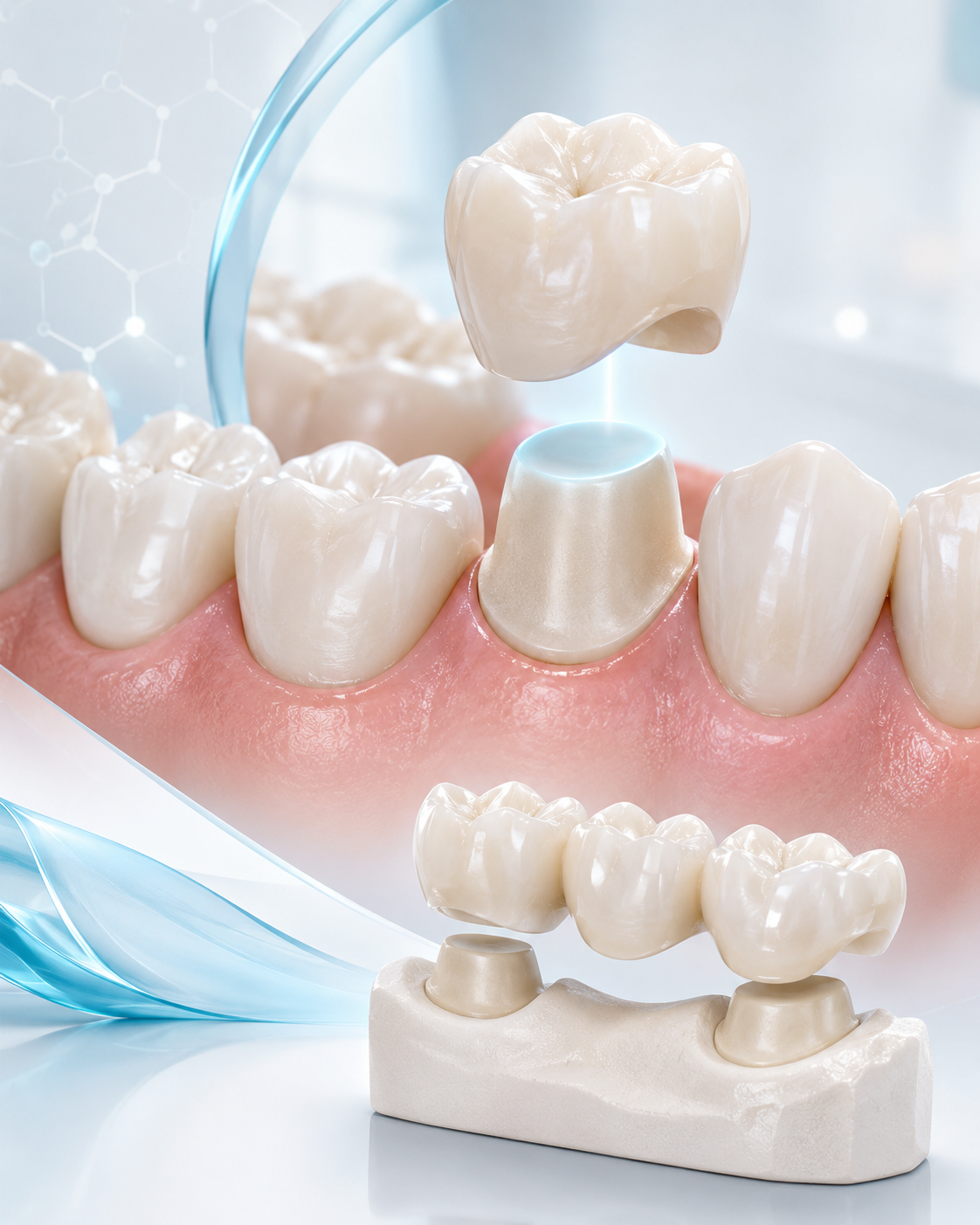
At Baro Dental in Busan, a complete single implant — fixture, surgery, abutment and the final crown — is published at ₩800,000 with a DIO fixture, ₩1,200,000 with Osstem KS, and ₩1,750,000 with Straumann, the same figures for every passport. What moves a real quote off those anchors is anatomy, not nationality: a bone graft (₩300,000–500,000) or sinus lift (₩500,000–700,000) where bone is short, and the ₩30,000 CT that finds out. This guide itemises the whole arithmetic — and arms you with the questions that keep any implant quote, here or anywhere, honest.
- The three published anchors — and what “crown included” means in Busan
- What the tiers actually buy — and what they don’t change
- The add-on map — anatomy’s short, honest list
- The complete implant arithmetic, in one table
- Busan vs home vs Seoul — the honest comparison
- The five questions that keep any implant quote honest — in Busan Seomyeon
What implant shoppers ask about Korean prices
- Is ₩800,000 the real total, or the teaser before the add-ons?
- What’s actually different between a ₩800,000 and a ₩1,750,000 implant?
- How do Busan prices compare with home — and with Seoul?
- How do I know if I’ll need the bone graft everyone warns about?
- Why do some Korean ads show prices half of these — what’s the catch?
The three published anchors — and what “crown included” means in Busan
Start with the numbers themselves, because everything else in this guide orbits them: ₩800,000 with a DIO fixture, ₩1,200,000 with Osstem KS, ₩1,750,000 with Straumann — each figure covering the complete single-tooth journey: the fixture placed surgically, the abutment that connects it, and the final crown that chews. Published on this site, identical for every passport, written before treatment.
The phrase doing the heavy lifting is “crown included,” and it’s the first thing to verify in any implant quote anywhere: a fixture without its crown is a screw in your jaw, not a tooth, and quotes that price the fixture alone — adding the abutment and crown as later “discoveries” worth ₩450,000-plus — are the single most common padding structure in implant pricing worldwide. Our anchors are totals for the standard journey; the add-ons section below covers what can genuinely move them, and it’s a short, anatomical list.
What the anchors don’t include, stated plainly rather than discovered: the ₩30,000 CT every surgical plan starts from, and the bone-augmentation procedures a minority of cases genuinely need — both itemised below with their own published figures. What they never include, because it doesn’t exist here: consultation fees that convert into pressure, foreigner surcharges, or the “package” arithmetic our same-day guide decodes.
And the timeline honesty that belongs in a cost guide because time is money too: an implant runs on biology’s calendar — months of integration between placement and final crown, commonly a two-trip rhythm for visitors. Any price attached to a compressed timeline is buying something other than the standard of care; the implant hub covers the honest schedule in full.
Want the arithmetic run on your actual jaw? Send your situation — a photo, an old X-ray, or just which tooth — and the written path to a real quote comes back in English. Message us on WhatsApp →
What the tiers actually buy — and what they don’t change
The three-tier question deserves a straight answer, because the price spread is real money. What changes with the tier: the fixture’s pedigree. DIO is a solid Korean manufacturer whose fixtures serve reliably — the honest budget choice, not a compromise dressed as one. Osstem is Korea’s largest implant maker and a global top-tier player, with the research base and decades-long track record that position implies. Straumann is the Swiss reference brand — the most documented implant system on earth, with the longest published follow-up data and the widest global parts availability.
What does not change with the tier: everything else. The same two directors place all three, on the same CT-guided planning, in the same surgery, to the same standard, with the same follow-up. The tier is a components decision, not a quality-of-care decision — a distinction worth carrying into any clinic, because “premium implant” marketing often blurs exactly this line.
The honest choosing framework we actually use in consultations: global parts availability weighs heaviest for the internationally mobile. A Straumann or Osstem implant can be serviced by almost any competent clinic on any continent — the future-proofing our records guide’s implant-passport section completes. A patient who’ll live near good dentistry indefinitely loses little choosing DIO; a patient whose next decade spans three countries buys real optionality with the upper tiers.
And the question people are too polite to ask, answered anyway: no, the expensive fixture doesn’t hurt less, heal faster, or chew better in the routine case. Its advantages live in documentation depth, edge-case engineering and worldwide serviceability — genuine, but long-horizon. Buy the tier for the future you actually have planned.
One tier-adjacent honesty this clinic’s implant pages state and this cost guide repeats: certain protocols you may have read about — immediate-load “teeth in a day” approaches among them — are not sold here regardless of tier, because our position on compressed timelines is the same as our position on compressed prices: the standard of care is the product, and everything else is packaging. The tiers vary the fixture; nothing here varies the standard.
The add-on map — anatomy’s short, honest list
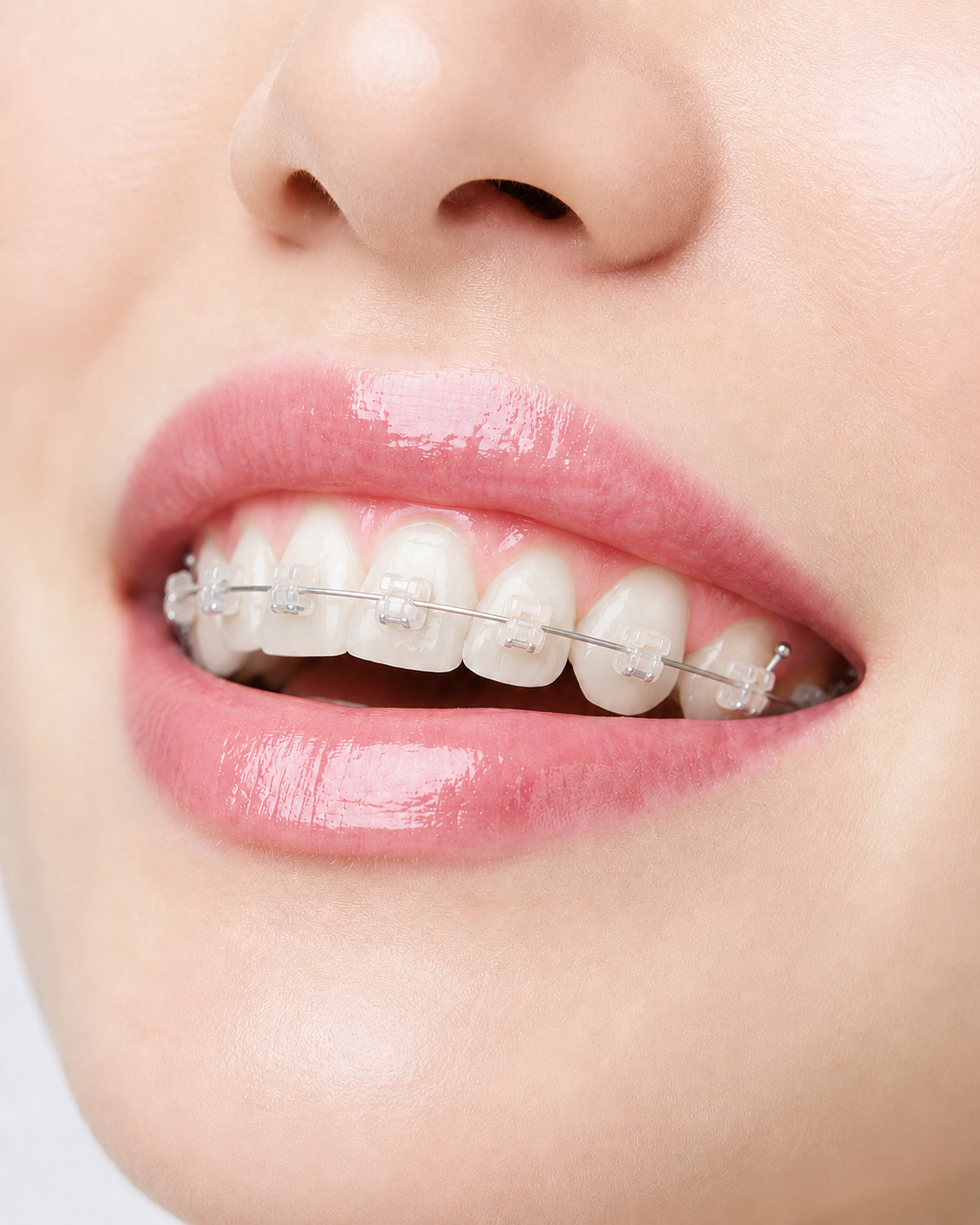
Real quotes move off the anchors for anatomical reasons, and the list is shorter than the internet’s anxiety suggests. Bone grafting (₩300,000–500,000) applies where the jaw has thinned — commonly after years without a tooth, since bone quietly resorbs where nothing loads it. Sinus lifts (₩500,000–700,000) apply to upper back teeth where the sinus floor sits low — a geography question the CT answers definitively.
The ₩30,000 CT is the honest gatekeeper of the whole list: it shows your bone’s actual volume and the sinus’s actual floor before anyone quotes anything, which is why a written implant quote here follows imaging rather than preceding it. A quote that names your graft before seeing your CT is quoting the average jaw — and padding or under-quoting yours accordingly.
The base-rate reassurance, honestly framed: many single-implant cases need no augmentation at all — a tooth extracted recently, or a jaw that held its volume, commonly takes a fixture directly. Where augmentation is genuinely indicated, it’s indicated for engineering reasons a screen can show you: the fixture needs bone to hold, the way a bolt needs wall. You’ll see your own anatomy make the argument, not a brochure.
Completing the itemisation for complex cases: full-arch work runs ₩15–20 million-plus with guide fees — its own page, its own arithmetic — and revision of another clinic’s implant follows the published component prices (implant prosthesis ₩450,000, access-hole filling ₩40,000) after honest diagnosis. Every figure in this paragraph is on the pricing page, which is the living list this guide summarises.
The complete implant arithmetic, in one table
The anchors, the add-ons and the gatekeeper — every published figure an implant decision touches:
| Item | Published figure | The honest note |
|---|---|---|
| Single implant — DIO fixture | ₩800,000 | Complete: fixture + abutment + crown — the honest budget tier |
| Single implant — Osstem KS | ₩1,200,000 | Korea’s global top-tier maker; deep track record, wide parts network |
| Single implant — Straumann | ₩1,750,000 | The Swiss reference standard — most documented system on earth |
| CT imaging | ₩30,000 | The gatekeeper: every honest quote follows it, none precedes it |
| Bone graft (where indicated) | ₩300,000–500,000 | Anatomy’s call, shown on your own scan — many cases need none |
| Sinus lift (upper back teeth) | ₩500,000–700,000 | A geography question the CT answers definitively |
| Full-arch rehabilitation | ₩15M–20M+ | Its own arithmetic, plus guide fees — see its dedicated page |
Figures current at time of writing — the pricing page is the living list. Identical for every passport; quotes are written, dated and follow your CT.
Busan vs home vs Seoul — the honest comparison
The comparison every reader is quietly running, handled with the honesty it deserves. Against Western prices, the gap is structural, not suspicious: single implants commonly run several times these figures in the US, UK, Australia and much of Western Europe — a spread driven by labour costs, insurance structures and clinic economics rather than by quality differences. Korea places implants at enormous volume with world-class systems (it manufactures two of the three tiers above), and volume plus competition produces exactly the prices on this page.
Against Seoul: the clinical standard is national, the price culture is not. Seoul’s medical-tourism districts carry Seoul rents and Seoul marketing budgets, both of which live somewhere in their quotes; Busan’s calmer market prices calmer. Same fixtures, same training pipelines, different overheads — the arbitrage is real and unmysterious, and Busan throws in a better between-appointments city for free.
Against the half-price Korean ads — the ₩390,000 banners visitors photograph and ask about: read the small print the banner cropped. The classic structures are fixture-only pricing (crown sold separately, remember the phrase that matters), volume-clinic models with compressed appointment economics, unfamiliar fixture brands with thin global parts networks, or teaser rates that anatomy “upgrades” in the chair. Some cheap implants are honestly cheap; the question is what the price excluded, and the next section’s questions extract exactly that.
And the comparison nobody advertises: against not treating. A missing tooth’s neighbours drift, its opposing tooth over-erupts, and its bone quietly resorbs — each year of waiting trends the eventual case toward the add-on list above. The cheapest implant is regularly the one placed before the graft became necessary; our single-implant page makes the full engineering case.
The five questions that keep any implant quote honest — in Busan Seomyeon
Carry these anywhere — they work in Busan, Seoul, Bangkok or Boston. One: “Is the crown included in this figure?” The single highest-yield question in implant pricing; you know why by now. Two: “Which fixture system, exactly — and will I get its documentation?” A quote that won’t name the brand is pricing a mystery; the implant-passport habit starts at this question. Three: “Is this quote based on my CT?” Pre-imaging quotes price the average jaw — insist on the ₩30,000 scan’s version of you.
Four: “What’s the timeline, visit by visit?” The answer reveals whether biology or marketing wrote the plan — months of integration is the honest shape; anything dramatically faster is selling a protocol, and you deserve to know which and why. Five: “What happens if something needs attention at month six — and what does that cost?” The week-six test from our same-day guide, scaled to implants: a clinic that answers crisply has a follow-up system; a blank answer priced its timeline to end at your payment.
How this clinic answers its own five, for the record: crown included in every anchor; system named in writing with documentation issued; quotes follow the CT; the timeline arrives visit-by-visit with the two-trip rhythm mapped for travellers; and follow-up runs through the same thread and published component prices as everything else — with revision care extended even to implants placed elsewhere, no lectures attached.
The written quote itself is the final safeguard: dated, itemised, in English, yours to take home, compare and sleep on — because a figure that fears comparison wasn’t a price, it was a pitch. Ours are on this page before you’ve messaged anyone; that’s rather the point.
And the closing arithmetic for the spreadsheet-keepers: take your home quote, subtract the relevant anchor above, and weigh the difference against two Busan round-trips — because the honest two-trip rhythm means pricing the journey, not just the surgery. For most Western-quoted patients the arithmetic clears with room for the hotel and the bibimbap; for some it doesn’t, and the same written quote that enables the comparison will tell you so. Either answer is the guide working.
Because a cost guide’s real job was never to win the comparison — it’s to make the comparison possible. Three anchors, a short anatomical add-on list, one gatekeeping scan, five portable questions: that’s the entire arithmetic, in writing, before you’ve spent a won. Whatever you decide, decide it with these numbers on the table — ours and everyone else’s.
And when the numbers have done their work and a decision forms, the next step costs one message and no commitment: your situation, your dates, your questions — answered in English, against your actual anatomy once the scan exists, in the written form every figure in this guide arrived in. Prices published this openly were always an invitation to check them.
- Three anchors, crown included: ₩750k DIO / ₩1,150k Osstem / ₩1,700k Straumann — complete single-tooth totals.
- “Crown included” is the phrase that matters: fixture-only quotes are the world’s favourite padding structure.
- Add-ons are anatomical, not commercial: grafts and sinus lifts exist where your CT says so — many cases need none.
- The tier buys pedigree and portability, not a different surgery — choose it for the decade you’ve actually planned.
- Five questions keep any quote honest — crown? system? CT-based? timeline? month-six plan? Ask them everywhere.
The dentists behind every guide on this site

FAQ
For the standard single-tooth journey with a DIO fixture — fixture, surgery, abutment and final crown — yes, and the figure is published precisely so you can hold us to it. What legitimately adds: the ₩30,000 CT every plan starts from, and bone augmentation (₩300,000–500,000 graft, ₩500,000–700,000 sinus lift) where your anatomy genuinely requires it — shown to you on your own scan, quoted in writing, before anything proceeds.
Structure, not shortcuts: Korea places implants at enormous volume, manufactures world-class systems domestically (Osstem and DIO among them), and runs clinic economics without the labour and insurance overheads that inflate Western quotes. The materials and protocols are the international standard — the price difference lives in the system around the surgery, not in the surgery.
The honest framework: the surgery, planning and standard of care are identical across all three — the tier buys the fixture’s documentation depth and global parts availability. Internationally mobile patients get real value from Osstem or Straumann’s worldwide serviceability; patients settled near good dentistry lose little choosing DIO. The consultation runs this logic on your actual life, not a brochure’s.
You mostly can’t from the outside — and neither can a clinic quoting you sight unseen, which is the point. The ₩30,000 CT shows your bone’s actual volume and the sinus floor’s position definitively; many single-implant cases need no augmentation at all, and where one is indicated, you’ll see the engineering argument on your own scan before any figure is written.
The visits fit trips; the biology doesn’t compress: integration between fixture placement and final crown runs on months, wherever you spend them, which is why visitors commonly run a two-trip rhythm — placement trip, crown trip — with the months passing at home. Anyone promising the complete journey inside one week is selling a protocol, not a schedule; our implant pages state the honest timeline in writing. The consolation is real though: each individual visit is modest, the months pass wherever you live, and Busan makes a genuinely pleasant place to need a second trip to.
Single Implant in Busan
The complete ₩800,000 journey, step by step.
Straumann Implants in Busan
What the reference tier actually buys, honestly framed.
Bone Grafting in Busan
The add-on explained — when anatomy genuinely asks for it.
Published Prices
The living list every figure in this guide lives on.
How to read a Korean dental price list without surprises
Related guide in this series.
Do foreigners pay more at a Korean dentist?
Related guide in this series.
What a Busan dentist can genuinely do in one day
Related guide in this series.
Ready for a real number? It starts with your CT, not our brochure.
Send your situation — the tooth, a photo, your dates — and get the written path to an honest quote: scan, per-tooth verdicts, figures in English.
Medical information in this guide is provided for general education and does not replace an individual examination and diagnosis. Prices shown are current at the time of writing; insured-schedule items follow Korea's national fee schedule and are quoted in writing at your visit. This clinic does not provide 24-hour service. Individual results vary.