Osstem & DIO implants in Busan Seomyeon — Korean fixtures, on home ground.
Korea places more implants per person than any country on earth, and these are the fixtures it runs on: DIO ₩800,000, Osstem KS ₩1,200,000 — custom abutment and zirconia crown included — placed by a dentist who teaches implant surgery on the Osstem AIC faculty.
Ask about Korean fixtures.
Tap what fits — we’ll open WhatsApp with your message ready to send.Nothing sends until you press send in WhatsApp. A photo and any X-rays help us give an honest tier read — Straumann-warranted, or KS-sufficient.
Are Korean implants actually good — or just cheap?
Genuinely good — and inexpensive here for reasons that have nothing to do with quality. Korea runs one of the world’s densest implant markets: Osstem is the country’s largest manufacturer with deep international documentation, DIO an established maker with a long domestic record — and on home ground there are no import margins, no distributor layers, and ferocious domestic competition. The result: DIO ₩800,000, Osstem KS ₩1,200,000, both including the custom abutment and zirconia crown.
The blunt framing for visitors: you’re buying the fixture in the country that makes it, placed by clinicians who train on it daily — ours literally teaches it, as Osstem AIC faculty. The same fixtures cost dramatically more abroad after shipping, distribution and local pricing do their work. Which Korean tier fits you — and when the honest answer is actually the Swiss premium instead — is decided by your CT (₩30,000), and this page lays out exactly how.

Two Korean fixtures, one home advantage.
Osstem is the giant: Korea’s largest implant manufacturer and one of the biggest worldwide, with a research and training infrastructure — including the AIC education network that trains implant surgeons — that only scale can build. The KS line we place is its premium tier: a sand-blasted, acid-etched surface of the same family that defines modern integration science, tapered design for primary stability, and a parts ecosystem stocked in effectively every Korean city.
DIO is the established value engineer: a Busan-headquartered manufacturer — genuinely local to this clinic — with decades of domestic placement history and a straightforward, proven fixture design. At ₩800,000 including abutment and crown, it’s the honest answer for sound bone at standard sites, where integration biology asks nothing exotic of the surface.
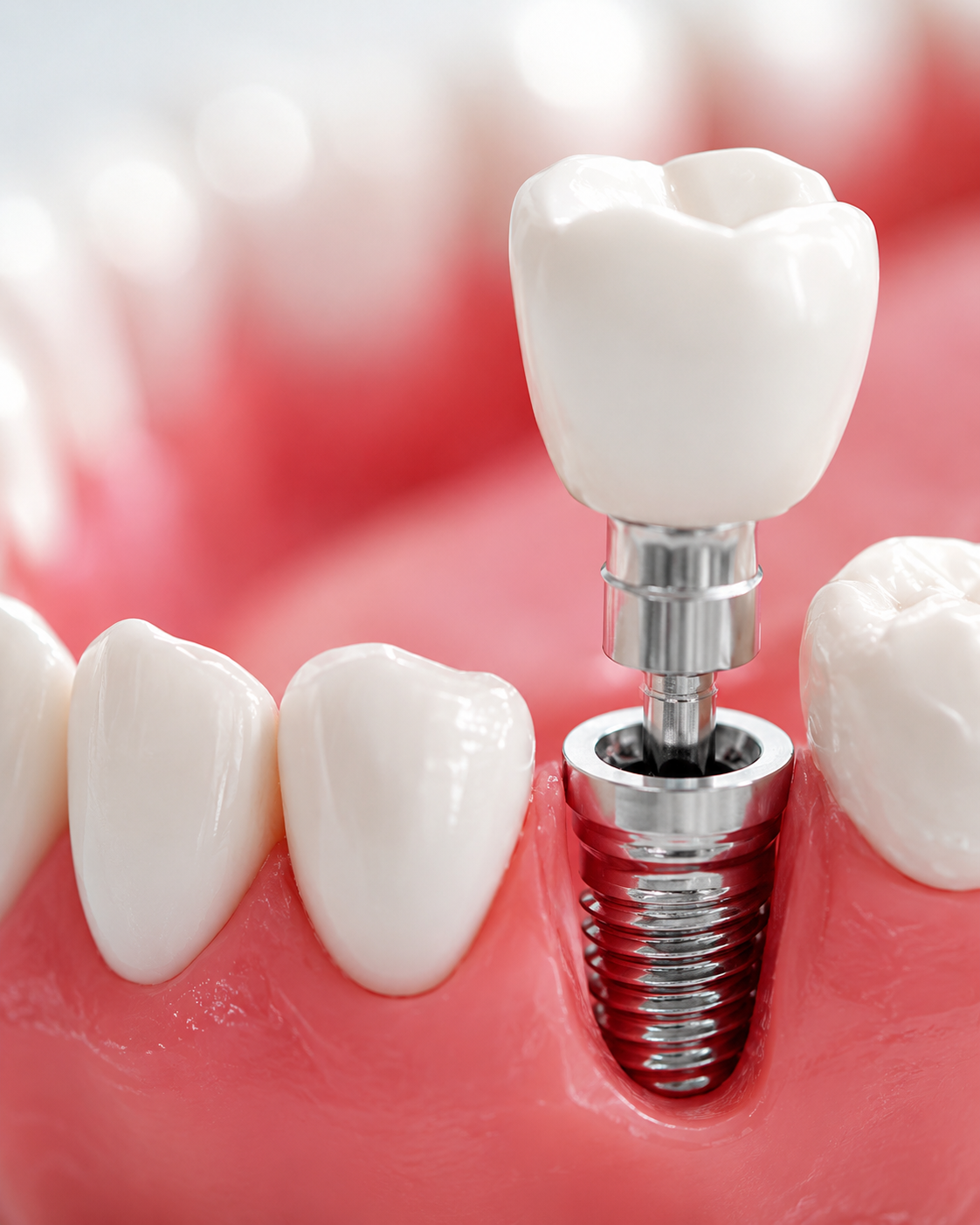
What both share is the home-ground economics this page keeps returning to: manufactured here, stocked here, serviced here, taught here. The osseointegration biology is identical to any quality fixture’s — covered on our single implant page — and the three-part anatomy (fixture, custom abutment, zirconia crown) arrives as one written price at every tier, because a tooth sold in pieces is a bill sold in instalments.
Six patients, two Korean tiers — and one honest referral upward.
The textbook molar site
DIO’s home caseSound ridge, healthy gums, ordinary back-tooth gap: the site that asks nothing special of a fixture. DIO at ₩800,000 — crown included — treats it dependably, and paying more here buys reassurance, not outcome.
The premium-surface pragmatist
Osstem KS’s home caseWants the modern documented surface class and the deepest Korean ecosystem without Swiss pricing: KS at ₩1,200,000 is the balance most of our patients land on after seeing their own CT — and why the tier exists.
Planning several implants
Where tiers compoundMulti-site plans multiply every price gap: three DIO sites versus three Swiss ones is a seven-figure spread. We price per site and mix tiers per anatomy — demanding sites upgraded, textbook sites economised, in one written plan.
The expat living in Korea
Service-network logicStaying in Korea for years? The Korean brands’ domestic parts and service density is unbeatable here — any future adjustment happens same-week, anywhere in the country. Home ground, literally.
Torn between the two tiers
The ₩400,000 questionKS over DIO buys the premium surface class, broader size lineup and Osstem’s documentation depth — margins that matter as sites get less ideal. The table below itemises it; your CT votes; nobody upsells by default.
The genuinely demanding site
Honestly: consider SwissThin ridge, soft rear-upper bone, re-treatment after failure: where every documented margin counts, the honest recommendation may be Straumann (₩1,750,000) — the same candour that talks standard sites down talks demanding ones up.
How Korean-fixture treatment actually goes.
CT & the tier conversation
The CT (₩30,000) reads your bone; the recommendation — DIO, KS, or an honest referral up to Swiss — comes with reasons on screen and the whole-tooth price in writing (₩100,000 diagnosis, credited).
Site preparation, if needed
Grafting (₩300,000–500,000) or a sinus lift(₩500,000–700,000) where the scan demands — published add-ons named before anything begins, and skipped where anatomy doesn’t ask.
Placement by the teacher
Local anaesthesia, guided precision, measured torque — performed by an Osstem AIC faculty dentist placing the system he trains other dentists on. Familiarity this deep is itself a safety feature.
Integration months
Bone grows onto the fixture surface over a healing period measured in months and confirmed by testing — identical biology at every tier, monitored by photo check-ins for patients healing abroad.
Abutment & crown
Custom abutment connected, shade-matched zirconia crown seated and bite-tuned — already inside your tier’s single price. The visible tooth is built to the same standard whichever fixture sits beneath it.
Osstem KS vs DIO — what the gap actually buys.
| DIO — ₩800,000 | Osstem KS — ₩1,200,000 | |
|---|---|---|
| The maker | Established Korean manufacturer — Busan-headquartered, decades of domestic record | Korea’s largest, a global top-tier maker — with the research budget that scale funds |
| Surface class | Proven treated titanium — fully adequate where bone is sound | Premium sand-blasted, acid-etched family — the modern documented standard |
| Documentation depth | Solid domestic history | Deep Korean and international study base — the KS line travels in the literature |
| Size & parts lineup | Covers standard cases well | Broader diameters and options — more room to match awkward anatomy |
| What’s included | Custom abutment + zirconia crown — the whole tooth, both tiers, one written price | |
| Honest bottom line | The right answer for textbook sites — chosen on merit, not on budget shame | The balance pick as sites get less ideal — margins without the import premium |
Both integrate reliably in appropriate sites — the gap buys surface class, lineup breadth and documentation, which matter more as your anatomy gets less textbook. The CT decides which side of that line your jaw sits on; the recommendation comes with the scan on screen. And where neither margin suffices, the Swiss tier is quoted with the same candour.
What “AIC faculty” means — placed by the one who teaches it.
Every implant page on this site says placement skill outranks fixture brand. Here’s what that skill looks like as a career — and why it matters more than any logo on this page.
Learning the system
Every implant surgeon starts as a student of one — anatomy, drilling protocols, torque discipline, the judgment calls no manual captures. AIC (the Osstem-affiliated implant education network) is where much of Korea’s implant generation trained.
Volume builds judgment
Between coursework and mastery sit years of placements — the ordinary sites that build rhythm and the awkward ones that build judgment. Korea’s implant density compresses this curve: clinicians here simply see more cases, sooner.
Invited to teach
Faculty appointments aren’t applied for — they’re extended to clinicians whose casework and understanding merit putting them in front of other dentists. Teaching a surgical system means being answerable for how a generation places it.
Your fixture, placed by its instructor
The dentist placing your Osstem or DIO fixture teaches implant surgery on the Osstem AIC faculty — the systems on this page aren’t just stocked here; they’re taught from here. That’s the variable studies keep ranking above brand, sitting on your side of the chair.
How much do Osstem and DIO implants cost in Busan?
At this clinic, per tooth, crown and custom abutment included: DIO ₩800,000, Osstem KS ₩1,200,000 — fixed in writing at diagnosis (₩100,000, credited). Anatomical add-ons are published, not sprung: CT ₩30,000, bone graft ₩300,000–500,000, sinus lift ₩500,000–700,000, and only where your scan actually demands them. The comparison question worth asking anywhere: “is the crown in that number?”
Why are Korean implants so much cheaper than in my country?
Home-ground economics, not corner-cutting: no import duties or shipping, no international distributor layers, and the world’s fiercest domestic implant competition keeping margins honest. Abroad, the same Osstem fixture crosses borders, warehouses and markups before it reaches a jaw. Add Korea’s implant volume — the highest per-capita placement rates anywhere — and you get experienced hands at manufacturer-country prices. That combination is, frankly, the medical-tourism case for Busan in one sentence.
Is Osstem as good as Straumann?
In sound bone at appropriate sites — comparably dependable, at a third less even than KS-to-Swiss. Where the honest gap opens is at the margins: Straumann’s surface programme and titanium-zirconium alloy carry the deepest documentation for demanding sites — thin ridges, soft bone, re-treatments. Our rule is symmetric candour: standard sites get talked down to Korean tiers, genuinely demanding ones get talked up to Swiss, and the CT referees.
Should I pay ₩400,000 more for KS over DIO?
Only if your anatomy cashes the cheque. The gap buys a premium surface class, broader size lineup and deeper documentation — margins that earn their keep as sites get less textbook: modest density, tighter spaces, higher demands. A clean molar site in sound bone doesn’t spend those margins, and DIO serves it honourably. The CT (₩30,000) makes this a two-minute evidence question instead of a showroom decision.
What does it mean that your dentist is Osstem AIC faculty?
AIC is Osstem’s implant education institute — the network where a large share of Korea’s implant surgeons train. Faculty are the clinicians invited to do the training: dentists whose casework qualifies them to teach placement to other dentists. Practically, it means the person placing your fixture works at instructor depth on these exact systems — and since placement quality outranks brand in every study, it’s the single most load-bearing line on this page.
If I leave Korea later, can my Korean implant be serviced abroad?
Yes, with planning. Osstem’s international footprint has grown across major markets, and any competent implant clinic can service a documented fixture — which is why you leave here with your implant’s exact reference details for any future dentist. For patients whose lives span many countries over decades, the globally ubiquitous Swiss ecosystem is the belt-and-braces choice — a trade-off we’ll lay out honestly against your actual plans.
Care by board-certified specialists in Seomyeon
Both directors are board-certified specialists in Advanced General Dentistry, so your cosmetic treatment is planned with your overall dental health in mind.
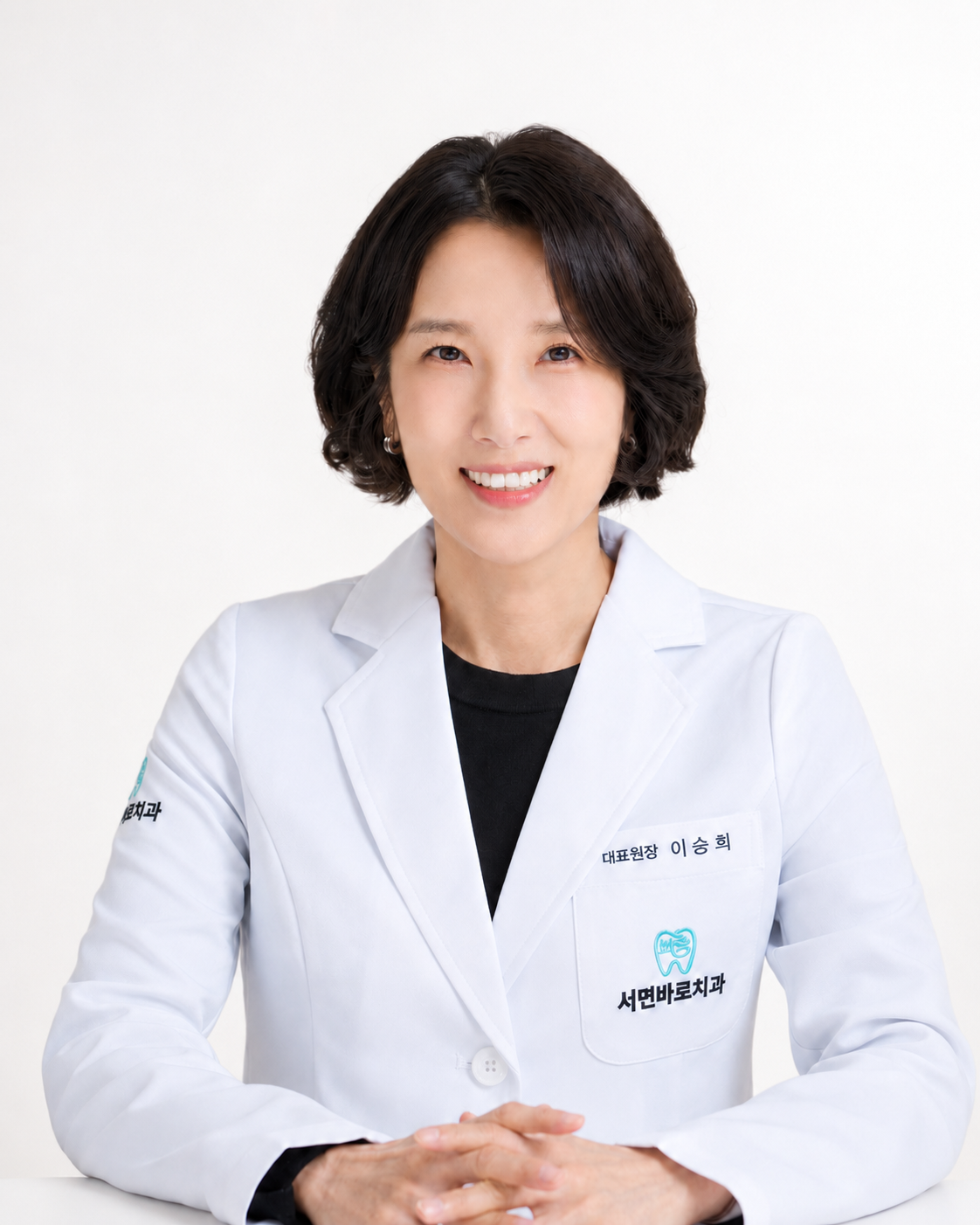
- Board-certified specialist, Advanced General Dentistry
- M.S. in Orthodontics, Kyungpook National University
- Focus on natural, alignment-led smile improvement
- Conservative, tooth-preserving approach
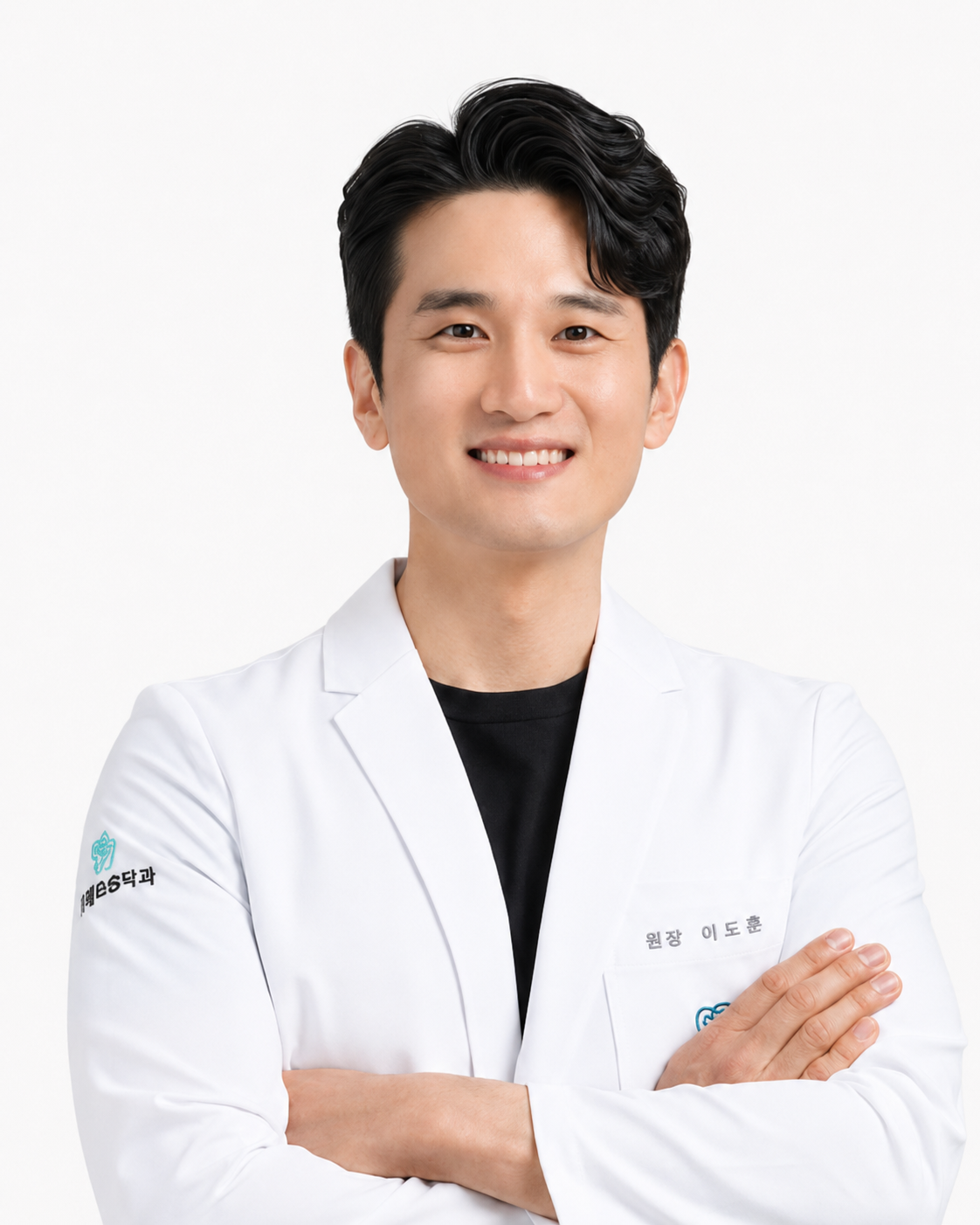
- Board-certified specialist, Advanced General Dentistry
- DDS, Dankook University College of Dentistry
- Restorative & aesthetic resin filling work
- Focus: natural, durable results
Small truths about Korean fixtures.
- Korea is implantology’s highest-volume habitat. National insurance support for seniors and dense clinic competition made implants routine here decades ago — the experience curve your placement benefits from was built one ordinary Tuesday at a time.
- DIO is a Busan company. Its headquarters sit in this city — your ₩800,000 fixture likely travelled less distance to your jaw than your morning coffee beans did. Local isn’t a quality argument, but parts availability doesn’t get better than this.
- “Premium surface” is a class, not a brand. The sand-blasted, acid-etched family that defines modern integration exists across quality makers — KS carries Osstem’s version with its own study base. What no surface replaces: sound planning and clean placement.
- The crown is tier-blind on purpose. DIO or KS beneath, the visible tooth is the same shade-matched zirconia, included in the price — because the part the world sees shouldn’t depend on the part it doesn’t.
- Maintenance decides longevity more than the logo does. Peri-implant gum health — cleaning plus routine scaling (₩60,000) — protects a Korean fixture and a Swiss one with perfect equality. The cheapest insurance on this page.
When Korean tiers are right — and when we’ll point past them.
Korean fixtures are the right call when…
- your site is sound-to-moderate — where DIO and KS integrate as dependably as anything made
- you’re planning multiple implants — per-site tier mixing keeps quality up and totals sane
- your life is anchored in Korea — the domestic service density is unbeatable on its home ground
- value matters and shame doesn’t — choosing DIO for a textbook molar is competence, not compromise
We’ll point past them when…
- the CT shows a genuinely demanding site — thin ridge, soft rear-upper bone — where Swiss margins earn their premium
- you’re re-treating a failed implant — investigation first, then the deepest-documented system for round two
- gum disease is active — foundations first at every tier, every time
- a fresh extraction site needs its healing months — staged placement into settled bone beats any brand advantage on any timeline
Osstem & DIO FAQ.
The KS premium line — Osstem's tapered fixture with the sand-blasted, acid-etched surface family, at ₩1,200,000 including custom abutment and zirconia crown. Osstem makes several lines at several price points; we standardised on KS because the surface class and size lineup cover demanding-adjacent sites without the import premium. If your case would be better served by another system entirely, the CT conversation says so plainly.
Yes — Osstem and DIO fixtures carry the regulatory approvals of the major markets they sell into, including Korea's MFDS and the certifications required in the many countries they export to. These are audited global manufacturers, not workshop products. You'll also receive your fixture's exact reference and lot details for your records — the paper trail any future dentist, anywhere, can work from.
Usually yes — recommendations here are reasoned, not mandatory, and where DIO remains clinically sound for your site we'll respect the choice and say so in the plan. The honest exception: where the scan shows margins DIO genuinely can't offer, we'll decline to place the wrong fixture rather than bill you for a compromise — the same integrity that stops us upselling stops us underselling your anatomy.
From your side of the chair, no — same local anaesthesia, same guided precision, same quiet appointment, same aftercare sheet. The differences are surgical-kit details the dentist manages: each system's drilling sequence and torque protocol. Since your surgeon teaches on these systems, the protocol depth is exactly where you want it — invisible to you, second nature to him.
In Korea: same-week parts, any city — the home-ground advantage at its most practical. The realistic repairs are crown-level anyway (a chipped or worn crown renewed — implant prosthesis ₩450,000, published), since integrated fixtures rarely need touching. Abroad: your reference documents let any implant clinic source compatible components; Osstem's growing international network makes that easier each year. Keep the paperwork — it's the cheapest part of the implant and the most useful.
Yes — and Korean fixtures are the value spine of dental tourism here: manufacturer-country pricing, crown included, placed by AIC faculty hands. The structure suits travel naturally: CT and planning, placement (same trip where the plan allows), integration months at home with WhatsApp check-ins, crown on a return visit. The whole budget is knowable before you book a flight — which is precisely what published whole-tooth pricing is for.
Korean fixtures across visits.
Send a photo of the gap and any X-rays on WhatsApp. You’ll get an honest first read — DIO-suitable, KS-suggested, or Swiss-worthy — and the realistic visit count before booking anything.
CT (₩30,000), tier recommendation with the scan on screen, written whole-tooth plan (₩100,000 diagnosis, credited). Placement can follow the same trip where the plan allows.
Integration proceeds wherever you live — WhatsApp photo check-ins, local imaging shared if convenient, loading approved by testing on your return.
Abutment connected, zirconia crown seated and bite-tuned — already inside your tier’s price — plus your fixture’s reference documents for any clinic, anywhere, ever.
Find your tier — on evidence, not instinct.
Send a photo of the gap on WhatsApp — we’ll tell you honestly whether it reads DIO-suitable, KS-suggested, or Swiss-worthy, with the whole-tooth price for each. In English.
Message us on WhatsAppBaro Dental Clinic · 5F, SJ Medical Building, 698-1 Jungang-daero, Busanjin-gu · Seomyeon Station Exit 2, 4 min
Explore the options in Busan.
Single Tooth Implant in Busan
The full journey — anatomy, osseointegration, and all three tiers compared.
Explore →Straumann Implant in Busan
₩1,750,000 — when demanding sites earn the Swiss margins.
Explore →Bone Graft in Busan
₩300,000–500,000 — rebuilding thin sites before any fixture, any tier.
Explore →Full-Arch Implants in Busan
Where multi-site economics matter most — the whole-mouth plan, priced.
Explore →Medical information on this page is provided for general education and does not replace an individual examination and diagnosis. Whether an Osstem KS, DIO or other fixture suits your site is confirmed at a CT-based consultation, with the recommendation and reasons provided in writing. Brand names are referenced for identification; individual results vary with anatomy, health factors and maintenance.