Implant or bridge? How a dentist actually decides.
One missing tooth, two engineering answers — and the deciding vote usually belongs to the neighbours. The real decision tree a dentist runs: what the adjacent teeth look like, what the bone allows, what the timeline and budget honestly demand — with published prices for both paths and the cases where each answer is simply correct.
By Baro Dental Clinic, Seomyeon · August 2026 · 14 min read
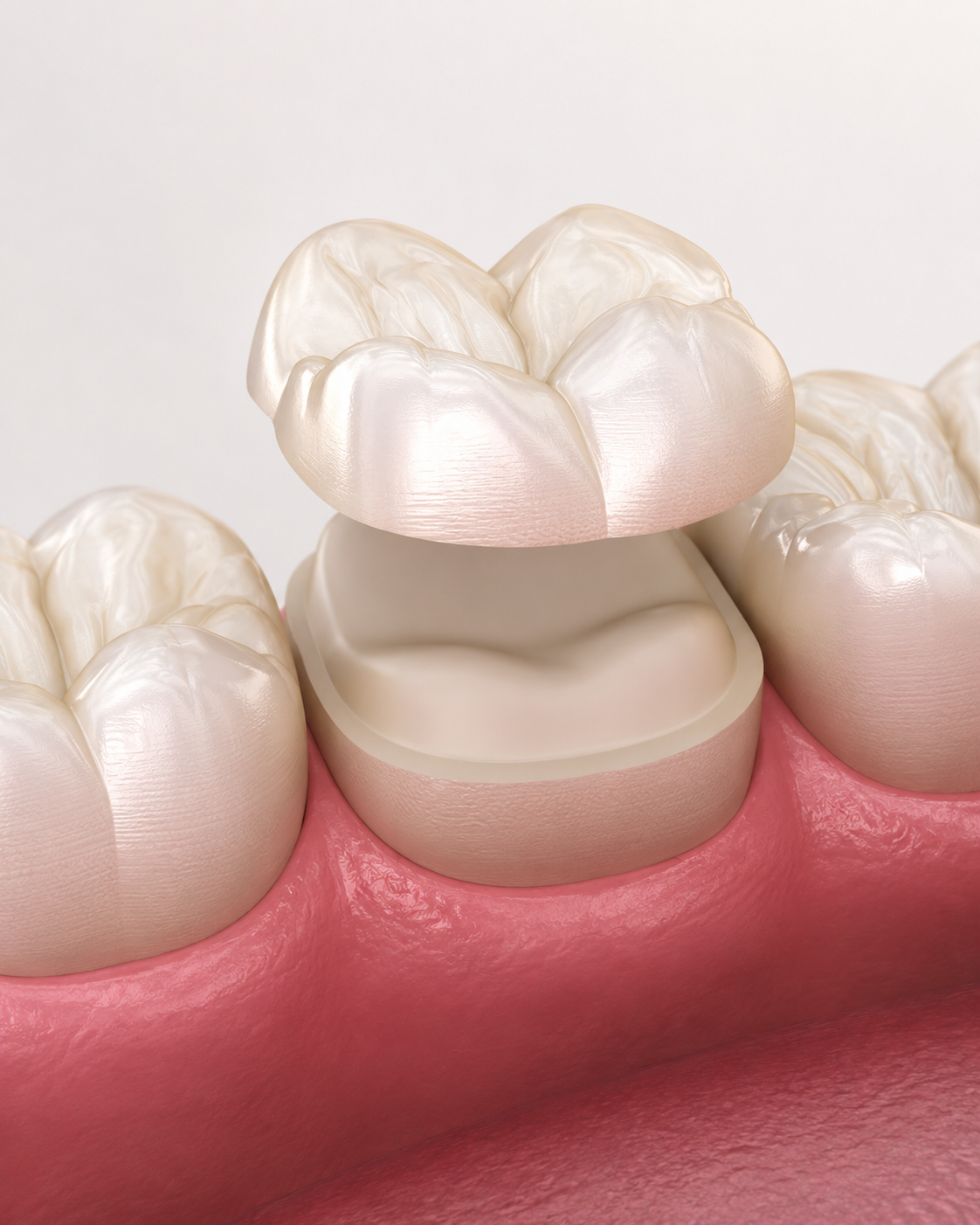
The honest decision rule: when the teeth beside the gap are healthy and untouched, an implant usually wins because a bridge would grind down two good teeth to anchor itself; when those neighbours already carry crowns or large fillings, a bridge becomes a genuinely strong answer — the grinding cost was already paid. Around that core rule sit the real-world modifiers: bone volume, healing timelines, budget shape and how many teeth are missing. This guide walks the actual decision tree with published prices for both paths — an implant from ₩800,000 crown-included, a three-unit bridge at roughly ₩1,300,000–1,400,000 in zirconia — and names the cases where each answer is simply correct.
- The two answers, engineered honestly in Busan
- The decision tree — how the call actually gets made
- The cost comparison — sticker, lifetime, and the honest asterisks
- The head-to-head, in one honest table
- The clear cases — where each answer is simply correct
- How the choice runs at this clinic in Busan Seomyeon — and your next step
What patients with a gap actually ask
- My dentist at home said bridge, a friend says implant — who’s right?
- Is it true a bridge ruins the teeth next to the gap?
- I’ve had the gap for years — does that change the answer?
- Which is actually cheaper once everything is counted?
- I can’t do months of healing — does that force the bridge?
The two answers, engineered honestly in Busan
Start with what each actually is, because the marketing shorthand obscures the engineering. An implant replaces the missing tooth at the root: a titanium fixture integrates with your jawbone over months, an abutment connects it, and a crown chews on top — a freestanding tooth that asks nothing of its neighbours. The published journey here runs ₩800,000 crown-included with a DIO fixture, ₩1,200,000 with Osstem, ₩1,750,000 with Straumann.
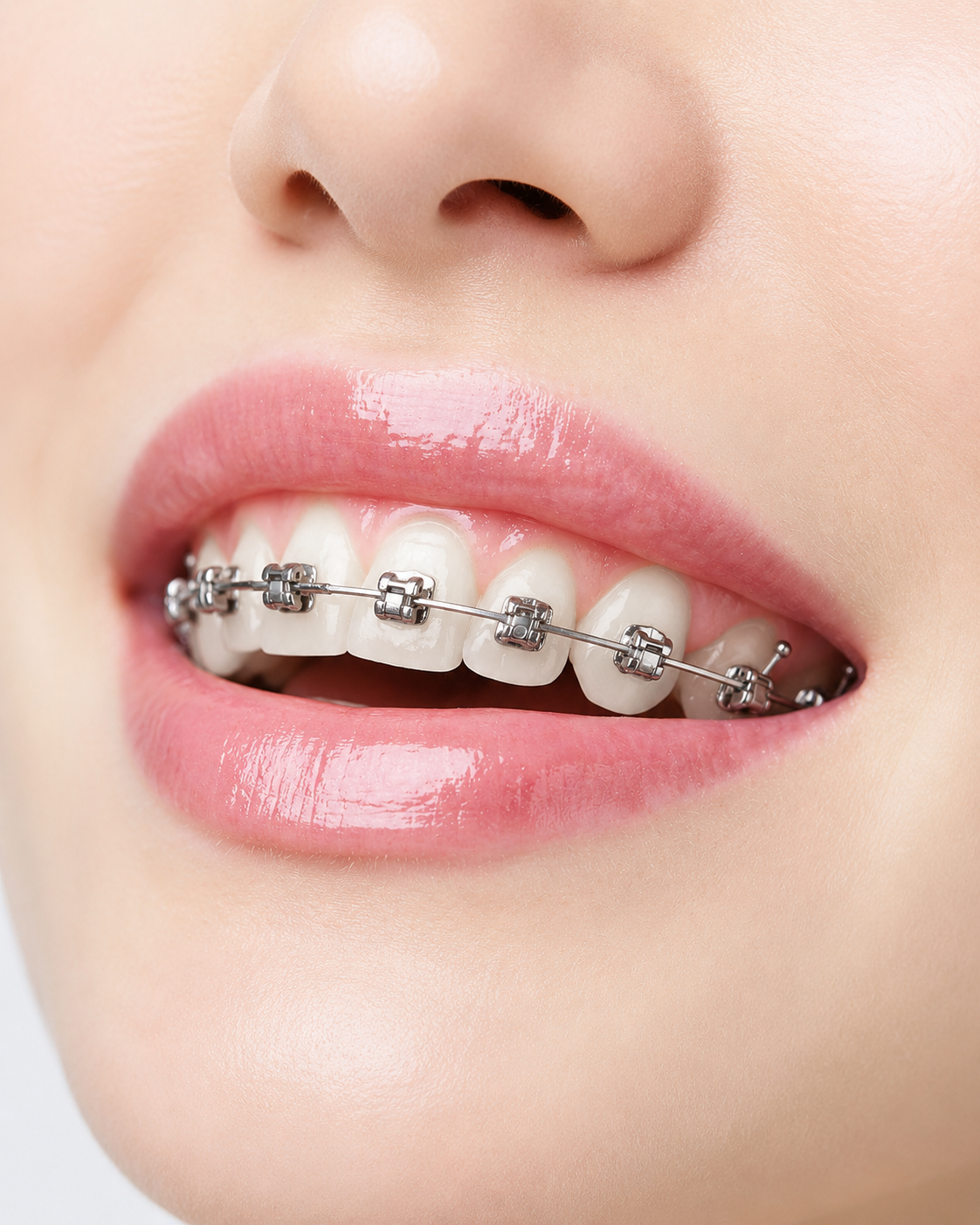
A bridge replaces the missing tooth from above: the teeth on either side of the gap are prepared for crowns, and a connected three-unit piece — crown, suspended tooth (the pontic), crown — spans the space. No surgery, no bone requirement, no integration months: impressions at one visit, the fitted bridge days later. The arithmetic in zirconia: two anchor crowns at ₩450,000–500,000 each plus the pontic at ₩400,000 — roughly ₩1,300,000–1,400,000 for the standard three-unit span, itemised in writing like everything else here.
The engineering trade at the heart of the whole comparison: the implant spends time and surgery to leave your other teeth alone; the bridge spends your neighbour teeth to skip the surgery and the wait. Every honest recommendation is a judgement about which currency your particular mouth can better afford — and that judgement runs on findings, not preference, which is why the decision tree in the next section starts at the teeth beside the gap rather than at either price.
One framing this clinic holds against its own interest, stated early: bridges are not obsolete. Implant-era marketing often paints the bridge as yesterday’s answer; in the right mouth it’s a fast, proven, surgery-free solution with decades of track record, and this guide will name those mouths plainly. The wrong move isn’t choosing a bridge — it’s choosing either answer before your anatomy has voted.
The decision tree — how the call actually gets made
Question one, and usually the decisive one: what are the neighbour teeth carrying? Virgin, healthy teeth beside the gap argue hard for the implant — a bridge would grind two sound teeth into crown-anchors, an irreversible spend of healthy enamel that dentistry treats as a last-resort currency. Neighbours already crowned, heavily filled or root-canal-treated flip the logic: the preparation cost is already sunk, the teeth may even benefit from new full-coverage crowns, and the bridge converts existing damage into structural duty. This single question settles more implant-versus-bridge cases than every other factor combined.
Question two: what does the bone say? An implant needs adequate bone volume, and the ₩60,000 CT answers definitively — including whether a graft (₩300,000–500,000) or sinus lift (₩500,000–700,000) would be needed first. Where bone is thin and the patient declines augmentation, the bridge’s no-bone-required design becomes a genuine advantage rather than a consolation. Long-standing gaps matter here: bone resorbs where nothing loads it, so the years-old gap trends toward needing augmentation — one honest reason the implant conversation rewards earliness.
Question three: how many teeth, and where? A single missing tooth is the classic contest this guide referees. Multiple adjacent gaps shift the maths — long-span bridges ask more of their anchors as the span grows, while implants scale by adding fixtures; the full-arch page covers the far end of that spectrum. And a gap at the very back with no tooth behind it removes the bridge from the menu entirely — a bridge needs an anchor at both ends, and cantilever designs carry their own honest caveats.
Question four, the human layer: timeline, surgery tolerance, budget shape. The implant asks for months and a surgical visit; the bridge asks for neither. Medical factors that complicate surgery, a genuine need for a finished tooth inside weeks, or a firm preference against surgery are all legitimate votes the consultation weighs openly — the tree is anatomy-first, not anatomy-only. What the tree never runs on: which answer bills more. The next section does that arithmetic in daylight instead.
The cost comparison — sticker, lifetime, and the honest asterisks
The sticker round first, in published figures: a DIO implant journey at ₩800,000 crown-included undercuts the three-unit zirconia bridge’s ₩1,300,000–1,400,000 — a result that surprises patients raised on “implants are the expensive option.” The asterisks, stated rather than discovered: the implant side adds the ₩30,000 CT always and augmentation only where your scan genuinely shows the need; the bridge side’s figure already spans its seam items, and both paths’ quotes arrive written before anything proceeds, per the house rule this whole Cost series documents.
The lifetime round is where the comparison gets genuinely interesting. A bridge’s fate is chained to three teeth: if either anchor develops decay at its margin or fails structurally, the whole span is typically remade — and the suspended pontic makes cleaning under it a lifelong discipline (floss threaders and water flossers become household words). An implant’s fate is its own: it can’t decay, though it absolutely can suffer gum problems without maintenance, and its crown is individually replaceable if needed. Across decades, the freestanding design generally accumulates fewer forced remakes — the engineering reason implants win most long-horizon comparisons even at equal sticker.
The comparison’s honest wildcard: the timeline cost. For a visitor, the bridge finishes inside one trip (impression early, fitting before the flight — the lab-tier pattern), while the implant runs the two-trip rhythm our budget guide prices at real money: a second round of flights and hotel belongs in any honest implant-versus-bridge spreadsheet for travelling patients, and sometimes it’s the line that decides.
And the arithmetic this guide refuses to hide behind either answer: the neighbour teeth are a cost too. Grinding two healthy teeth has no line item but is the most expensive event in the bridge column when it applies — healthy enamel doesn’t regrow, and crowned teeth carry lifelong margins to maintain. Where the neighbours were already crowned, that cost drops to zero and the bridge’s column brightens accordingly. Which is question one of the tree, arriving now in won.
Want the tree run on your actual gap? A photo and any old X-ray gets the honest pre-read free — which questions your case turns on, before any chair or commitment. Message us on WhatsApp →
The head-to-head, in one honest table
Every factor the decision tree weighs, compared side by side:
| Factor | Implant | Bridge |
|---|---|---|
| Neighbour teeth | Untouched — the design’s whole point | Prepared for crowns — the design’s whole cost; sunk already if they’re crowned |
| Surgery & bone | Surgical placement; adequate bone (CT decides; graft where genuinely needed) | None — no bone requirement, no surgical visit |
| Timeline | Months — integration runs on biology; two-trip rhythm for visitors | Days — impression to fitting inside one trip |
| Published cost (single gap) | From ₩800,000 crown-included (+ ₩30,000 CT; augmentation only per scan) | ~ ₩1,300,000–1,400,000 three-unit zirconia, itemised |
| Decades view | Freestanding — can’t decay; crown individually replaceable; gum care still mandatory | Fate chained to both anchors; margin decay remakes the span; under-pontic cleaning for life |
| Simply correct when | Healthy neighbours · rear gap with no back anchor · decades game | Crowned neighbours · inadequate bone · surgery unwanted · weeks-not-months timeline |
Both paths quoted in writing after the ₩40,000 examination layer; figures current at time of writing per the living pricing page.
The clear cases — where each answer is simply correct
The implant is simply correct when: the neighbour teeth are healthy and untouched (the headline case); the gap sits at the back with no rear anchor; the patient is playing a decades game and wants the fewest future dependencies; or multiple scattered gaps would otherwise demand multiple bridges. In these mouths the implant isn’t the premium choice — it’s the conservative one, spending surgery and months to protect teeth that a bridge would spend permanently.
The bridge is simply correct when: both neighbours already carry crowns or major restorations (the sunk-cost case, and it’s common); bone is inadequate and augmentation is declined or unwise; surgery is medically complicated or firmly unwanted; or the timeline genuinely cannot hold months — the wedding, the visa, the one-trip visitor for whom the second-trip overhead breaks the maths. In these mouths the bridge isn’t settling — it’s the correct tool, delivered in days, with decades of track record behind the design.
The genuinely contested middle — one neighbour restored, one virgin; adequate-but-not-generous bone; flexible timeline — is where the consultation earns its keep: your CT and your neighbours on screen, both paths priced in writing, the trade-offs argued in both directions, and the decision explicitly allowed to leave the building. Plenty of patients take both written quotes home and answer after a week; the gap waited years, it can wait a fortnight of thinking.
And the option this comparison quietly assumes away, restored for honesty: doing nothing is also a choice, with its own price. The implant cost guide’s closing comparison applies in full — neighbours drift into the gap, the opposing tooth over-erupts, bone resorbs, and each waiting year trends the eventual case toward augmentation and complexity. Whichever answer your mouth votes for, it votes louder now than it will later.
A note for the second-opinion carriers this comparison quietly serves: a written quote from home naming one path is exactly the artefact to bring — the ₩40,000 examination reads your case independently, the tree runs in the open, and agreement or disagreement arrives with its reasons on screen. Cross-checking a big recommendation is what published comparisons like this one exist for.
How the choice runs at this clinic in Busan Seomyeon — and your next step
The process, concretely: the ₩30,000 examination-and-CT layer puts your neighbours and your bone on screen; the consultation runs the tree above in the open — question by question, your anatomy answering each — and both paths leave the room as written, itemised quotes: the implant tiered by fixture per the implant guide, the bridge itemised anchor-pontic-anchor. No path is pre-sold; the honest cases section above is genuinely how the recommendations fall, including the bridges.
What both paths share here, so the choice is about engineering rather than service tiers: the same two directors, the same lab standard for every crown and pontic, the same written-price rule, the same English documentation travelling home with you, and the same thread for every is-this-normal question afterwards. The comparison ends at the design; the care around either design is identical.
For visitors, the staging honesty in one paragraph: a bridge fits one trip comfortably — impression early, sightseeing through the lab interval, fitting before the flight. An implant runs the two-trip rhythm — placement trip, integration months at home, crown trip — and the thread will map both calendars against your actual dates before you commit to either, including the honest “the bridge fits your window; the implant doesn’t” where your itinerary casts that vote.
The next step costs one message: a photo of the gap, an old X-ray if one exists, your dates if you’re travelling — and back comes the honest pre-read on which questions of the tree your case will likely turn on, before any booking. The gap has two good answers; the point of this guide is that yours should be chosen by your teeth, in daylight, in writing.
- The neighbours decide most cases: healthy teeth beside the gap argue implant; already-crowned neighbours make the bridge genuinely strong.
- Sticker surprise: the ₩800,000 crown-included implant undercuts the ₩1.15–1.35M three-unit bridge.
- Timeline is real money for travellers: bridge = one trip; implant = two — budget the second trip’s overhead honestly.
- Bridges are not obsolete: crowned neighbours, thin bone, or a hard deadline make the bridge simply correct.
- Waiting has a price too: bone resorbs and neighbours drift — whichever answer, it votes louder now.
The dentists behind every guide on this site


FAQ
Only when those teeth were healthy: preparing virgin teeth for anchor crowns spends sound enamel irreversibly, which is the core argument for the implant in that mouth. When the neighbours already carry crowns or large restorations, the cost is sunk — the bridge then converts existing damage into structural duty, and can even be the occasion for better new crowns on those teeth. The question isn't bridge-versus-implant in the abstract; it's what your specific neighbours are carrying.
On sticker, the implant, surprisingly: ₩800,000 crown-included (DIO tier) against roughly ₩1,300,000–1,400,000 for a three-unit zirconia bridge. The honest modifiers: the implant adds a ₩30,000 CT and augmentation only where your scan shows the need, and travelling patients should price the implant's second trip. Across decades, the implant's freestanding design generally accumulates fewer forced remakes — but a bridge on already-crowned neighbours competes far better than its reputation suggests.
Rarely too late, honestly later than ideal: bone resorbs where nothing loads it, so long-standing gaps more often need grafting (₩300,000–500,000) before a fixture — the ₩30,000 CT answers definitively. The bridge's no-bone-required design is a genuine alternative where augmentation is declined. And whichever way your case falls, the drift-and-resorption clock argues for deciding sooner rather than later still.
Comfortably — it's classic lab-tier work: neighbours prepared and impressions taken early in the trip, the lab interval spent sightseeing, the fitted bridge cemented before your flight. The implant path can't compress the same way: fixture placement and final crown sit months of integration apart, the two-trip rhythm our budget guide prices honestly. For one-trip-only travellers, that difference is sometimes the deciding vote — stated plainly at consultation.
The gap doesn't stay neutral: neighbouring teeth drift and tilt into the space, the opposing tooth over-erupts seeking contact, and the bone beneath quietly resorbs — each year trending the eventual fix toward more complexity and cost. Leaving it is a legitimate choice to make knowingly; the examination will tell you honestly how fast your particular gap is moving, and some genuinely move slowly. But it's a choice with a meter running, and the meter favours deciding early.
Single Implant in Busan
The freestanding path — the full ₩800,000 crown-included journey.
Crowns & Bridges in Busan
The bridge path — anchors, pontics and the lab-tier rhythm.
Bone Grafting in Busan
The add-on question long-standing gaps often carry.
Published Prices
Both columns of the comparison, on the living list.
What a dental implant actually costs in Busan, Korea
Related guide in this series.
Crown and inlay costs in Busan, itemized
Related guide in this series.
Dentures vs implants for missing teeth
Related guide in this series.
Two good answers. Let your teeth cast the vote.
A photo of the gap starts the honest pre-read; the ₩40,000 examination puts your neighbours and bone on screen; both paths leave in writing. Choose in daylight.
Medical information in this guide is provided for general education and does not replace an individual examination and diagnosis. Prices shown are current at the time of writing; insured-schedule items follow Korea's national fee schedule and are quoted in writing at your visit. This clinic does not provide 24-hour service. Individual results vary.