Save it or pull it? Root canal vs extraction.
The most consequential fork in general dentistry, argued honestly: when the root canal genuinely saves a tooth worth saving, when extraction is the kinder and cheaper truth, and why the comparison is never just two procedures — it’s two futures, one of which includes the ₩800,000-plus question of what fills the gap.
By Baro Dental Clinic, Seomyeon · August 2026 · 14 min read
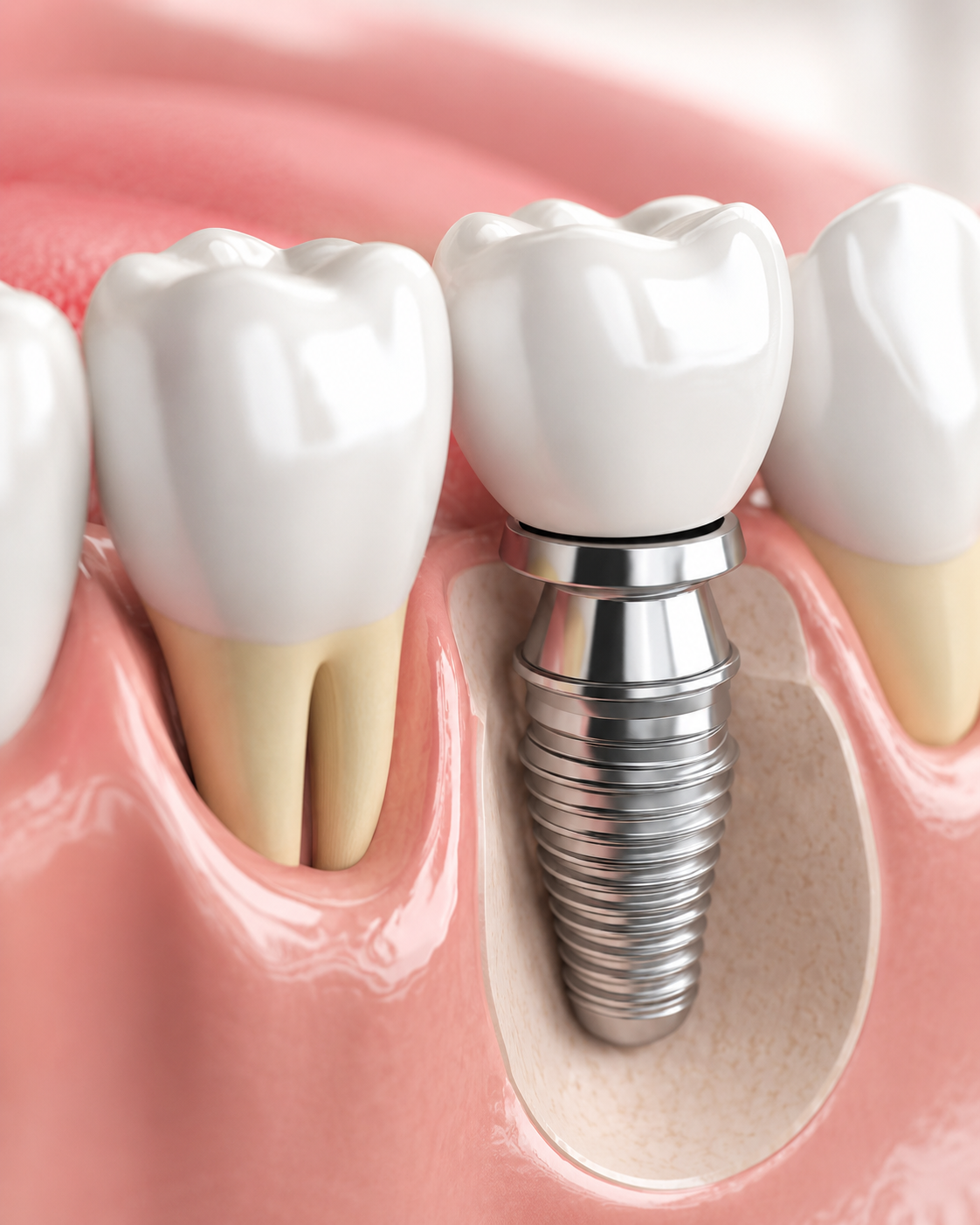
The honest default: dentistry fights for the tooth — a root canal that clears infection from a restorable tooth, crowned afterward, keeps your own root doing a job no replacement fully matches; extraction wins only when the tooth is genuinely beyond saving — fractured below the gumline, hopelessly split, or so hollowed that nothing trustworthy can be rebuilt on it. Both procedures are priced by Korea’s national insurance schedule and put in writing at your visit; the real money question sits downstream — the crown (₩450,000+) that finishes a saved tooth against the ₩800,000-plus implant conversation that follows a pulled one. This guide runs the whole fork honestly: the deciding findings, the full arithmetic of both futures, and the cases where each answer is simply right.
What patients at the fork actually ask
- One dentist said save it, another said pull it — how do I know who’s right?
- Is a root canal worth it if the tooth needs a crown anyway?
- Wouldn’t pulling it and getting an implant be more “permanent”?
- How much does each path really cost once everything is counted?
- Does a root canal hurt as much as everyone says?
The two paths, honestly described in Busan
The root canal path: when decay or trauma reaches the nerve chamber, the tooth’s pulp inflames or dies — the source of the notorious toothache — and the procedure clears the infected tissue from the root canals, disinfects them, and seals the system. The tooth stays; its root keeps holding its place in the bone; and because a root-treated tooth is more brittle, the journey typically finishes with the crown chapter — the “graduation” this site’s restoration guides name, with core build-up and post as the honest seam items where the remaining structure needs them.
The extraction path: the tooth comes out — a procedure far gentler in modern hands than its reputation — and the infection leaves with it, immediately and completely. Then the second question arrives, the one this comparison refuses to hide: what fills the space? The implant-or-bridge fork opens (₩800,000-plus for the implant journey, ₩1.3–1.4M for a three-unit bridge), or the gap stays — with the drifting, tipping and bone-resorption meter the implant guide prices honestly. Extraction is never the end of a treatment plan; it’s the start of a different one.
The pricing grammar for both, per the price-list guide: root canal work and extractions belong to Korea’s national insurance schedule — quoted in writing at your visit, with canal count (front teeth run one, molars three or four) and extraction complexity as the honest variables. The big published figures in this comparison all live downstream: the crown that finishes one path, the replacement that finishes the other.
And the framing sentence the whole fork stands on: this is not a choice between procedures; it’s a choice between futures — one where your own root keeps working for years, one where an engineered replacement takes over. Both futures can be excellent; they cost differently, age differently, and suit different teeth — which is why the decision belongs to findings, run in the order the next section shows.
How the call actually gets made in Busan — restorability first
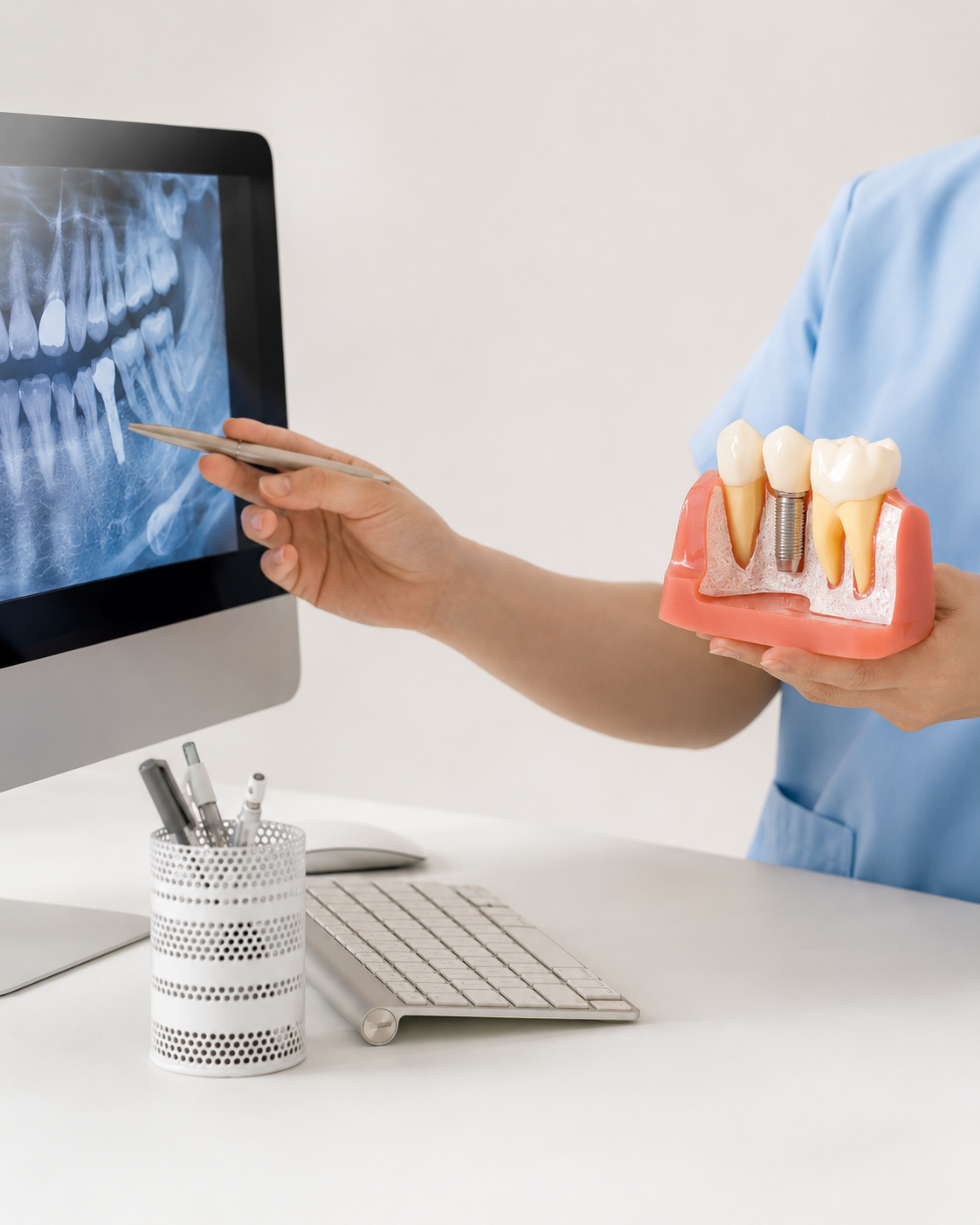
The deciding question is restorability: once infection is cleared, is there enough sound tooth above and below the gumline to rebuild something trustworthy on? A tooth with intact walls and a solid root answers yes loudly. A tooth fractured vertically through the root, split below the gumline, decayed deep under the bone level, or hollowed past the point where core and crown can grip — answers no, and no amount of skilled root canal work changes what remains to build on. This single finding, read on the ₩60,000 examination’s imaging, settles most cases before preference enters.
The supporting findings, in order: the periodontal verdict — a tooth whose bone support is already collapsing from gum disease may not be worth anchoring a root canal and crown to, an honest intersection of this comparison with the last one; the strategic position — a tooth carrying a bridge, or the last molar holding your bite’s back corner, earns a harder fight than a crowded wisdom-adjacent tooth nobody will miss; and the retreatment question — a previously root-treated tooth that reinfected can often be retreated, but the odds conversation gets run honestly, with the extraction-and-implant alternative priced alongside rather than hidden.
Where the fight is genuinely worth it — and this is most teeth at this fork: the root canal preserves things no implant fully replicates — your natural ligament’s pressure sensing, the bone stimulation of a living root’s attachment, the gum architecture around a natural neck — and it keeps every future option open: a saved tooth can still become an implant decades later if it eventually fails; a pulled tooth can never become a tooth again. Dentistry’s bias toward saving isn’t sentimentality; it’s option-value arithmetic.
Where extraction is simply right: vertical root fractures (the unfixable), teeth split or decayed below rebuildable levels, hopeless periodontal support, retreatments whose honest odds no longer justify the spend, and the occasional strategic call in a crowded or ortho-planned arch — wisdom teeth being the standing example of teeth extracted precisely because fighting for them serves nothing. In these mouths, extraction isn’t giving up; it’s refusing to bill you for a fight already lost — and the same-day honesty is that a clear-cut extraction often can happen the day it’s diagnosed, per the same-day guide.
The full arithmetic — both futures, all lines counted
The save-it column, complete: root canal (insured-schedule, written at the visit, canal count as the variable) + the post-and-core seam where structure needs it + the crown — ₩450,000 zirconia posterior as the anchor figure. For a molar, the realistic all-in commonly lands in the mid-hundreds of thousands of won — and at the end of it you own a working tooth on your own root, with the access-hole repair line (₩60,000) as the cheap decades-later maintenance the crown guide flags.
The pull-it column, complete and honestly longer: extraction (insured-schedule) + the replacement fork — the ₩800,000-plus implant journey(plus CT, plus augmentation where the scan votes, plus the two-trip rhythm for travellers) or the bridge’s ₩1.3–1.4M with its neighbour-teeth cost — or the “nothing for now” line whose drifting-and-resorption meter quietly runs. On raw won, saving the tooth is usually the cheaper future, often by a wide margin — a comparison the implant-era marketing of “just pull it and upgrade” rarely prints.
The honest counter-arithmetic, so this guide argues both directions: a root canal on a marginal tooth that fails in three years bought three years, then re-bills the entire extraction column anyway — which is exactly why the restorability read matters more than the save-it reflex, and why the odds conversation on borderline teeth happens with numbers, on screen, before anything proceeds. A well-chosen extraction beats a doomed heroic save; the sorting, not the sentiment, is the service.
And the timeline arithmetic for visitors, mapped plainly: root canal work runs multiple visits (the biology of disinfection between appointments) and pairs with the crown’s lab rhythm — comfortably plannable within a normal Busan stay when the thread knows early; the extraction path splits its calendar — the removal now, the implant’s two-trip integration rhythm after healing — making “which future fits my trips” a genuine variable the consultation maps against your actual dates, not an afterthought.
Carrying two different verdicts on the same tooth? Send both stories and any X-ray — the honest tiebreak read comes back free, before any chair. Message us on WhatsApp →
The fork, in one honest table
Both paths, both futures, all lines counted:
| Dimension | Root canal (save it) | Extraction (pull it) |
|---|---|---|
| What happens | Infected pulp cleared, canals disinfected and sealed — the tooth and root stay | Tooth removed, infection gone with it — and the gap question opens immediately |
| Procedure pricing | Insured national fee schedule — written at the visit; canal count is the variable | Insured national fee schedule — written at the visit; complexity is the variable |
| The downstream chapter | Crown to finish ( ₩450,000 +), core/post where structure needs | Implant journey ( ₩800,000 +), bridge (₩1.3–1.4M), or the gap’s running meter |
| Total-future arithmetic | Usually the cheaper future — often by a wide margin | The honestly longer column — replacement, logistics, and time included |
| What it preserves / costs | Your root, ligament sensing, bone stimulation, every future option | Immediate finality — and the one option that never returns: the tooth itself |
| Simply right when | Tooth restorable, support sound, position strategic — most teeth at this fork | Vertical fracture · unrebuildable structure · hopeless support · odds no longer honest |
Both procedures insured-schedule per Korea’s national fee system, quoted in writing at your visit; downstream figures published on the living pricing page. Save-first is the house bias — and it runs against revenue, which is why it’s believable.
The fear file, answered honestly
“Root canals are agony” — the reputation describes the toothache that precedes treatment, not the treatment: under modern local anaesthesia the procedure itself is long but effortless for most patients, and it’s the appointment that ends the pain everyone remembers. The soreness afterward is days of tenderness on biting, managed with ordinary analgesics — a footnote against the ache it replaced. Anxiety about the appointment is normal and worth saying out loud at booking; long procedures go better with breaks agreed in advance.
“Pulling it is more permanent” — inverted, honestly: nothing in dentistry is more permanent than a natural root that stays healthy, and the implant — excellent as modern fixtures are — is a replacement with its own maintenance life, gum-health dependencies and component logistics per the fixture comparison. The implant is the best answer to a missing tooth ever engineered; it is not an upgrade on a saveable one, and any recommendation flowing that direction deserves the “show me why this tooth can’t be saved” question, answered on your own imaging.
“The tooth is dead after a root canal, so why keep it” — the nerve is gone; the tooth is not: its root, ligament and bone attachment keep living and working, which is precisely the asset the procedure preserves. “Root canals fail anyway” — success rates for well-executed treatment on well-chosen teeth run high for decades; failures cluster where case selection was optimistic or the crown chapter was skipped — two errors this clinic’s sorting and sequencing exist to prevent, and the reason the crown conversation happens the same day as the root canal verdict, not after.
And the fear nobody names but everyone at this fork carries — deciding wrong: the honest antidote is that this decision is rarely urgent-today (swelling and spreading infection excepted — those are same-day calls, made plainly); a written finding, a second opinion carried on your own X-rays per the records guide, and a week of thinking cost nothing against a future measured in years. The tooth that genuinely must come out today announces itself; everything else can survive your due diligence.
How the fork runs at our Busan Seomyeon clinic — and your next step
Here is how the fork actually runs: the ₩40,000 examination images the tooth and reads restorability — walls, root integrity, bone support, on screen, pointed at; the verdict arrives with its reasons (“this saves, and here’s the structure it saves onto” or “this doesn’t, and here’s the fracture line that decides it”); and both futures leave in writing — the insured-schedule root canal figure with its canal count, the crown chapter’s published line, and where extraction is the honest call, the replacement fork’s complete arithmetic alongside, so the decision compares futures rather than procedures.
The house bias, declared: this clinic fights for saveable teeth — the downhill-by-default routing that runs the whole site applies here as save-first-when-honest, and the incentive disclosure cuts the same way it always does: the extraction-plus-implant column bills more than most save columns, so the save recommendation you’ll usually hear is the one running against revenue. When extraction is recommended here, that arithmetic is exactly why it’s believable.
What both paths share operationally: the same two directors (Dr. Lee Do-hoon’s implant-and-restorative focus covering both futures), the same written-figure rule before anything proceeds, the same evening-and-Saturday grid absorbing the multi-visit rhythms, and the same thread afterward for every is-this-normal question — healing checks included, at whatever hour your worrying happens.
One message starts it: the tooth’s story in two sentences — the ache’s history, any verdicts already received, the X-ray if another clinic took one — plus your dates if you’re travelling — and the honest pre-read returns: likely saveable, likely not, or genuinely needs the screen — before any chair, any figure, any fork taken. Your own tooth is worth a real answer; that’s the entire policy.
- Restorability decides, not reflex: enough sound structure to rebuild on = fight for it; fracture below the line = let it go.
- Saving is usually the cheaper future: root canal + crown typically undercuts extraction + implant — the arithmetic “pull and upgrade” marketing skips.
- Nothing is more permanent than your own healthy root — the implant is the best replacement ever built, not an upgrade on a saveable tooth.
- The procedure ends the famous pain; it doesn’t cause it — the reputation belongs to the toothache before treatment.
- The fork is rarely urgent-today: written findings, your own X-rays, a second opinion — due diligence costs nothing against a future in years.
The dentists behind every guide on this site


FAQ
Ask each the same question: "show me the finding that decides it." A save verdict should point at restorable structure — walls, root integrity, bone support — on your imaging; a pull verdict should point at the fracture line, the sub-gum decay, or the support loss that makes rebuilding dishonest. Verdicts with visible findings behind them can be compared; verdicts without them can't. Your X-rays are yours to carry per the records guide — and this thread reads tiebreaks for free.
Usually yes — run the full columns: root canal (insured-schedule) plus crown (₩450,000+) against extraction plus implant (₩800,000+ before CT and any augmentation) or bridge (₩1.3–1.4M). The save column is typically the smaller number and ends with your own root doing work no replacement fully matches — ligament sensing, bone stimulation, natural gum architecture. The crown isn't a penalty on the root canal; it's the finishing chapter that makes the save last.
For a genuinely unsaveable tooth, yes — the implant is the best answer to a missing tooth ever engineered. For a saveable one, the framing inverts: well-executed root canals on well-chosen teeth succeed at high rates for decades, and a natural root that stays healthy outlasts and outperforms any replacement. The honest test of a pull-and-implant recommendation on a tooth that might save: "show me why this one can't be saved" — answered on your imaging, not in general terms.
The procedure's reputation belongs to the toothache before it: under modern local anaesthesia, treatment is long but effortless for most patients — it's the appointment that ends the pain. Afterward, expect days of biting tenderness managed with ordinary analgesics. Two honest notes: say anxiety out loud at booking (long procedures go better with breaks agreed in advance), and genuine swelling or spreading infection is a same-day call, not a wait-and-see.
Often yes, with planning: root canal work runs multiple visits with disinfection time between, and the sequence tolerates gaps better than infections tolerate neglect — but the honest answer depends on your tooth's state and your dates, mapped in the thread before you book anything. What doesn't travel well: an open, mid-treatment tooth on an indefinite timeline. Tell the thread your full window up front and the plan gets built to land the crown chapter before your flight, or staged honestly across trips.
Root Canal in Busan
The save path's full clinical page — insured-schedule, honestly sequenced.
Crowns in Busan
The graduation chapter that finishes every saved tooth.
Single Implant in Busan
The ₩800,000+ journey — the pull path's downstream fork.
Wisdom Teeth in Busan
The standing exception — teeth extracted because fighting serves nothing.
Implant or bridge? How a dentist actually decides
Related guide in this series.
Crown and inlay costs in Busan, itemized
Related guide in this series.
What a dental implant actually costs in Busan, Korea
Related guide in this series.
Your own tooth is worth a real answer. Both futures, in writing, before any fork.
Two sentences about the tooth and any X-ray start the free pre-read; the ₩40,000 examination reads restorability on screen; the verdict arrives with its reasons and both columns priced. Then you decide.
Medical information in this guide is provided for general education and does not replace an individual examination and diagnosis. Prices shown are current at the time of writing; insured-schedule items follow Korea's national fee schedule and are quoted in writing at your visit. This clinic does not provide 24-hour service. Individual results vary.