Kids dentist in Busan — sealants, fluoride and the first visit.
Expat families in Busan ask the same three things: when the first visit should be, what the clinic will actually do to a small child, and what it costs — especially with Korean insurance covering some children's treatment and not others. This guide answers them for Baro Dental in Seomyeon: the timing, the sealant and fluoride programme, the insurance rules by age, and how we handle a child who would rather be anywhere else.
By Baro Dental Clinic, Seomyeon · October 2026 · 9 min read
Baro Dental sees children from the first tooth, and for expat families in Busan the programme is simple: a first visit around the first birthday, check-ups every six months, fluoride varnish at each, sealants on the permanent molars as they arrive (covered by Korean insurance for under-18s), and fillings where needed (resin, covered for under-12s on permanent teeth). The clinic is four minutes from Seomyeon Station on both metro lines, which puts it within half an hour of Haeundae, Centum and the international-school neighbourhoods. Here is the timing, what happens in the chair, what insurance covers by age, how fees are quoted, and the honest way we handle a frightened child.
- When the first visit should be — and what happens in it
- Sealants: which teeth, which age, what insurance covers
- Fluoride varnish: twice a year
- When a child has decay: fillings and crowns
- Korean insurance for children, by age
- Nervous children: how we run the visit
- The age-seven orthodontic check
- Practical notes for expat families in Busan
What parents ask before bringing a child
- My daughter is eighteen months old and has eight teeth — is it really time for a dentist?
- My son's school in Haeundae mentioned sealants. Are they covered, and are they worth it?
- Our last visit at home ended in tears before we reached the chair. Will it be different here?
- Does Korean insurance cover children's fillings, or do I pay the listed price?
- My seven-year-old's front teeth are coming in crooked — is it too early to think about braces?
When the first visit should be — and what happens in it
The guideline we follow is the one paediatric dental associations give worldwide: first visit by the first birthday, or within six months of the first tooth. It sounds early because the point is not treatment; it is to look, to count, to check how the teeth are coming in, to talk about bottles, brushing and fluoride, and to make the dentist a familiar place before anything ever hurts. A child whose first visit is at age five with a toothache learns that the dentist means pain; a child whose first visit was a game at eighteen months does not.
The first visit itself is short. The child sits on a parent's lap or in the chair with the parent beside them; the dentist counts the teeth with a mirror, looks at the gums and the bite, applies fluoride varnish if the child allows it, and talks to the parent about diet, brushing technique and what to expect next. No X-rays unless there is a specific reason. It falls under the published ₩40,000 first visit, and from then on, check-ups every six months keep the pattern. Our children's orthodontics page covers the growth side; this guide is about everyday care.
Sealants: which teeth, which age, what insurance covers
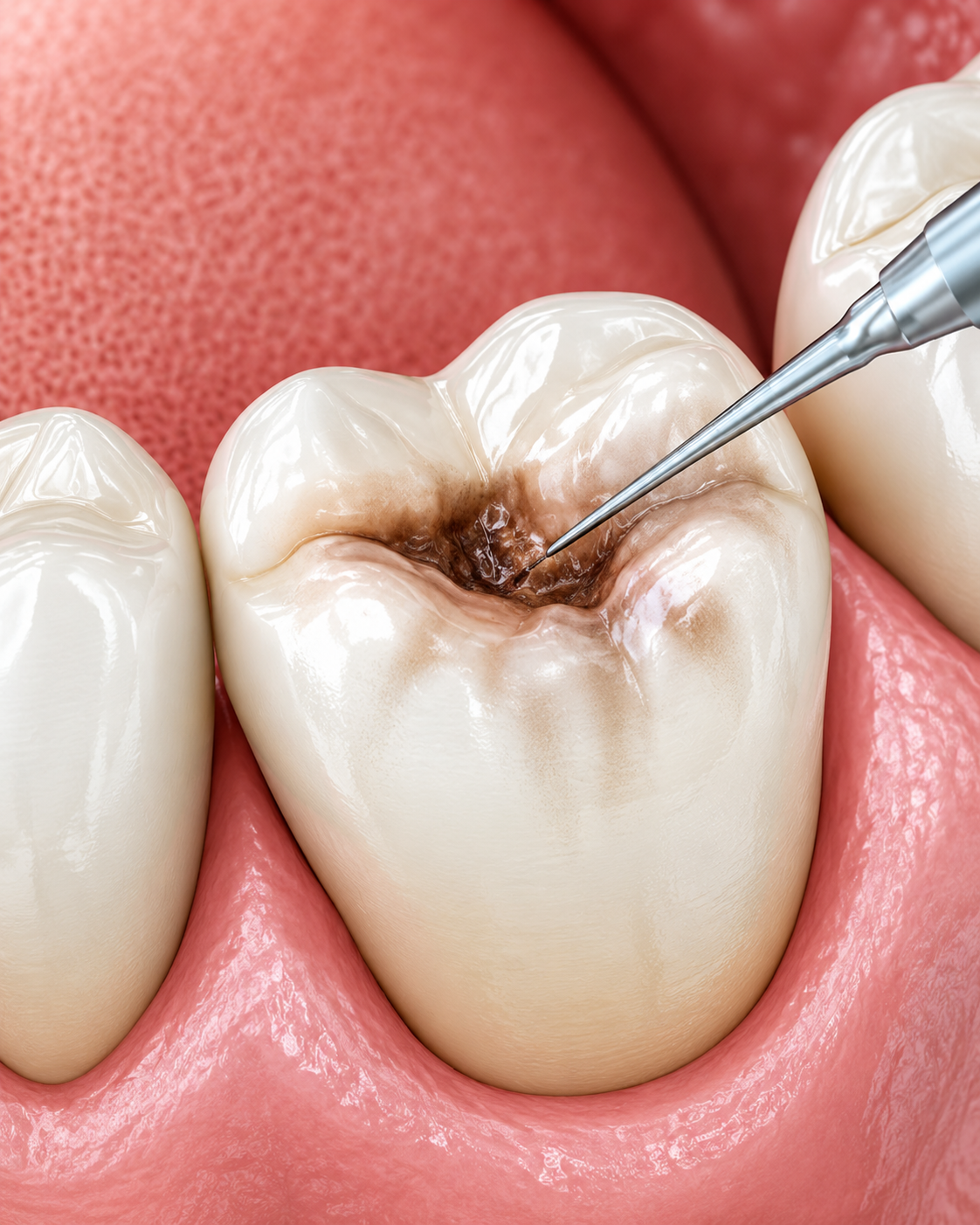
Sealants are the single most effective preventive treatment in children's dentistry, and the timing is set by biology. The first permanent molars erupt at around age six, behind the baby teeth, and their chewing surfaces are deeply grooved — grooves a toothbrush cannot reach and where most childhood decay starts. A sealant is a thin resin flowed into those grooves and set with light: painless, no drilling, no anaesthetic, five minutes per tooth. The second permanent molars arrive at around twelve and are sealed the same way.
Insurance: under Korean national health insurance, sealants on permanent molars are covered for children under 18 at a 30% patient share. For a child who is not enrolled, ask us for the fee on WhatsApp before the visit. Sealants are checked at every six-monthly visit and touched up where worn; most last years. The fillings page explains what sealants prevent.
| Children's treatment | Fee | Korean insurance (enrolled child) | When |
|---|---|---|---|
| First visit / check-up | ₩40,000 | Exam and X-rays covered, 30% share | By first birthday, then every 6 months |
| Fluoride varnish | Ask us | Non-covered | Every 6 months from the first teeth |
| Sealant, per permanent molar | Ask us | Covered under 18, 30% share | Around age 6 and age 12 |
| Children's resin filling | Ask us | Covered under 12 on permanent teeth, 30% share | When decay is found |
| Stainless steel crown (baby molar) | Ask us | Non-covered | Large decay on a baby molar |
| Space maintainer (band & loop) | ₩200,000 | Non-covered | After early loss of a baby molar |
Fees shown are from our published list, current at time of writing; for items marked “Ask us”, message us and we quote for your child before the visit. Insured items follow Korea's national fee schedule and require the child to be enrolled as a dependant; enrolment is checked from the parent's ARC.
Fluoride varnish: twice a year
Fluoride varnish is painted onto the teeth at each six-monthly visit — a minute's work that hardens enamel and reverses the earliest stage of decay. It is non-covered by Korean insurance, and we tell you the fee before the visit; for most children two applications a year, from the first teeth through the teens, is the right frequency, with more for a child who has had decay. At home, a smear of fluoride toothpaste under three and a pea-sized amount from three, twice a day, with a parent doing the brushing until about age seven — Korean supermarket and pharmacy toothpastes are labelled with fluoride content in ppm, and we will tell you which to buy.
When a child has decay: fillings and crowns
When decay is found on a baby tooth, the honest question is how long that tooth has left. A baby molar that will be in place for years gets a children's resin filling, or, where the decay is large, a stainless steel crown — a preformed cap fitted in one visit that protects the tooth until it falls out naturally. A baby tooth close to exfoliating may simply be watched. A baby molar lost early gets a space maintainer (₩200,000) so the permanent tooth behind it has room. Fees for children's fillings and crowns are quoted after the examination, before any treatment. On permanent teeth, resin fillings are used as in adults. Local anaesthetic is given gently, with the gum numbed first; children who were told the truth beforehand (“this will feel like a little pinch, then your tooth goes to sleep”) do remarkably well.
Bringing a child for a first visit, or a worried one? Tell us the child's age and anything about past visits on WhatsApp. We will book a quiet slot, explain what will happen in words you can pass on, and the visit stays within what the child allows. Message us on WhatsApp →
Korean insurance for children, by age
Children of enrolled NHI members are registered as dependants and receive insured dental care at the same 30% share. The two children-specific benefits: sealants on permanent molars for under-18s, and resin fillings on permanent teeth for under-12s — notable because adult resin fillings are not covered. Examinations, X-rays, extractions of baby teeth, and treatment of infection are covered at any age. Fluoride varnish, stainless steel crowns and space maintainers are non-covered; we quote the fee before treatment. Enrolment is checked from the parent's ARC at reception; the Korean health insurance guide explains how dependants are registered.
Nervous children: how we run the visit
A frightened child is not a problem to be managed; it is information about pace. We use the sequence every paediatric dentist uses — tell, show, do: explain in a child's words, show the instrument on a finger or a parent, then do the smallest version of the step. Parents stay in the room. The first visit of an anxious child may be nothing more than a ride in the chair and a count of the teeth, and that counts as success. We book these children into the quietest slots — the first appointment at 10:30 or the first after lunch at 15:30 — and never run them against the clock.
Two honest limits. We do not use sedation for children, and a child who needs extensive treatment under sedation or general anaesthesia is referred to a hospital paediatric dentistry department, with our notes. And a child who cannot cooperate today is not failed; the visit ends on a good note, and we try again in a few weeks. The Korean dental clinic etiquette guide has a section on bringing children that parents find useful.
The age-seven orthodontic check
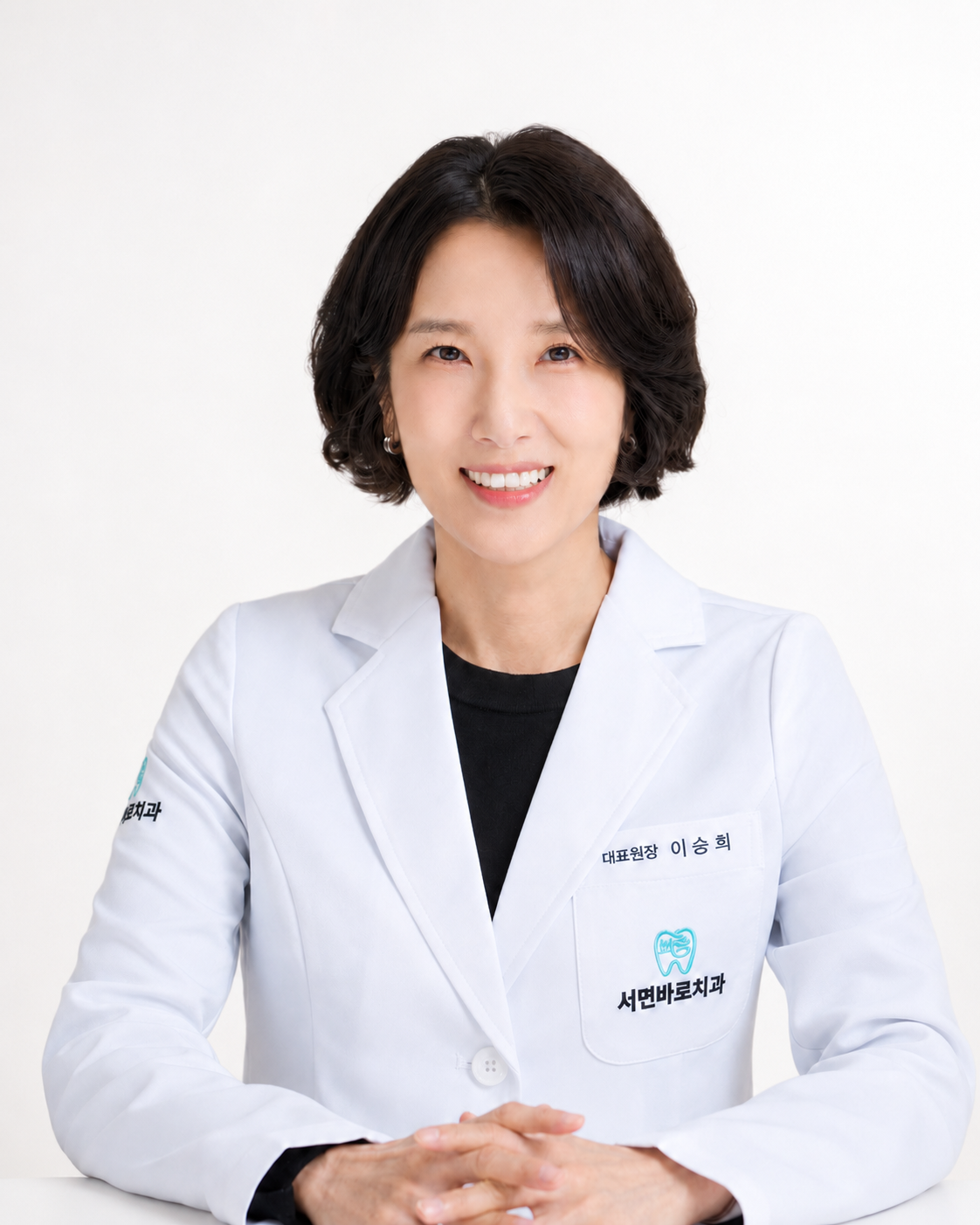
Orthodontic associations recommend a first orthodontic assessment at about age seven, when the front permanent teeth and first molars are in and the bite can be read. Most children need nothing at that age; a minority benefit from early intervention — a crossbite corrected, a narrow upper jaw expanded, a habit stopped — that makes later treatment shorter or unnecessary. Dr. Lee Seung-hee's orthodontic background (M.S. Orthodontics, Kyungpook National University) is behind this assessment; it is part of the routine check-up, not a separate appointment, and the children's orthodontics page lists the early appliances and their published prices.
Practical notes for expat families in Busan
Families from the Haeundae and Gijang international-school communities reach Seomyeon in 25–30 minutes on Line 2 (the Haeundae guide has the walk from Exit 2), and Saturday mornings 10:30–15:00 are the family slot; we book siblings back to back. Records go home with you in English — a summary for school medical forms, or for your dentist at home — at no charge. Fees are quoted before treatment and are identical for every passport, and the child's first visit is just as much for the parent: the ten minutes talking about bottles, snacks, juice and brushing are, honestly, where most of the value is.
- First visit by the first birthday: a look and a count, ₩40,000, and then every six months.
- Sealants at six and twelve: covered under 18 for enrolled children — the best prevention there is.
- Fluoride twice a year: non-covered, from the first teeth.
- Insurance by age: resin on permanent teeth covered under 12; sealants under 18; exams and extractions at any age.
- Nervous children set the pace: quiet slots, tell-show-do, parents in the room, and a good ending even if little gets done.
The dentists behind every guide on this site

FAQ
By the first birthday, or within six months of the first tooth. The first visit is a look, a count and advice for parents — no treatment — and sets up the six-monthly pattern that prevents most childhood decay.
Yes. For children enrolled as dependants of an NHI member, sealants on permanent molars are covered under 18 at a 30% share. Without enrolment, ask us for the fee before the visit.
For enrolled children under 12, a resin filling on a permanent tooth is covered at a 30% share. For fillings on baby teeth, or a stainless steel crown on a badly decayed baby molar, we quote the fee after the examination and before treatment.
With pace, not pressure: quiet slots at 10:30 or 15:30, parents in the room, tell-show-do, and a first visit that may be just a ride in the chair. We do not sedate children; a child needing extensive work under sedation is referred to a hospital paediatric department with our notes.
A first assessment at about age seven, which we do as part of the routine check-up. Most children need nothing then; some benefit from early correction of a crossbite or a narrow jaw that shortens later treatment. The children's orthodontics page lists the early appliances and prices.
Children's Orthodontics
Early assessment at seven, and the appliances with published prices.
Fillings & Resin
What sealants and fluoride are preventing.
Published Prices
Every children's figure in KRW, the same page for every passport.
Korean health insurance and dental care for foreigners
Related guide in this series.
From Haeundae to Seomyeon on Line 2
Related guide in this series.
Korean dental clinic etiquette
Related guide in this series.
Read enough? Start the thread.
Tell us your child's age, where you live in Busan and anything about past visits — the reply is a quiet slot, what will happen in words you can pass on, and the figures in writing.
Medical information in this guide is provided for general education and does not replace an individual examination and diagnosis. Prices shown are current at the time of writing; insured-schedule items follow Korea's national fee schedule and are quoted in writing at your visit. This clinic does not provide 24-hour service. Individual results vary.