
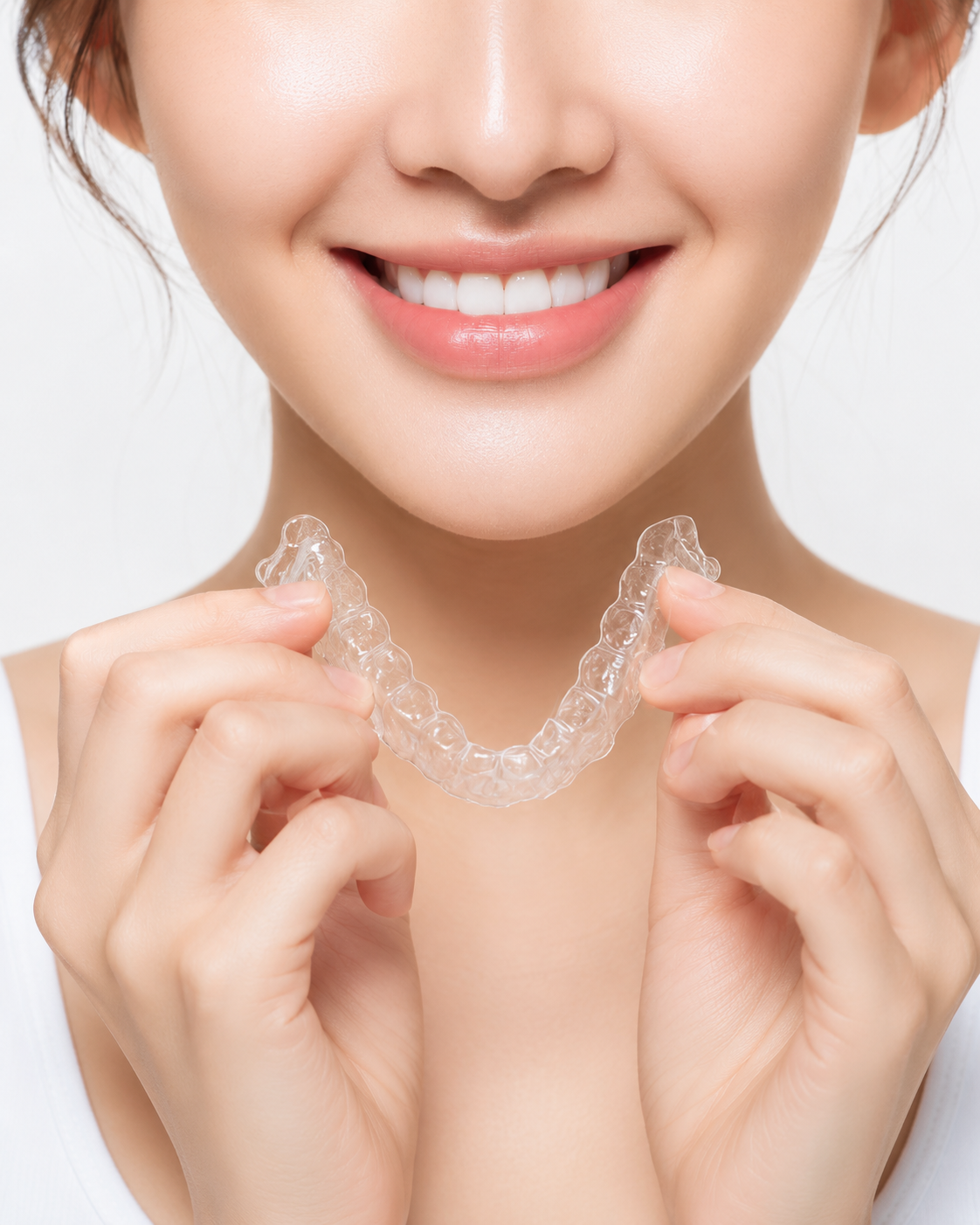
Night guards in Busan Seomyeon — the cheapest thing your grinding will ever break.
Sleep grinding works with forces your waking jaw never uses — and it spends them on enamel that never grows back, crowns that cost ₩450,000, and inlays that cost ₩300,000. A custom-fitted night guard at ₩300,000 puts a replaceable layer between those forces and everything you’d rather keep.
Ask about your nights.
Tap what fits — we’ll open WhatsApp with your message ready to send.Nothing sends until you press send in WhatsApp. A photo and any X-rays help us give an honest tier read — Straumann-warranted, or KS-sufficient.
Do I need a night guard in Busan — and what does a custom one cost?
₩300,000, published, custom-fitted over two visits — an impression captures your teeth exactly, the lab fabricates the guard, and the fit visit tunes it until it seats and bites correctly. You’re a candidate if any of these sound familiar: mornings that start with a tired or aching jaw, headaches at the temples on waking, a partner who reports grinding sounds, teeth that look flattened or chipped at the edges, or new cold sensitivity without a cavity to blame.
The honest economics run one way: sleep grinding generates forces beyond your voluntary maximum bite, with no conscious brake, for hours — and it spends them on things that don’t regenerate or don’t come cheap: enamel (irreplaceable), crowns (₩450,000+), inlays (₩300,000), and implant crowns (₩450,000 to remake). The guard is a deliberately sacrificial layer: it takes the wear so they don’t, and when it eventually wears out, replacing it costs ₩300,000 instead of rebuilding a mouth.
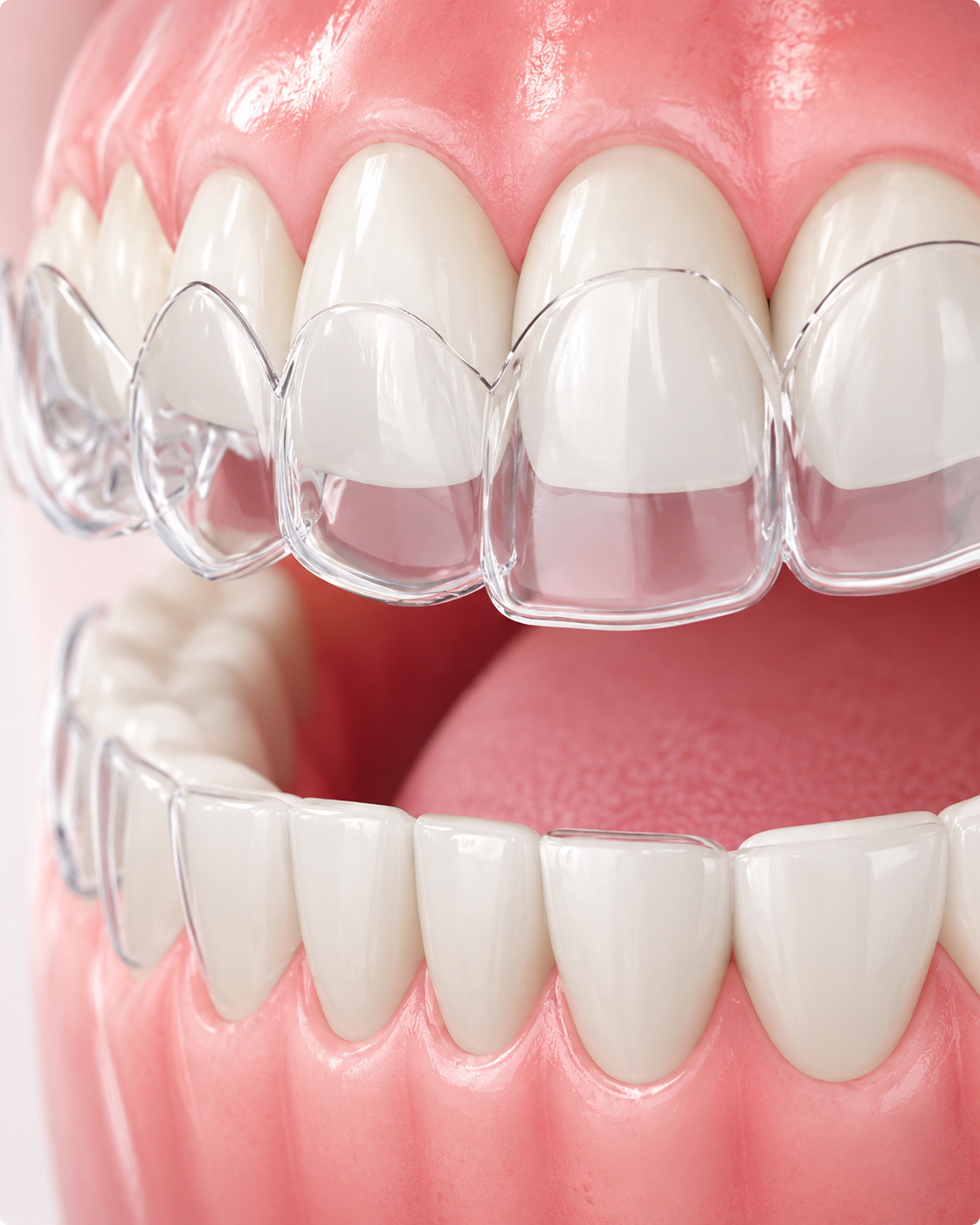
A custom guard is engineering — the pharmacy kind is a mouthful of hope.
A night guard is a rigid or semi-rigid splint, worn over one arch during sleep, that does two jobs at once: it puts a sacrificial surface between your upper and lower teeth so the grinding wears plastic instead of enamel, and it redistributes the load — spreading forces evenly across the arch instead of letting them concentrate on whichever unlucky teeth your grinding pattern favours.
The custom part isn’t vanity pricing. A lab-made guard is fabricated on an exact model of your teeth: it seats precisely (so it stays in place all night and doesn’t itself stress the teeth it grips), its thickness is controlled where your bite needs it, and its biting surface is adjusted at the fit visit so your jaw closes evenly — the detail that separates a guard you wear from a guard that lives in a drawer. Boil-and-bite pharmacy guards, honestly assessed, are bulky, soft (some grinders chew through them like gum — soft material can even invite more clenching), and fit approximately at best. As a trial of the habit, fine; as protection for a mouth with ₩450,000 crowns in it, the wrong tool.
One scope note, stated plainly: this page is about protecting teeth and restorations from grinding and clenching. Jaw-joint problems — clicking, locking, joint pain — are a different, more complex topic that deserves proper assessment rather than an appliance sold as a cure-all; our TMJ page covers how we approach that honestly.
Six sleepers who need this page — and one who needs a different one.
The morning-jaw reporter
The classic self-referralWaking with a tired, tight or aching jaw — sometimes with temple headaches — is the body’s own grinding report, filed daily. The night’s work happened without your knowledge; the morning invoice arrives anyway. A guard intercepts both.
The partner-reported grinder
The overheard diagnosisGrinding loud enough to be heard across a bed is force worth respecting — and the person who hears it is usually right before any dentist confirms it. The confirmation visit checks the wear pattern; the guard usually follows.
The flattened-edges finding
The check-up discoveryMany grinders learn it from a mirror-and-probe moment at a routine check-up: canine tips worn flat, front edges chipped micro-scalloped, molar surfaces polished shiny. The wear is the biography; the guard stops the next chapter.
The restoration owner
The insurance caseNew crowns, inlays, or an implant in a grinding mouth is expensive cargo on a rough road — every restoration page on this site points here for a reason. The guard is the premium; the ₩450,000+ work it shields is the payout avoided.
The unexplained-sensitivity case
Grinding’s quiet signatureCold-sensitive teeth with no cavity to blame, hairline craze lines, aching that moves around — chronic load stresses teeth in ways X-rays don’t dramatise. The exam rules out the other suspects first; when grinding is the author, the guard is the edit.
The jaw-joint sufferer
A different page’s patientClicking, locking, or pain in the joint itself isn’t automatically a night-guard case — joint problems need proper assessment before any appliance, and selling a guard as a TMJ cure-all is exactly the over-promise we avoid. Start at our TMJ page; honest scoping first.
How a custom guard actually goes.
Confirm the culprit
Wear patterns, jaw muscles, sensitivity map, restoration inventory — the exam confirms grinding is the author and rules out the impersonators. Findings on screen, ₩300,000 in writing.
The impression
Your arch is captured precisely — the model the lab builds on, and the reason the finished guard seats like it grew there instead of like it was boiled there.
Lab fabrication
The guard is made to controlled thickness on your model — rigid enough to survive a grinder’s nights, shaped to stay put without squeezing the teeth it protects.
The fit & bite tune
Seating checked, retention adjusted, and — the step that matters most — the biting surface tuned so your jaw closes evenly across it. An even guard is a worn guard; an uneven one is a drawer ornament.
Wear, wash, check
Nightly wear, morning rinse and brush (guard soap or mild soap — not toothpaste, which scratches), dry storage — and a look at each routine check-up, because the guard’s wear pattern is your grinding’s ongoing report card.
What grinding breaks — priced against the ₩300,000 that protects it.
| What the night shift wears down | What that costs you | The honest note |
|---|---|---|
| Enamel — edges, tips, chewing surfaces | Irreplaceable — enamel does not regrow, at any price | The only row money can’t fix — which makes it the most expensive row on the table |
| A cracked tooth needing rescue | Crown — ₩450,000–500,000 | Grinding is the crack’s favourite author — and crowns in grinding mouths need guards too |
| A ceramic restoration chipped or fractured | Inlay/onlay remake — ₩300,000 | Extreme point loads are ceramic’s one weakness — the guard is its bodyguard |
| An implant’s crown worn or loosened | Implant prosthesis — ₩450,000 | Implants feel no pain to warn you — overload works in total silence there |
| A tooth ground past saving | Extraction and implant — ₩800,000–1,750,000 | The end of the road this table exists to close early |
| The night guard itself | ₩300,000 — and it’s supposed to wear out | The only row designed to be sacrificed — its scars are the receipt for everything above surviving |
Read the last row twice: a worn guard is a working guard — every scratch on the plastic is a scratch that didn’t land on enamel or ceramic. The guard is the one item in your mouth whose job description is to be destroyed slowly, on your behalf, at a published price.
The physics of the night shift — why sleep grinding out-damages anything you do awake.
“I’d know if I were grinding hard enough to break things” is the intuition — and it’s wrong for four mechanical reasons:
The brake is off
Awake, your bite is governed by protective reflexes — feedback that stops you before force becomes damage. Asleep, that governor largely stands down: bruxism forces can exceed your voluntary maximum bite, applied by the strongest muscles-for-size in the body, with nobody at the controls. You wouldn’t — couldn’t — bite that hard on purpose.
Grinding is sliding, not just squeezing
Chewing loads teeth vertically, the direction they’re engineered for. Grinding drags them sideways under load — shear forces enamel tolerates poorly — for cumulative stretches each night. It’s the difference between pressing sandpaper onto wood and rubbing it: same pressure, entirely different rate of loss.
The losses compound and never refund
Enamel is a non-renewable resource — every night’s microns are gone permanently, and thinner enamel wears faster than thick, so the loss rate accelerates as the loss accumulates. Cracks obey the same compounding: tonight’s micro-crack is tomorrow’s propagation site. Nothing about untreated bruxism trends toward fine.
The guard converts damage into depreciation
A guard doesn’t stop the grinding — honest scoping: no appliance switches off the habit — it changes what the grinding costs : shear lands on replaceable plastic, loads spread evenly instead of concentrating, and the whole night’s violence gets absorbed by the one item in your mouth priced and designed to absorb it. Damage becomes depreciation; depreciation has a published price.
How much does a custom night guard cost in Busan?
₩300,000 at this clinic — published, covering the impression, lab fabrication and the fit-and-tune visit. For scale: it’s the same price as one inlay, three-quarters of one crown, and a fraction of any implant conversation — all of which are things grinding routinely bills for. Adjustments to keep the fit right are part of the follow-up care, and the written figure precedes the impression, as everywhere on this site.
Why not just buy a boil-and-bite guard from the pharmacy?
Honestly weighed: a pharmacy guard is better than bare enamel for a light grinder testing the waters, and we’d rather you wear one than nothing. The limits are real though — the fit is approximate (so many end up spat out or drawer-bound by week two), the soft material can actually invite chewing in some grinders, heavy bruxers chew through them in months, and nobody tunes the bite on one. For a mouth with restorations to protect or a grinding pattern doing visible damage, the custom guard is the tool that actually gets worn nightly for years — which is the only metric that matters.
Will a night guard stop my grinding?
No — and any page that promises otherwise is selling. Bruxism is a sleep-related habit the guard doesn’t switch off; what the guard changes is the consequence : the wear lands on replaceable plastic, forces spread instead of concentrating, and morning jaw fatigue commonly eases because the loading pattern improves. Some grinders find episodes reduce over time; many simply grind on the guard for years — happily, because that’s precisely the arrangement. Protection, honestly framed, is the product; cure was never on the label.
Why do I grind my teeth in the first place?
Honest state of knowledge: bruxism’s causes are multifactorial and incompletely understood — stress and anxiety are consistently associated, sleep-stage arousals play a role, some medications and stimulants (including evening caffeine and alcohol) correlate, genetics contribute, and in a subset it travels with sleep-disordered breathing. What that means practically: the guard protects regardless of cause, sensible sleep hygiene is free to try, and if your grinding comes with heavy snoring or gasping awakenings, mention it — that combination deserves a physician’s look at the sleep itself, and we’ll say so rather than just sell plastic over it.
How long does a night guard last?
Our standard honest frame, with a twist: it’s a wear part by design — the entire job is to erode instead of your teeth — so its lifespan tracks your grinding’s intensity more than any calendar. Light grinders keep one serviceable for years; heavy bruxers retire them faster, wearing visible tracks into the surface. The check-up tells you when: thinning, cracks, or bite-through means it’s given everything it has, and replacing it at ₩300,000 is the system working exactly as priced. A guard that never wears out is protecting someone who didn’t need one.
Is it uncomfortable to sleep with a guard?
The first nights are an adjustment — more saliva, awareness of the newcomer, maybe removing it half-asleep once or twice — and then, for the large majority, it simply becomes part of the bedtime furniture within a week or two. A custom guard’s slim, tuned fit is most of why: the bulky, loose pharmacy experience is what gives the category its bad reputation. If yours still bothers you after the settling window, that’s a fit-adjustment visit, not a personal failing — come in, we tune it. The guard only protects on the nights it’s actually worn.
Care by board-certified specialists in Seomyeon
Both directors are board-certified specialists in Advanced General Dentistry, so your cosmetic treatment is planned with your overall dental health in mind.

- Board-certified specialist, Advanced General Dentistry
- M.S. in Orthodontics, Kyungpook National University
- Focus on natural, alignment-led smile improvement
- Conservative, tooth-preserving approach

- Board-certified specialist, Advanced General Dentistry
- DDS, Dankook University College of Dentistry
- Restorative & aesthetic resin filling work
- Focus: natural, durable results
Small truths about night guards.
- Brush it with soap, not toothpaste. Toothpaste’s abrasives scratch the plastic into a bacteria-friendly texture — mild soap or a guard cleaner, cool water (hot warps it), and a dry, ventilated case are the whole regimen.
- The guard’s scratches are your teeth’s receipts. Every track worn into the plastic is force that didn’t land on enamel or ceramic — bring it to check-ups so we can read the report and catch retirement age early.
- Evening caffeine and alcohol are grinding’s roadies. Both correlate with rougher nights — not a moral rule, just a variable worth knowing you control. The guard protects either way; the habit tweak is a free bonus lever.
- Travelling? The guard travels first. Grinding doesn’t take holidays — unfamiliar beds and jet lag often make it worse. Case in the carry-on, and if you’re a visitor who forgot yours, an impression early in your Busan trip can have a new one fitted before you fly.
- Daytime clenching is a separate habit with a separate fix. The guard works the night shift; desk-hours jaw clenching responds to awareness cues instead — lips together, teeth apart, tongue resting on the palate. Ask at the fit visit; the coaching is free.
When the guard earns its keep — and when we’ll say it’s not the answer.
The night guard is right when…
- wear, chips or morning jaw fatigue say the night shift is running — the guard intercepts it nightly
- crowns, inlays or implants live in a grinding mouth — ₩300,000 of insurance over ₩450,000+ of cargo
- sensitivity and craze lines have no cavity to blame — and the exam names grinding as the author
- a pharmacy guard proved the habit but not the protection — the custom upgrade is the version that gets worn
We’ll say something else when…
- the complaint is the jaw joint itself — clicking, locking, joint pain get assessed properly via our TMJ page, not a guard sold as a cure-all
- grinding travels with heavy snoring or gasping awakenings — the sleep itself deserves a physician’s look, and we’ll say so before selling plastic
- the sensitivity has a treatable cause — a cavity or cervical notch gets fixed first; guards don’t treat decay
- active gum disease is loosening teeth — foundations first, as everywhere; a guard on moving ground protects the wrong thing
Night guard FAQ.
The evidence arrives three ways: witnesses (a partner hearing it is near-definitive), morning symptoms (jaw fatigue, temple headaches, teeth that feel "worked"), and the teeth themselves — flattened canine tips, chipped edges, shiny worn facets on molars, unexplained cold sensitivity. Plenty of grinders have zero morning symptoms and learn it entirely from the wear at a check-up, which is one more argument for the ₩60,000 scaling-and-exam visit where these discoveries usually happen.
One guard covers one arch — commonly the upper, though the lower suits some bites, gag-sensitive sleepers and certain restoration layouts better. The choice is made at your assessment based on your bite, your existing dental work and comfort, not by default. Either way it's a single slim appliance, not the boxing-movie double mouthful people picture — and the bite-tuning at the fit visit is identical.
With crowns and implants — not just can, should: restorations are exactly the cargo the guard exists to protect, and the impression captures them precisely so the guard fits over them without stress. With active clear-aligner treatment it's a sequencing conversation — the aligners themselves occupy the night shift during treatment, and the guard question returns at retention stage, where grinding and retainers get planned together. Bring your full dental inventory to the assessment and the plan accounts for all of it.
Two visits with a lab interval between — impression first, fit-and-tune second — which compresses comfortably into most Busan stays when the impression happens early in the trip. It also pairs efficiently with a scaling visit or any other treatment on the same mornings. Message your dates on WhatsApp before booking anything and we'll confirm the lab calendar fits inside your itinerary honestly.
Usually replace, honestly: a cracked or bitten-through guard has finished the job it was priced for, and a guard that stopped fitting is often reporting dental changes — new restorations, shifted teeth — that a fresh impression should capture anyway. Guards made elsewhere are welcome for assessment under the same no-lectures policy as everything here; occasionally a minor adjustment revives one, and we'll say so when it's true rather than defaulting to a sale.
Usually not — childhood grinding is common, frequently tied to growth stages and mixed dentition, and most children outgrow it without any appliance; fitting rigid guards over erupting teeth and growing jaws is generally avoided for exactly that reason. What childhood grinding does deserve is monitoring at routine check-ups, and a mention if it's dramatic or paired with disturbed sleep. Persistent grinding into the late teens, once the adult teeth are established, re-opens the guard conversation on adult terms.
A custom guard within one trip.
Mention the grinding evidence — morning jaw, partner reports, worn edges — with your dates on WhatsApp. We’ll confirm the two-visit rhythm fits your stay.
Assessment, the grinding verdict on screen, and the impression — the lab clock starts on day one, often paired with a scaling visit (₩60,000) in the same morning.
Fit and bite-tune — the guard leaves in your carry-on, seated, tuned, and priced exactly as written before the impression (₩300,000).
Wear nightly, wash gently, and let any dentist anywhere read its wear pattern at check-ups — or bring it back on your next Busan trip and we’ll read it together.
The night shift is running — put something between it and your teeth.
Message us on WhatsApp — morning jaw, partner reports, worn edges, or restorations that deserve insurance. Honest assessment first, ₩300,000 in writing, custom fit before you fly. In English.
Message us on WhatsAppBaro Dental Clinic · 5F, SJ Medical Building, 698-1 Jungang-daero, Busanjin-gu · Seomyeon Station Exit 2, 4 min
Explore the options in Busan.
TMJ & Jaw Joint in Busan
When the joint itself is the complaint — honestly scoped, properly assessed.
Explore →Crowns & Bridges in Busan
The ₩450,000+ cargo this page’s ₩300,000 protects.
Explore →Scaling & Check-up in Busan
₩60,000 — where most grinders discover their wear patterns.
Explore →Cavity & Fillings in Busan
Ruling out the other author of unexplained sensitivity.
Explore →Medical information on this page is provided for general education and does not replace an individual examination and diagnosis. Whether a night guard suits your case — including grinding assessment, arch selection and fit planning — is confirmed at an in-person consultation. Night guards protect teeth and restorations from grinding forces; they are not presented as treatment for jaw-joint conditions or sleep disorders. Individual results vary.