Baro Dental Seomyeon, explained before you visit.
Where the clinic is, who will treat you, how the published pricing works, what English care actually means here, and what happens minute by minute on a first visit — written for patients arriving from outside Korea, with the details most clinic pages leave out.
By Baro Dental Clinic, Seomyeon · August 2026 · 15 min read
Baro Dental is a two-dentist clinic on the fifth floor of the SJ Medical Building in Seomyeon, four minutes from Seomyeon Station Exit 2, running its entire patient journey in English with published KRW prices. This guide walks the whole thing before you commit to anything: the people, the place, the hours, the money, and the honest limits — so your first message on WhatsApp is already an informed one.
- Who will actually treat you in Busan
- Where the clinic is in Busan Seomyeon, and how to reach it
- Hours — and the two evenings that change everything
- What “English-speaking” means here, specifically
- How pricing actually works at our Busan clinic
- Your first visit, minute by minute
- What the clinic actually offers — and what it doesn’t
- Fitting dental care into a Busan trip
- After the visit in Busan Seomyeon — what follows you home
What readers ask before their first visit
- I found the clinic on Google — but who actually works there, and will they understand me?
- Is the price on the website the price I’ll actually pay as a foreigner?
- I’m only in Busan for a week — what can realistically be done in that window?
- What happens on the first visit — do I commit to treatment just by walking in?
- Which station exit, which building, which floor — and what do I show a taxi driver?
Who will actually treat you in Busan
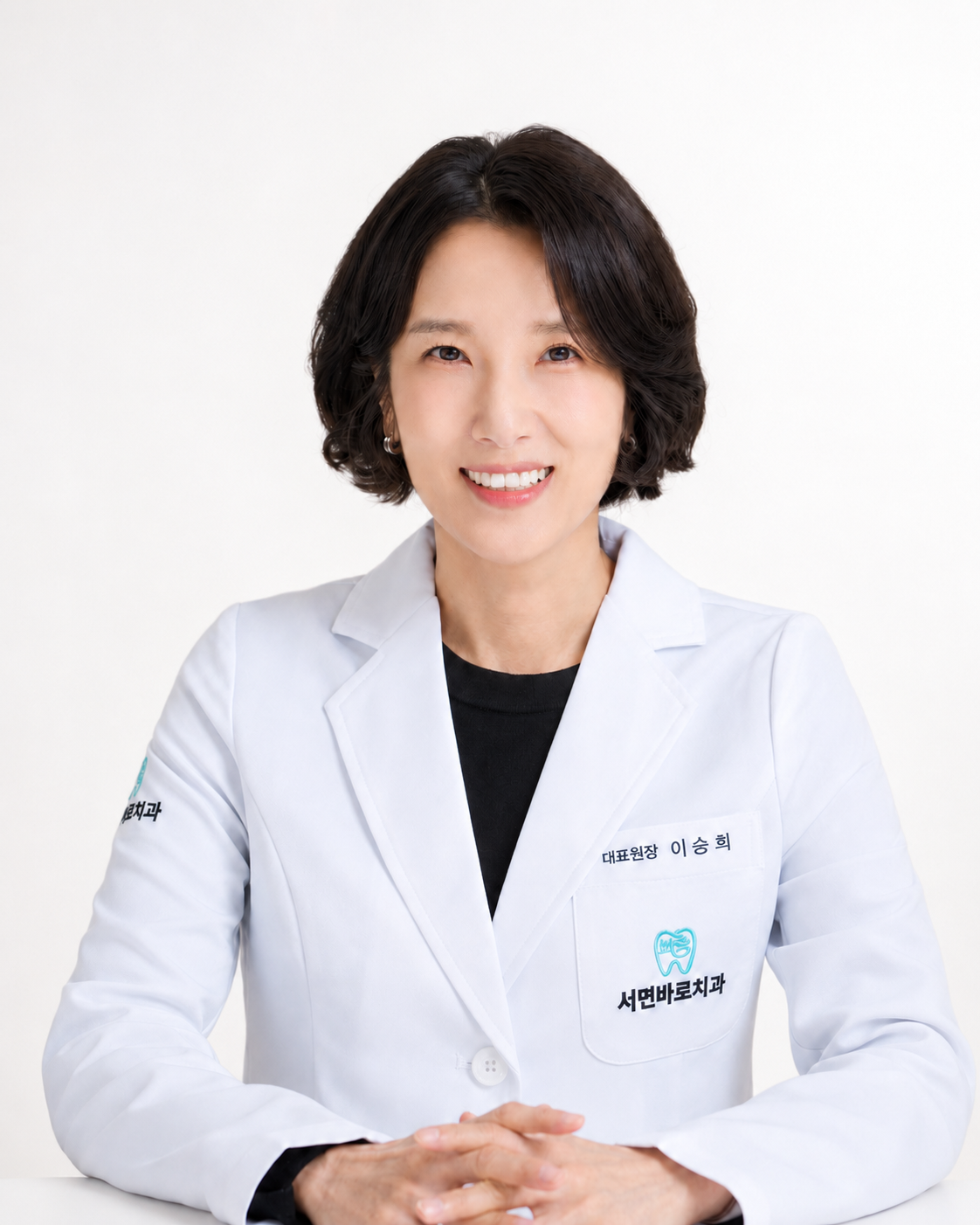
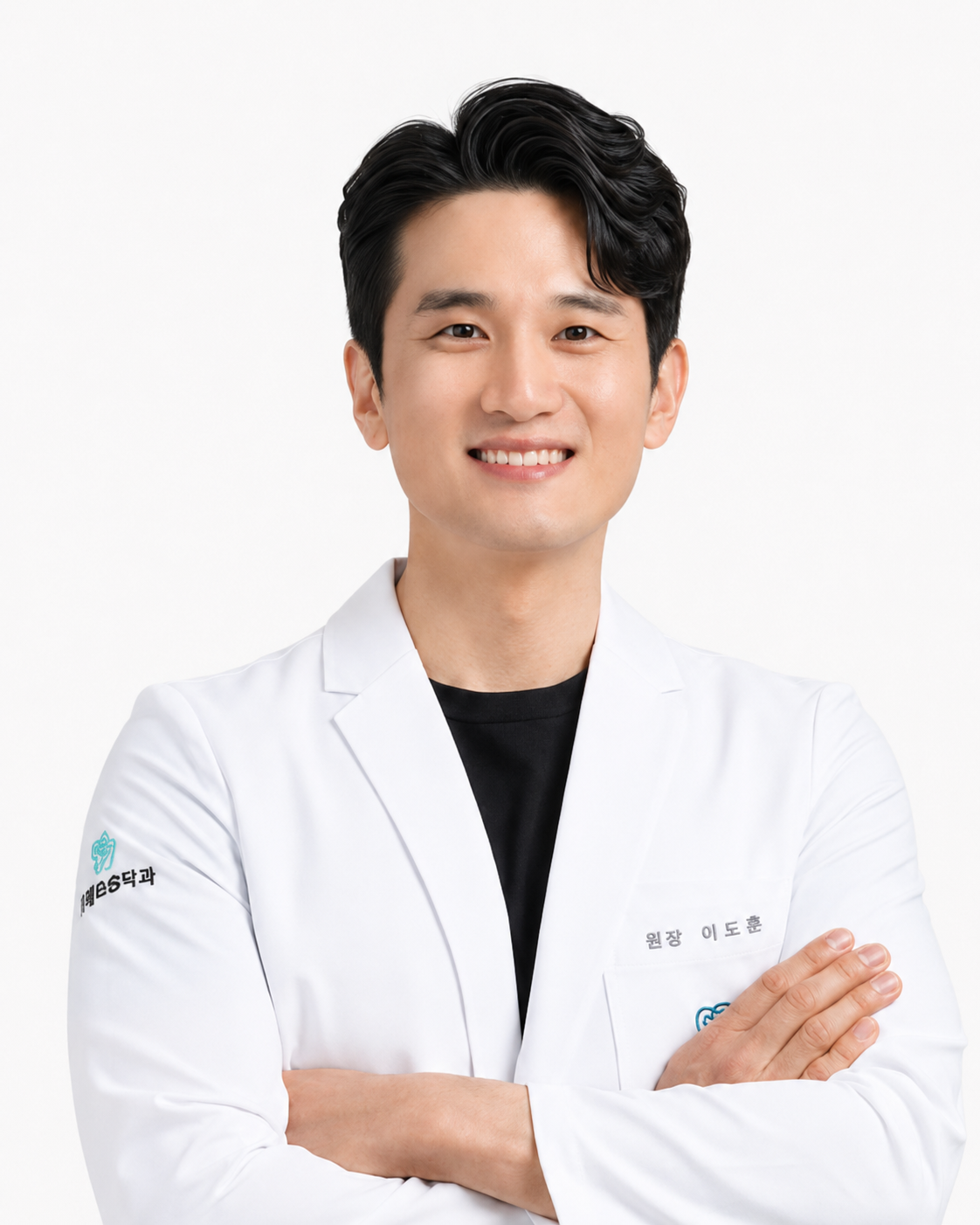
Two dentists run this clinic, and knowing them by name matters more than it sounds — because at Baro Dental the clinical explanation is the dentist’s own job, not a receptionist’s paraphrase. Both are directors and board-certified specialists in Advanced General Dentistry. Dr. Lee Seung-hee additionally holds an M.S. in Orthodontics from Kyungpook National University — the credential behind this clinic’s aligner and braces planning. Dr. Lee Do-hoon focuses on implant and restorative dentistry — the fixtures, crowns and bridges that make up much of what international patients travel for.
A two-dentist clinic is a deliberate shape, and it’s worth understanding what it buys you. You will see the same dentist across your visits — the person who examined you plans your treatment, performs it, and reviews it, with no hand-offs between departments and no re-explaining your case to a stranger at each appointment. For treatment staged across trips (common for visitors), that continuity is not a comfort feature; it’s how details survive.
The honest flip side, stated plainly: a boutique clinic is not a hospital. Complex cases that genuinely belong in a university hospital setting — certain surgical pathologies, medically complex patients needing anaesthesiology support — get told so at the examination, with a referral rather than a stretch. The English-speaking care page covers this honesty policy in full; it applies to everything in this guide.
Where the clinic is in Busan Seomyeon, and how to reach it
The address that matters: 5th floor, SJ Medical Building, 698-1 Jungang-daero, Busanjin-gu — four minutes on foot from Seomyeon Station Exit 2. Seomyeon is where Busan’s two main metro lines cross, which makes this the most reachable clinic location in the city by design: roughly 25–30 minutes from Haeundae, about 15 from Nampo-dong, 10–15 from Busan Station’s KTX, and around 40 minutes from Gimhae Airport.
From Exit 2, walk straight along Jungang-daero and look for the SJ Medical Building on your left — a medical tower whose signage lists its clinics by floor. Take the elevator to the fifth floor; the reception speaks English and will be expecting you if you messaged ahead, which we recommend for exactly this reason.
For taxis, one rule saves ten minutes of confusion: show the Korean address, not the romanised one. Korean drivers navigate by district and building name, and “Jungang-daero” spoken aloud lands differently than 중앙대로 shown on a screen. The Korean line to show: 부산진구 중앙대로 698-1, SJ메디컬빌딩 5층 (서면역 2번 출구) — it’s also in the location strip at the bottom of every page on this site, including this one.
Hours — and the two evenings that change everything
The schedule, exactly: Monday and Friday 10:30–19:00, Tuesday and Thursday 10:30–21:00, Saturday 10:30–15:00, with a lunch break 14:00–15:30, and closed on Wednesdays, Sundays and public holidays. Two features of that grid deserve highlighting because they shape how people actually use the clinic.
First, the Tuesday and Thursday evenings to 9 PM. For expats, that’s after-work dentistry without taking leave — the single most requested scheduling feature among working residents. For tourists, it means a clinic visit doesn’t have to cost a beach day: examine at 7 PM, dinner in Seomyeon at 8:30. Our emergency page leans on these evenings too, since dental pain has a documented fondness for starting after office hours.
Second, the honest converse: we are not a 24-hour service, and Wednesday is a closed day. A Wednesday problem means WhatsApp triage plus bridging advice and a first-thing Thursday slot; a genuine middle-of-the-night emergency belongs at a hospital ER, and we say so plainly rather than let “emergency dentist” imply otherwise. Clinics that advertise limitless availability are describing their marketing, not their roster.
What “English-speaking” means here, specifically
The claim gets made by half the clinics in Korea, so here is ours, itemised: booking and triage happen in English on WhatsApp; your symptoms are taken in your own words with follow-up questions until they’re precise; findings are shown to you on screen — your photos, X-rays, CT slices — and explained in plain English; consent and prices are written before treatment; aftercare instructions leave with you in writing; and records and receipts are issued in English for your insurer and your dentist at home.
The honest framing we hold ourselves to: this is working clinical English, verified by comprehension rather than performed as fluency — we don’t pretend to be a London practice, and we don’t need to. Images on screen cross language barriers that vocabulary limps over, written summaries survive any accent, and for the large share of our international patients whose English is also a second language, plain words plus pictures beats native-speed eloquence every time.
One test worth running on any clinic, including this one: language capability shows itself not at booking — anyone can manage a booking — but at the moment something needs explaining carefully. Ask a real question mid-consultation and watch what happens. We wrote a full page on this standard; consider this section its summary.
Reading this before a trip? Send your dates and what you’re considering — you’ll get an honest read on what fits your window, with written prices, before you book anything. Message us on WhatsApp →
How pricing actually works at our Busan clinic
The structural promise first: prices for non-covered treatments are published on this site in KRW, and they are the same figure for every passport. An implant is ₩800,000 with a DIO fixture whether you’re from Busan or Brisbane; a zirconia crown is ₩450,000; a scaling and check-up is ₩60,000. No foreigner surcharge, no quote theatre, no number that changes shape between consultation and invoice.
The second tier: insured-schedule items — root canal work, extractions, gum treatment — follow Korea’s national fee schedule. Patients enrolled in Korean national insurance (many expats and students are) pay the insured rate; visitors without enrolment pay the non-covered rate for those items, quoted in writing before treatment begins. The distinction is explained at the examination with your actual numbers, not discovered on the bill.
And the rule that governs both tiers: nothing is treated before its figure is written down. Emergency visits included — there is no emergency surcharge here, and crisis is precisely when the written-number rule matters most. The full list lives on the pricing page; every treatment page on this site repeats its own figures because we’d rather you arrive already knowing them.
| What you might book first | Published price | What it includes |
|---|---|---|
| Scaling & check-up | ₩60,000 | Cleaning, full examination, findings on screen, English debrief |
| Resin filling | ₩50,000–150,000 | By surface area, per simple cavity — cervical seals ₩50,000 |
| CT imaging | ₩30,000 | 3-D planning scan, taken only where genuinely indicated |
| Whitening | ₩495,000 | Three professional sessions |
| Single implant | from ₩800,000 | DIO fixture, crown included — Osstem ₩1,200,000 / Straumann ₩1,750,000 |
Prices current at time of writing — the pricing page is the living list. Insured-schedule items (root canals, extractions, gum treatment) are quoted in writing at your visit.
Your first visit, minute by minute
It starts before you arrive: one WhatsApp message with what you need, your dates if you’re visiting, and a photo if something hurts. Booking, honest pre-answers and triage all happen in that thread — by the time you walk in, the visit already has a shape.
In the chair, the sequence is the same for a ₩40,000 check-up as for an implant consultation: a structured examination first, imaging where genuinely indicated (CT is ₩30,000, and you’ll be told why before it’s taken), then everything on screen — each finding shown, graded honestly, and explained until it’s actually clear. Questions are the point of this stage, not an interruption to it.
Then the part that surprises people used to salesier clinics: the decision is explicitly allowed to leave the building. You get options with written prices and honest trade-offs, and taking the plan home — or back to your hotel, or to your dentist at home for a second opinion — is treated as a respected choice, not a negotiation tactic to overcome. Plenty of our patients booked their treatment days or weeks after their first visit; the plan doesn’t expire.
The lowest-stakes way to experience all of the above is the ₩60,000 scaling and check-up: a professional cleaning, a complete examination with findings on screen, and English paperwork — the whole system, auditable for the price of a nice lunch.
What the clinic actually offers — and what it doesn’t
The treatment map in one paragraph: dental implants(DIO, Osstem and Straumann tiers, from single teeth to full-arch, including revision of implants placed elsewhere), clear aligners and braces, crowns and bridges, inlays and onlays, dentures, whitening, and the full general-dentistry floor — fillings, root canals, gum treatment, scaling, wisdom teeth and night guards.
Equally useful is the not-offered list, stated the way we state everything: certain branded systems and techniques you may have read about elsewhere are not sold here, and each treatment page names its own exclusions honestly rather than burying them. Where a treatment we don’t offer is genuinely your best option, the honest referral is part of the service — a clinic that thinks it’s the answer to every question hasn’t understood many questions.
Every treatment linked above has its own long-form page with published prices, honest limits and the reasoning behind recommendations — 33 of them, all in English. Reading the page for your treatment before messaging makes your first conversation twice as productive; that’s what they’re for.
Fitting dental care into a Busan trip
The honest planning rule that governs everything: treatments fit trips only when biology agrees. Single-visit work — check-ups, fillings, whitening, many crowns with a lab interval, a night guard across two visits — compresses comfortably into a one-to-two-week stay. Implants with healing phases and full aligner journeys genuinely need multiple trips or a hybrid plan with your dentist at home, and anyone promising otherwise inside one week is selling you a compromise with your name on it.
What we do instead is stage: your first message includes your dates, the plan gets built around them from the start, and you’ll hear plainly what this trip can hold, what the next one finishes, and what your home dentist can supervise between. English documentation is written for exactly that hand-off — findings, materials, specifications, recommended follow-up — readable by a colleague anywhere.
Seomyeon helps here too: between appointments you’re in the middle of Busan’s best food streets, twenty-five minutes from the beach, and four minutes from a metro interchange that reaches everything. Dental travel works best when the city is worth the trip on its own — Busan clears that bar comfortably.
After the visit in Busan Seomyeon — what follows you home
A visit here doesn’t end at the elevator. You leave with three durable things: written aftercare for anything treated that day, English records — findings, materials, specifications — written for a colleague’s eyes anywhere in the world, and the WhatsApp thread itself, which keeps working after you fly. “Is this normal?” at 9 PM from another country gets answered during clinic hours; rebooking a return trip happens in the same thread; your home dentist’s follow-up question can be forwarded straight in.
For check-up patients, the visit also ends with a recall recommendation set to your actual mouth rather than a generic calendar — low-risk mouths commonly run longer intervals, smokers and heavy coffee drinkers shorter, and the reasoning gets explained rather than asserted. Whether that recall happens here on your next Busan trip or with your dentist at home, the examination’s findings travel with you either way.
And a small promise about this guide itself: the details on this page — hours, prices, access — are maintained alongside the treatment pages, and if anything here doesn’t match what you experience in person, we genuinely want to hear it on WhatsApp. The consistency between the website and the chair is the product; this guide is its front page.
- Message first, always: the WhatsApp thread is the front door — booking, triage and honest pre-answers before any taxi.
- Start small if you want: the ₩40,000 check-up audits the entire clinic experience with zero commitment.
- Trust the written number: nothing is treated before its price is on paper — and the paper matches this website.
- Plan trips with biology: tell us your dates in message one; what fits and what doesn’t gets said plainly.
- Tue/Thu evenings exist for you: 9 PM closing on those days is the schedule feature everyone underuses.
The dentists behind every guide on this site
FAQ
Book ahead by WhatsApp — not because walk-ins are refused, but because messaging first means English triage, a slot that actually fits your issue, and a dentist who already knows your case when you sit down. A walk-in gets seen where the day’s schedule allows; a message from the metro on your way over is already better than none.
For routine care, a few days’ notice comfortably works. For treatment planned around a trip — a crown with its lab interval, staged implant work — message when you book your flights: the earlier the dates arrive, the better the plan fits them, and the pre-visit conversation costs nothing.
Yes — international cards and cash both work, receipts itemise in English, and the figure matches what was written before treatment. The design goal is a payment moment with no news in it.
Building parking arrangements are being confirmed for this guide — ask on WhatsApp when booking and you’ll get the current answer for your visit. Honest note: with Seomyeon Station four minutes away on two lines, the metro is usually the faster door-to-door option in this district.
Your passport or ID, any dental records or X-rays you have from home (photos of paperwork count), a list of medications, and your travel dates if you’re visiting. Gaps are normal — we’ve assembled histories from four countries and a shoebox. If you have Korean national insurance, bring that too; it changes the price of insured-schedule items.
Scaling & Check-up in Busan
₩60,000 — the natural first appointment this guide keeps mentioning.
English-Speaking Care
The full standard behind this guide’s language claims.
Published Prices
The complete KRW list — every passport pays the same page.
How to book a Busan dentist in English, step by step
Related guide in this series.
What to bring to a Korean dental clinic
Related guide in this series.
What a Busan dentist can genuinely do in one day
Related guide in this series.
Read enough? Start the thread.
Your dates, your question, or just “I read the clinic guide” — the first message is the whole first step. English throughout, written prices, honest answers.
Medical information in this guide is provided for general education and does not replace an individual examination and diagnosis. Prices shown are current at the time of writing; insured-schedule items follow Korea's national fee schedule and are quoted in writing at your visit. This clinic does not provide 24-hour service. Individual results vary.