Stained teeth: whitening, resin, or both?
Two different tools for two different kinds of stain: whitening changes the colour of your own enamel from within; resin covers what bleach can’t reach. Which one your discolouration needs depends on where the stain actually lives — and one famous case, the single dark tooth, is a diagnosis before it’s a cosmetic decision at all.
By Baro Dental Clinic, Seomyeon · August 2026 · 13 min read
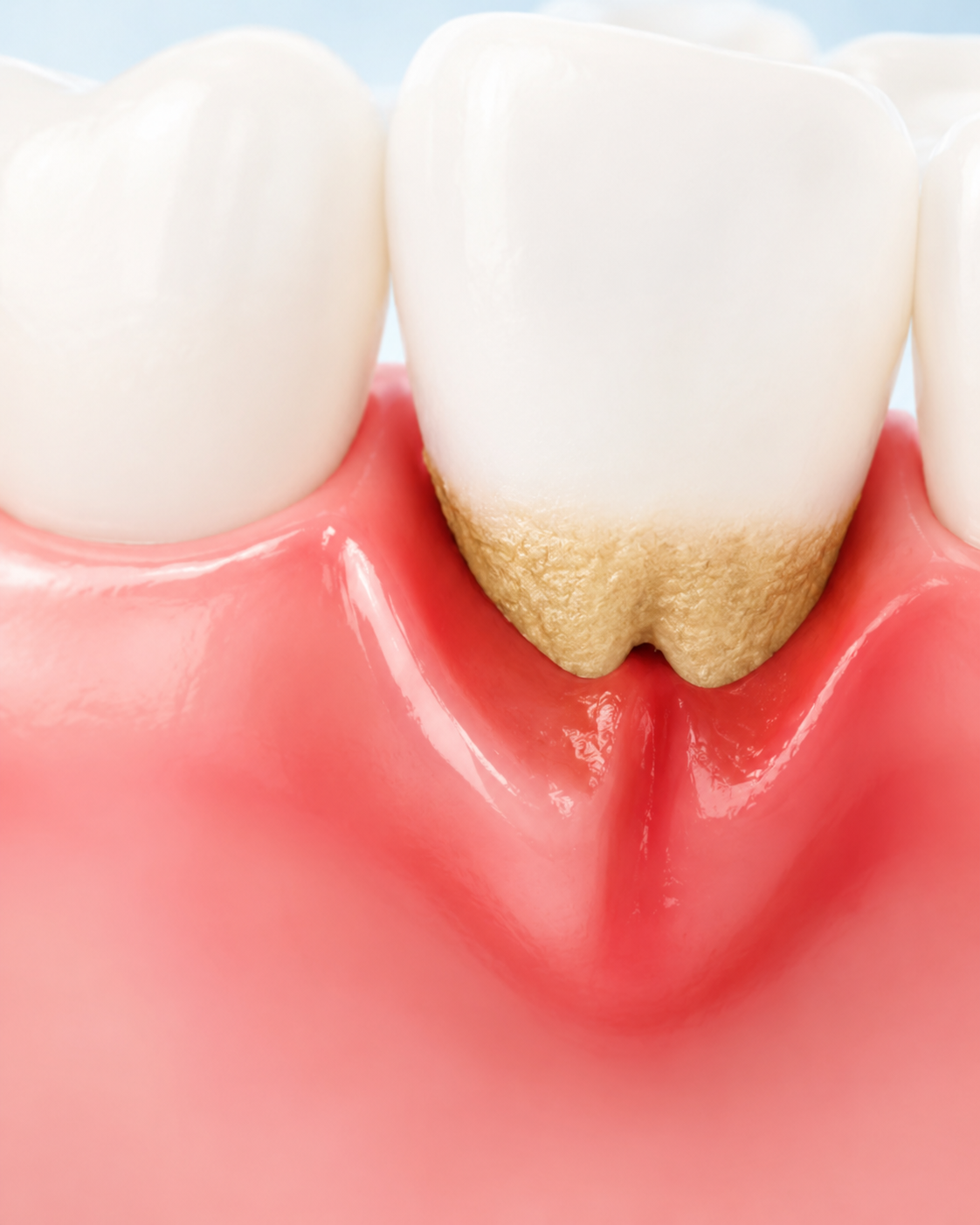
The honest sorting rule: discolouration living in your enamel — the general yellowing of years, coffee and age — is whitening territory (₩495,000 for the 3-session course, ₩660,000 for 5); localized defects bleach can’t fix — white spots, enamel flaws, a chipped or misshapen corner — are resin territory, covered rather than lightened; and a single tooth that darkened on its own is neither until it’s diagnosed, because a lone dark tooth usually means the nerve inside has a story. Many real cases end up sequenced rather than chosen: whiten first to set the target shade, then place any resin to match the new colour — the order that cannot run in reverse, since resin doesn’t bleach. This guide sorts the stains honestly, prices both tools in daylight, and names the cases where each — or both, or neither — is simply right.
What stained-teeth shoppers actually ask
- My teeth are yellow overall — will whitening actually work on me?
- One front tooth turned grey on its own — can I just bleach it?
- I have white spots that got more visible after whitening — why?
- Can resin just cover everything instead of bleaching?
- Which order do I do this in if I need a crown or filling too?
Two tools, honestly defined in Busan
Whitening changes the colour of your own tooth from within: peroxide-based gel penetrates enamel and breaks down the pigment molecules accumulated by years of coffee, tea, wine and time, lightening the tooth itself rather than coating it. The published course here: ₩495,000 for three sessions, ₩660,000 for five — the two-tier structure the whitening cost guide prices in full, with the deeper course serving heavier baseline discolouration. Its honest scope: it lightens what pigment made dark; it cannot change what structure made different.
Composite resin is the coverage tool: tooth-coloured material placed directly and shaped over a localized flaw — a white spot that stands out, an enamel defect, a chipped corner, a worn edge — matched to the surrounding shade and polished to blend. The published anchors: simple resin work from ₩50,000(priced by surface area), with shape-and-space work like diastema closure at ₩150,000 per tooth surface showing the same tool doing cosmetic duty. Its honest scope: it covers what it’s placed on — and it holds its own colour, which is the fact the sequencing rule below stands on.
The engineering difference that sorts every case: whitening is subtractive — it removes pigment from inside enamel; resin is additive — it places new material over a flaw. Neither does the other’s job: no amount of bleach reshapes a chipped corner or dissolves a developmental white spot, and no resin placement lightens the twenty-eight teeth around it. The question is never “which is better” — it’s where does your stain actually live , and the examination answers that in minutes.
And the case that belongs to neither tool yet: the single tooth that darkened on its own. A lone grey or brown tooth among normal neighbours almost always has an internal story — an old knock, a quietly dying nerve, a previous root canal — and treating its colour before diagnosing its cause is painting over a warning light. The whitening guide’s diagnosis-gate rule applies in full, and this comparison repeats it on purpose: that tooth gets the ₩60,000 examination first, every time.
The sorting — where your stain lives decides
Whitening territory, honestly mapped: generalized yellowing across all teeth — the slow accumulation of pigmented years — responds best; surface staining from coffee, tea, wine and smoking responds well (often with a ₩60,000 scaling first, since bleaching over tartar wastes gel on a surface that cleaning would have fixed); and age-darkened but structurally normal enamel lightens predictably. The honest limits stated with it: greyish and tetracycline-band discolourations lighten less predictably than yellows, results vary by baseline, and the consultation says which pattern yours is before you pay for a course.
Resin territory, honestly mapped: the localized and the structural — white-spot lesions (developmental or post-orthodontic decalcification), enamel defects and craze lines that catch stain, chipped and worn edges, and the small shape corrections the diastema line prices. Two honest truths about white spots specifically: whitening can initially make them more visible (the surrounding enamel lightens toward the spot’s brightness before the contrast settles — a known, temporary phase worth being told about in advance), and resin masking after whitening is the standard, satisfying fix where spots still stand out.
The both-tools cases, which are common: generally yellowed teeth with a few localized flaws sequence naturally — whiten the whole smile to its target shade first, then place resin matched to the new colour. The order never reverses, because resin doesn’t bleach: composite placed before whitening keeps its old shade while the enamel around it lightens, turning yesterday’s invisible repair into tomorrow’s visible patch — the sequencing rule this site’s restoration guides apply to crowns and inlays, holding here at the smallest scale.
And the neither-tool cases, named for honesty: discolouration on a tooth with active decay is a treatment conversation, not a cosmetic one; deep structural discolouration beyond what bleach reaches and resin gracefully covers opens the crown-tier conversation with its own honest page; and the lone dark tooth, once diagnosed, follows its cause — sometimes internal bleaching after root treatment, sometimes coverage, always diagnosis first. A cosmetic menu that can say “this isn’t a cosmetic case” is the one worth trusting with the cases that are.

The money, in daylight
The figures side by side, all published: whitening ₩495,000 (3 sessions) or ₩660,000 (5) — a whole-smile change priced per course; resin from ₩50,000 per site(by surface area; shape work ₩150,000 per surface on the diastema line) — a per-flaw price that scales with how many flaws genuinely need covering. The honest comparison isn’t between the two figures — they buy different things — but between each figure and its alternative of doing nothing, which for pigment is free and for structural flaws is also free, since neither worsens urgently. Cosmetic dentistry’s honest luxury is time to decide.
What the whitening figure includes and excludes, per its cost guide: professional application, the course’s sessions, and shade documentation — with the scaling gateway (₩60,000) recommended first where tartar would waste the gel, and the sensitivity conversation had honestly in advance (transient sensitivity during a course is common, manageable, and temporary). What the resin figures include: placement, shaping, polish and shade-match — with the honest ownership note that composite ages, can pick up stain at its margins over years, and repolishes or replaces cheaply when it does.
The combination arithmetic for the common both-tools case: a ₩495,000 course plus one or two resin sites lands the whole project around ₩550,000–650,000 — a full-smile result for about the price of a single anterior crown, which is the honest reason this pairing is cosmetic dentistry’s best-value page for suitable cases. And the guard-rail restated: suitability is a finding — the same money on the wrong case (bleaching a dead tooth, masking active decay) buys disappointment with excellent production values.
The maintenance honesty, so the results last what they should: whitening fades on the same pigments that built the original stain — coffee, tea, wine, smoke — on a years-not-months timescale, slower with sane habits and the recall-and-scaling rhythm; top-up courses price as fresh courses, honestly; and resin’s margins live longest in clean mouths. The cheapest cosmetic maintenance programme in dentistry remains the ₩60,000 habit this site never stops recommending — because it keeps being true.
One grey tooth, or a whole yellow smile? A photo in decent light gets the honest sort free — whitening territory, resin territory, or the diagnosis-first case. Message us on WhatsApp →
The comparison, in one honest table
Both tools, mapped against each other with their honest limits attached:
| Dimension | Whitening | Resin masking |
|---|---|---|
| How it works | Subtractive — breaks down pigment inside your own enamel | Additive — covers a localized flaw with shade-matched composite |
| Published figures | ₩495,000 / 3 sessions · ₩660,000 / 5 | From ₩50,000 per site · by surface area · shape work ₩150,000 per surface |
| Home territory | Generalized yellowing, surface pigment, age-darkened enamel | White spots, enamel defects, chips, worn edges, small shape corrections |
| Honest limits | Greys and banded discolourations lighten less predictably; fades on the habits that built the stain | Holds its own colour (never bleaches); margins can stain over years — repolishes cheaply |
| The famous rule | Whiten first — sets the target shade for everything after | Placed after whitening, matched to the new colour — never the reverse |
| Outranked by | The single dark tooth — diagnosis before any cosmetic step | Active decay — treatment before any masking |
All figures published on the living pricing page; the ₩60,000 examination sorts the case and does the scaling where tartar is part of the picture. Single-tooth discolourations get diagnosed before any cosmetic step, every time.
The single dark tooth — the case that outranks the menu
It deserves its own section because it’s the most common way this comparison arrives at a clinic: “one of my front teeth went grey — can you whiten it?” The honest answer is that the colour is the last chapter of that tooth’s story, not the first: a tooth that darkens alone has usually had its internal blood supply injured — an old sports knock years forgotten, a deep filling’s slow aftermath, a crack — and the grey is often the nerve’s quiet obituary. Bleaching it without diagnosis treats the paint while ignoring the engine light.
The route that serves it: the ₩40,000 examination — imaging, vitality testing, the tooth’s history — and then the cause-matched menu: a tooth with a dying or dead nerve typically wants root treatment first (insured-schedule, per the save-it guide), after which internal whitening — bleaching from inside the emptied chamber — often lightens the tooth remarkably; residual mismatch graduates to coverage conversations with their own pages. A previously root-treated tooth that darkened years later runs the same logic from the middle.
What this section wants you to keep even if you keep nothing else: a lone dark tooth is a diagnosis, then a cosmetic project — in that order, always. The order isn’t caution theatre; it’s what makes the cosmetic result last, because colour treated without cause returns, and infection ignored for aesthetics escalates on its own schedule. The examination that sorts it costs less than a tenth of the whitening course it protects.
And the reassurance the worried version of this reader deserves: most single-dark-tooth stories end well — diagnosed, treated, lightened or covered, and visually retired from the smile’s worry list. The tooth kept its place; the story just needed reading in the right order. Send a photo before booking anything; this is precisely the case the free pre-read exists for.
How it runs at our Busan Seomyeon clinic — and your next step
In practice it runs like this: the ₩40,000 examination reads where your discolouration actually lives — generalized pigment, localized defects, or the single-tooth story — with the scaling done in the same sitting where tartar is part of the picture; the sorting lands on the honest menu (whitening course, resin sites, the sequenced both, or the “this is a treatment case first” redirect); and everything leaves as written figures — course tier, per-site resin count, the whole project totalled before anything proceeds.
The house rules, applied to cosmetics where they’re rarest: downhill by default — the ₩60,000 scaling that solves a surface-stain case outranks the ₩495,000 course that didn’t need selling, and that redirect happens here weekly; sequencing stated up front — whiten before resin, whiten before any crown-tier shade-matching, per the rule every restoration guide on this site repeats; and the decision leaves the building — cosmetic timelines are yours, and nothing here worsens while you think.
For visitors, the friendly logistics: whitening courses compress well into a Busan stay (sessions spaced across trip days — tell the thread your dates and the course gets mapped onto them), resin work is same-day tier by definition, and the sequenced both fits a normal one-to-two-week window comfortably — the same-day guide’s honest tiering applied to the smile’s smallest projects. The one calendar rule: shade-matched work happens after the course finishes, so the plan front-loads the whitening.
One message starts it: a photo in decent light, one line on what bothers you — the overall yellow, the specific spots, the one grey tooth — with your dates if you’re visiting — and the honest pre-read follows: whitening territory, resin territory, sequenced both, or the diagnosis-first case — before any chair, any course, any figure. Stains are the most solvable complaint in dentistry; the service is solving yours in the right order.
- Where the stain lives decides: pigment in enamel = whitening; localized flaws = resin coverage — neither does the other’s job.
- The order never reverses: whiten first, then match resin to the new shade — composite doesn’t bleach.
- A single dark tooth is a diagnosis first — the nerve usually has a story, and colour is its last chapter.
- White spots can look worse mid-whitening — a known temporary phase; resin masking afterward is the standard fix.
- The best-value page in cosmetics: course + a couple of resin sites ≈ ₩550,000–650,000 — about one anterior crown.
The dentists behind every guide on this site


FAQ
Generalized yellowing is whitening's best case — pigment accumulated in otherwise normal enamel lightens predictably across a ₩495,000 three-session course, with the five-session tier serving heavier baselines. The honest caveats: grey and banded (tetracycline-type) discolourations respond less predictably, tartar should be cleaned first so gel isn't wasted on a surface problem, and your baseline pattern gets read at the ₩60,000 examination before you commit to a course.
Not first, honestly: a tooth that darkens alone almost always has an internal story — an old knock, a dying nerve, a past root canal — and bleaching it without diagnosis paints over a warning light. The route that works: examination and vitality testing (₩40,000), cause treated where needed, then internal whitening from inside the tooth, which often lightens it remarkably. Most of these stories end well — but they end well in that order.
A known, temporary phase: the enamel around the spots lightens toward their brightness first, briefly increasing contrast before the shade settles and evens over the following weeks. It's worth being told in advance — which is why it's in this guide. Where spots still stand out after the course settles, resin masking matched to your new shade is the standard, satisfying fix, priced per site from ₩50,000.
For a flaw or three, yes — that's resin's home territory. For a whole smile's colour, no honest clinic recommends it: covering every visible surface trades your enamel's natural translucency for a monochrome coating, ages at every margin, and costs more per decade than the whitening it replaced. The tools sort by scope: resin for the local, whitening for the general, sequenced together where a case genuinely needs both.
Before the crown's shade is chosen, always: crowns, other lab-made cosmetic work and resin all hold their manufactured colour while natural enamel around them can change, so the target shade gets set first by whitening, and everything matched after. Whiten mid-restoration-planning and the sequence is simply built around it — the thread and the consultation coordinate the calendar so the shade-match happens once, correctly, after the course finishes.
Teeth Whitening in Busan
The course tiers — ₩495,000 and ₩660,000, honestly scoped.
Cosmetic Resin in Busan
The same tool doing shape duty — diastema closure ₩150,000 per surface.
Resin Treatment
The from-₩50,000 workhorse behind every masking case.
Root Canal in Busan
Where the single dark tooth's story usually starts.
Whitening and scaling costs in Busan, in plain numbers
Related guide in this series.
Coffee and wine stains: what removes them, honestly
Related guide in this series.
Crown and inlay costs in Busan, itemized
Related guide in this series.
Your smile has a right order. Sort first, then brighten.
A photo starts the free sort; the ₩40,000 examination reads where your stain lives; the plan — course, sites, or sequenced both — arrives in writing. Stains are solvable; solve yours in order.
Medical information in this guide is provided for general education and does not replace an individual examination and diagnosis. Prices shown are current at the time of writing; insured-schedule items follow Korea's national fee schedule and are quoted in writing at your visit. This clinic does not provide 24-hour service. Individual results vary.