Who actually performs your treatment, and why it matters.
The last question most patients ask is quietly the first one that matters: whose hands, whose judgment, whose name. Clinics differ more here than anywhere — from director-performed care where the person who planned your case treats it and answers for it, to volume models where providers rotate and accountability diffuses. This closing guide of the series maps the difference honestly, introduces the two directors behind every case here, and hands you the questions that reveal any clinic’s real structure — including this one’s.
By Baro Dental Clinic, Seomyeon · August 2026 · 12 min read

The honest answer here: every case at this clinic is planned, performed and followed by one of its two directors — Dr. Lee Seung-hee (Director, AGD Specialist, M.S. in Orthodontics, Kyungpook National University) and Dr. Lee Do-hoon (Director, AGD Specialist, with an implant-and-restorative focus) — the same person across your consultation, treatment and follow-up, with hygienists and staff in the supporting roles that are honestly theirs. Why the structure matters more than any résumé line: continuity of judgment (the person who read your scan treats what it showed), accountability with a name on it, and the incentive honesty that follows when the planner and the performer are the same person. This guide maps the models, introduces the team plainly, and closes the series the way it began — with the questions you can ask anywhere, this clinic included.
- Why “who” matters — the structure behind the hands in Busan
- The two directors — introduced plainly
- The whole team — who does what, honestly
- The structure, in one honest table
- The questions that reveal any clinic’s structure — this one included
- How it runs at our Busan Seomyeon clinic — and your next step
What patients quietly want to know
- Will the dentist I consult with be the one who actually treats me?
- Who are the directors here, plainly — and what do their credentials mean?
- What do the hygienists and assistants do versus the dentists?
- Why do some clinics feel like factories — and how do I tell before booking?
- If I come back next year, will the same person know my case?
Why “who” matters — the structure behind the hands in Busan
The difference this page maps is structural, not personal — and it’s worth naming without caricature: dental care everywhere runs on a spectrum from director-performed models(the dentist who consults, plans, treats and follows is the same person, with their name on the outcome) to volume models(consultation with one face, treatment by another, follow-up by whoever’s rostered — efficient at scale, and structurally anonymous). Neither is fraud; both exist honestly; but they produce different experiences of exactly the things this series has spent fifty guides on: continuity, accountability, and plans that answer to judgment rather than throughput.
Continuity of judgment, concretely: a treatment plan is hundreds of small reads — the scan’s grey zones, the gum’s trend, the bite’s history — and when the person who made those reads performs the work, the plan and the hands share one understanding; when they don’t, the plan travels as notes, and notes compress. The checkpoint calendars, the remote follow-ups, the trend-tracking this series describes all work best — honestly, only work fully — when the same eyes see visit one and visit nine.
Accountability with a name on it: every written plan, figure and warranty term this series teaches you to collect is signed by someone — and the practical difference between a name and a letterhead appears exactly when something needs answering: the is-this-normal message, the warranty-relevant event, the “help me understand this line” question. Structures where the answerer and the performer are the same person answer better, for the least mysterious reason in professional life.
And the incentive honesty this series has circled fifty times, landed here: the downhill-default pattern readers have met in every guide — the ₩40,000 redirect, the “your quote at home is fair,” the monitoring verdict where selling was available — is easiest to sustain where the person recommending is the person performing and answering: over-treatment has a face it must be defended to, later, by name. Transparency documents honesty; structure is what makes honesty cheap to keep.
The two directors — introduced plainly
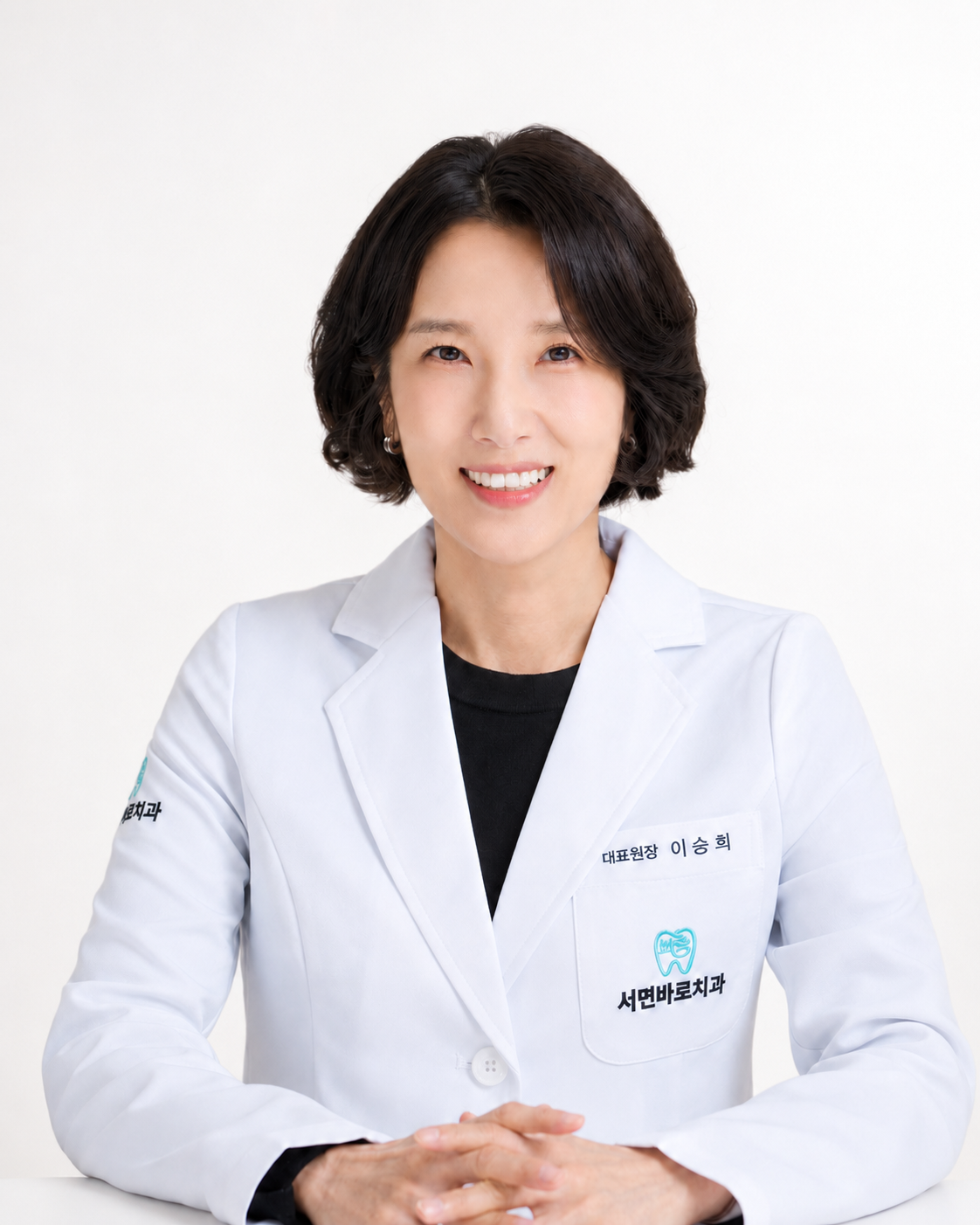
Dr. Lee Seung-hee — Director, AGD Specialist, holding an M.S. in Orthodontics from Kyungpook National University: the orthodontic depth behind this clinic’s braces and aligner chapters and the bite-level judgment that runs through everything else — because occlusion is the context every restoration, crown and implant lives in, and a director who reads bites at the postgraduate level reads every case through that lens.
Dr. Lee Do-hoon — Director, AGD Specialist, with the implant-and-restorative focus this series’ surgical and prosthetic chapters lean on: the implant journeys, the crown and restorative ladder, the surgical calendars — planned and performed by the same hands across their phases, per the checkpoint discipline the recovery calendar maps.
What AGD Specialist denotes, described honestly rather than embellished: an advanced general-dentistry credential reflecting structured postgraduate training across the breadth of clinical dentistry — the generalist-at-depth profile suited to exactly what this clinic is: a two-director practice where each case gets one clinician across its whole arc rather than a relay of departmental handoffs. Credentials describe training; the fifty guides before this one describe practice; readers are invited to weigh both, per the series’ standing preference for auditable over asserted.
And the working structure between the two, stated plainly: cases are directed by one director end to end — matched at intake to the case’s centre of gravity (orthodontic questions gravitating one way, surgical-restorative the other), with the second director as the in-house second opinion the borderline-case honesty this series describes actually uses: two senior clinicians in one hallway is a structural luxury small practices have and volume models simulate with committees. Your case has one name on it and two minds available to it; that’s the design.
The whole team — who does what, honestly
The honest division of labour, because “director-performed” doesn’t mean “director-does-everything” and pretending otherwise would insult both you and the team: the directors perform examinations and diagnosis, treatment planning, all surgical work, restorative preparations and fittings, root canal treatment, adjustments — the judgment-and-hands tier this page’s whole argument concerns. The dental hygienists perform the professional cleanings within their licensed scope — the ₩60,000 scaling this series has recommended fifty times is substantially their craft, done skilfully and alongside the director’s oral check in the same visit — plus the hygiene instruction the gum series leans on.
Assisting staff run the chairside support, the sterilization cycle that Trust guide mapped, and the front-of-house thread this series’ every “one message starts it” ends at — the coordination tier that makes the clinical tier punctual. The honest sentence about scope: nobody here performs beyond their license, and nobody’s contribution is hidden inside someone else’s title — when your visit involves the hygienist’s cleaning and the director’s examination, that’s what it’s called, per the same no-surprises rule that itemises quotes.
The continuity mechanics, since structure is this page’s subject: your file — the imaging, the trend notes, the records this series teaches you to hold — is read by the same director across visits, which is what makes the watch-this-spot verdicts, the wear-trend tracking and the recall rhythm’s whole value proposition function: monitoring is only monitoring if the monitor remembers. Returning visitors and recurring travellers get the same eyes each trip; that’s not a courtesy, it’s the product.
And the language layer, restated once because this page closes the series for its international readers: the directors consult in English, the thread runs in English, and the written everything — plans, figures, records, warranty terms — arrives in English per fifty guides’ worth of standing practice. Who treats you and whether you understood them are the same question wearing two grammars; here they get one answer.
Want to know who’d be treating your specific case? Describe it in two sentences — the director match, the honest read and the booking come back in one English reply, name included. Message us on WhatsApp →
The structure, in one honest table
Who does what, and what that buys you:
| Who | Does what | What that buys you |
|---|---|---|
| Dr. Lee Seung-hee — Director, AGD Specialist, M.S. Orthodontics (Kyungpook Nat’l Univ.) | Examination, diagnosis, planning and treatment — with the bite-level depth behind the orthodontic chapters | Occlusion-literate judgment on every case that touches a bite — which is every case |
| Dr. Lee Do-hoon — Director, AGD Specialist, implant & restorative focus | Surgical and restorative arcs planned and performed by the same hands across their phases | The checkpoint calendars run by the person who set them |
| The case structure | One director end to end, matched at intake; the second as in-house second opinion | A name on your case, two senior minds available to it |
| Dental hygienists | Professional cleanings within licensed scope + hygiene instruction | The ₩60,000 scaling’s craft — with the oral check in the same visit |
| Assisting & coordination staff | Chairside support, the sterilization cycle, the English thread | The clinical tier kept punctual — and every “one message starts it” answered |
| The honest limits | Two directors = finite capacity, named absences, book-ahead rhythm | Claims checkable at your first visit — which is how claims should be built |
Continuity is the product: the same director reads your file across visits, which is what makes monitoring, trend-tracking and the recall rhythm’s whole value function. The five structure-revealing questions work at any clinic on earth — this one is volunteering to go first.
The questions that reveal any clinic’s structure — this one included
The five, portable per this Trust series’ habit, phrased as they’re best asked: “Will the dentist who examines me be the one who performs my treatment?” (the master question — and follow the answer’s specificity, not its warmth); “Who exactly will perform [the specific procedure], by name?” ; “Will the same person see me at follow-ups?” ; “What does the hygienist do versus the dentist in my visit?” (honest clinics answer comfortably; the question offends only where the answer embarrasses); and “If something needs attention later, who answers for this work?” — the warranty guide’s accountability question wearing this page’s clothes.
How to read the answers, calibrated per series habit: names beat titles, specifics beat reassurance, and structure beats charisma — “Dr. X performs all implant surgery and will see you at every check” is an answer; “our excellent medical team will take great care of you” is a brochure. The volume-model tells, named without malice: consultation staff who can’t say who’ll treat you, treatment rooms you’re moved between mid-plan, follow-ups that start with your history being read aloud to you by a stranger. None is disqualifying alone; together they describe a structure, and structures are what you’re actually buying.
The honest limits of the director model, stated because this series states limits: two directors means finite capacity — the booking rhythm this series’ scheduling guides map exists precisely because the same-eyes promise doesn’t scale infinitely, and the book-ahead habit is the price of the structure; it means named absence — directors have surgery days and holidays, and the honest answer to “today, right now” is sometimes the walk-in guide’s honest tomorrow; and it means this page’s claims are checkable at your first visit — which is, per everything this series believes, exactly how claims should be built.
And the closing symmetry this fiftieth guide owes the forty-nine before it: every page in this series has ended by inviting a message — and every one of those messages, the ₩40,000 second reads, the is-this-normal photos, the honest stay-home verdicts, lands with the same two people whose names this page finally put to the practice. The series taught you to audit clinics; this page handed you the last audit target: us. Run the questions; that’s what they’re for.
How it runs at our Busan Seomyeon clinic — and your next step
The commitments, gathered from fifty guides into one closing list: director-performed care — one name on your case from consultation through follow-up, two senior minds available to it; everything in writing — plans, itemised figures per the published-price grammar, warranty terms, passports, records that leave with you; honest verdicts both directions — including stay-home, wait-and-watch, and your-quote-is-fair; and English end to end, chair to thread to paper.
The practical frame for new readers landing on the series’ last page first: the whole architecture starts with one visit — the ₩40,000 examination with imaging, findings shown on screen, and the written plan — performed by the director your case is matched to, per this page; booked over the English thread; four minutes from Seomyeon Station per the arrival guide; hours per the evening-and-Saturday grid. Fifty guides exist behind that visit; none of them is required reading to book it.
The closing honesty the series owes its own premise: this entire Knowledge Center — the published prices, the decoders, the calendars, the trust guides — is itself the structure this page describes, applied to information: the same two directors answer for every claim in it, the figures in it are the figures at the desk, and the invitation running through all fifty guides is one sentence long: check us. Ask the five questions at your consultation. Match the passport to the quote. Watch the pouch open. The clinic that wrote the audit guides is volunteering to go first.
One message starts it — the fiftieth time this series has said so, and the first time with the full picture behind it: your symptom, your quote, your dates, or simply your question, to the thread, in English. Back comes what fifty guides promised: the honest read, the written figures, and a named clinician who will still be your named clinician at the follow-up. Whose hands, whose judgment, whose name — you asked; this page answered; the chair is four minutes from Exit 2.
- Director-performed, end to end: the person who plans your case treats it and answers for it — one name, two senior minds available.
- The team’s division is honest and stated: directors on judgment and hands, hygienists on their licensed craft, nobody’s work hidden in a title.
- Continuity is the product: the same eyes on visit one and visit nine are what make monitoring, trends and recalls actually work.
- Names beat titles, specifics beat reassurance, structure beats charisma — the five questions reveal any clinic’s real model.
- The series’ last invitation is its first: check us — the clinic that wrote the audit guides volunteers to go first.
The dentists behind every guide on this site

FAQ
Yes — that's the structure this page exists to state: your case is matched at intake to one of the two directors, and that director performs the examination, the planning, the treatment and the follow-ups, with the second director available as the in-house second opinion on borderline calls. The claim is deliberately checkable: ask at your consultation who will perform each procedure by name, and expect the specific answer this page just gave.
Described honestly: both are Directors and AGD Specialists — an advanced general-dentistry credential reflecting structured postgraduate training across clinical dentistry's breadth. Dr. Lee Seung-hee additionally holds an M.S. in Orthodontics from Kyungpook National University, the bite-level depth behind the orthodontic chapters; Dr. Lee Do-hoon carries the implant-and-restorative focus the surgical guides lean on. Credentials describe training; the fifty guides and the written figures describe practice; you're invited to weigh both.
The honest division: hygienists perform professional cleanings within their licensed scope — the ₩60,000 scaling this series recommends everywhere is substantially their skilled craft — plus the hygiene instruction the gum guides depend on, while the directors perform examinations, diagnosis, planning, surgery, restorative work and adjustments. Your scaling visit includes the director's examination in the same sitting, and what each person did is what it's called — the same no-surprises rule that itemises quotes.
Ask the five questions and read the answers' specificity: consultation staff who can't say who'll treat you, a different face at treatment than at planning, follow-ups where a stranger reads your history aloud to you — none is disqualifying alone, but together they describe a rotating-provider structure. Names beat titles, specifics beat reassurance. The questions work at any clinic on earth, offend only where the answer embarrasses, and this clinic's own answers are printed on this page for checking.
Yes — and structurally, not sentimentally: your file is read by the same director across visits, your imaging and trend notes accumulate under the same judgment, and returning visitors and recurring travellers get the same eyes each trip. That continuity is what makes the watch-this-spot verdicts, wear-trend tracking and the recall rhythm genuinely work — monitoring is only monitoring if the monitor remembers. The honest limit: two directors means booking ahead per the scheduling guides; the same-eyes promise is the reason why.
Examination & Scaling in Busan
The ₩90,000 first visit — performed by the director your case is matched to.
Single Implant in Busan
The surgical arc one director carries across all its phases.
Clear Aligners in Busan
The orthodontic depth behind the bite-level judgment.
Published Prices
Fifty guides of figures — the same ones at the desk.
How Korean dental sterilization actually works
Related guide in this series.
How to verify your implant and crown are genuine
Related guide in this series.
The complete Baro Dental clinic guide for foreigners
Related guide in this series.
Whose hands, whose judgment, whose name. You asked; this page answered.
Your symptom, your quote, your dates, or simply your question — to the thread, in English. Back comes the honest read, the written figures, and a named clinician who will still be your named clinician at the follow-up. The chair is four minutes from Exit 2.
Medical information in this guide is provided for general education and does not replace an individual examination and diagnosis. Prices shown are current at the time of writing; insured-schedule items follow Korea's national fee schedule and are quoted in writing at your visit. This clinic does not provide 24-hour service. Individual results vary.