Flying after dental treatment: what to know.
Cabin pressure is the one part of dental aftercare your dentist at home never has to think about — and for a dental traveller it’s a planning input: trapped air expands at altitude, healing sockets prefer a day of peace, and sinus-adjacent surgery has its own honest calendar. Which treatments fly same-day, which want a buffer, and why your flight date belongs in the plan before anything is scheduled.
By Baro Dental Clinic, Seomyeon · August 2026 · 12 min read
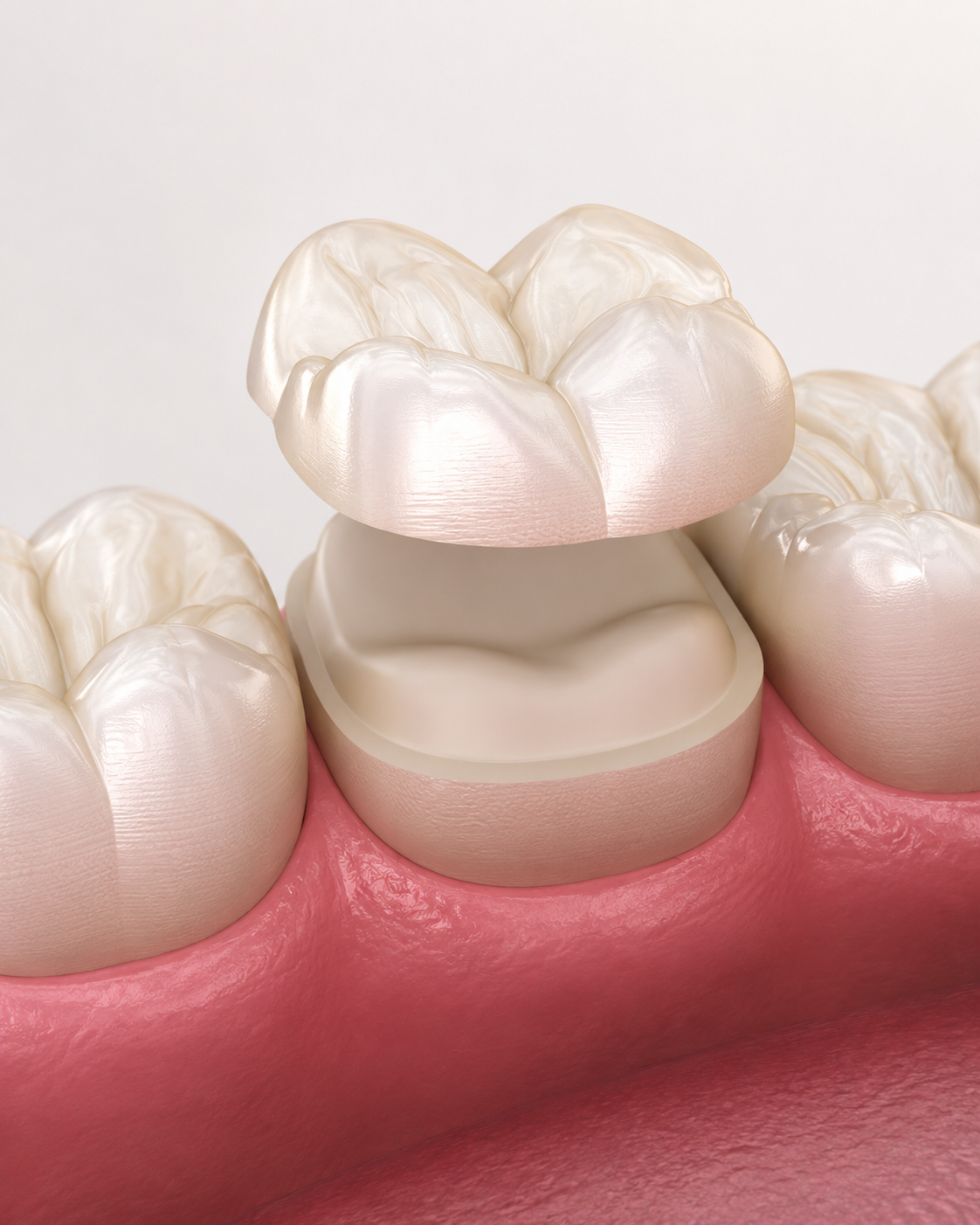
The honest summary: most dental work flies without a second thought — cleanings, whitening, resin fillings, fitted crowns and completed root canals impose no flight restriction at all — while the treatments that want daylight before departure are the surgical ones: commonly a day or two after simple extractions, two to three days after implant placement, and longer, case-by-case, after sinus-adjacent work, where the surgeon’s specific advice outranks any general page. The physics is simple — gas expands as cabin pressure drops, so enclosed spaces (a mid-treatment tooth, a fresh sinus graft) are the ones that care about altitude, while sealed, finished, healed work doesn’t — and the planning rule is simpler still: put your flight date in the first message, and the treatment calendar gets built backward from it, buffers included, so this page’s cautions never become your travel story.
- The physics — why altitude cares about some teeth and not others in Busan
- Treatment by treatment — the honest flight verdicts
- On the flight itself — the honest cabin playbook
- The verdicts, in one honest table
- Building the calendar backward from the flight
- How it runs at our Busan Seomyeon clinic — and your next step
What departing patients actually ask
- Can I fly the same day as a filling or crown fitting?
- How long after an extraction is it safe to fly?
- I had a sinus lift with my implant — does that change my flight?
- Why did my tooth ache on the descent last time?
- What should I actually do differently on the flight itself?
The physics — why altitude cares about some teeth and not others in Busan
The mechanism in one paragraph: airline cabins are pressurised, but not to sea level — cruising cabin pressure sits meaningfully below ground pressure, and by the gas laws any enclosed air pocket in your body expands on ascent and re-compresses on descent. Healthy, solid, sealed teeth contain no air pocket and notice nothing. The teeth that ache at altitude — the phenomenon has its own name, barodontalgia — are teeth with a space inside for pressure to work on: decay hollowing under an old filling, a failing seal, an abscess’s gas, a mid-treatment root canal chamber, or a sinus problem masquerading as an upper tooth.
Which yields this page’s most useful reframe, imported from the pain guide and worth restating: a tooth that reliably hurts on flights is volunteering diagnostic information — it’s naming itself as containing a hidden void, and it has earned an examination whether or not it behaves at sea level. Flight pain isn’t a quirk of flying; it’s a pressure test your dentist didn’t have to order, and the ₩40,000 examination reads its result.
The corollary that reassures departing patients: finished work is sealed work — a properly placed filling, a cemented crown, a completed and sealed root canal contain no space for pressure to find, which is precisely why they fly without restriction the day they’re done. The flight questions on this page are almost entirely about two other categories: healing surgical sites, where the concern isn’t pressure so much as timing peace for a fresh wound, and the sinus-adjacent special case, where pressure genuinely is the variable and the calendar honestly lengthens.
And the scope honesty owed up front: the timings on this page are the commonly advised, planning-grade ranges — useful for building an itinerary, deliberately unhedged where medicine is settled and deliberately soft where it isn’t — and the surgeon’s case-specific advice outranks all of them: your anatomy, your procedure’s specifics and your healing all vote, which is why the flight date belongs in the thread before scheduling rather than in a search bar after.
Treatment by treatment — the honest flight verdicts
No restriction at all — fly the same afternoon: examinations and scaling, whitening sessions, resin fillings, crown and inlay fittings (the cementation visit — classic last-day work per the same-day guide), night-guard deliveries, and denture fittings. The one same-day note that isn’t about safety: if the visit involved numbing, the numb-window rule applies to the airport meal — sensation back before hot food, on the ground or at altitude alike.
Completed root canals: sealed is sealed — no restriction once the chamber is closed, including with a temporary seal between visits, though the mid-arc case deserves its own sentence: an open or freshly medicated tooth mid-treatment is the classic barodontalgia candidate, and if your root-canal arc spans a flight, say so — the visit sequence gets arranged so you fly on sealed phases, which is a scheduling detail, not a restriction. Simple extractions: the commonly advised buffer is a day or two before flying — not because cabins endanger clots directly, but because the first 24–48 hours are the clot-protection window the extraction guide details, and a travel day (lifting bags, dry air, distraction from aftercare) is a poor use of it. Fly on day two or three and the question retires itself.
Implant placement: commonly advised at two to three days before flying — the same fresh-wound logic scaled up, plus the honest comfort point that post-surgical swelling peaks around day two and nobody enjoys peaking at 35,000 feet. The integration months that follow impose no flight limits whatsoever — the two-trip rhythm exists precisely because integrated healing and intercontinental life coexist fine. The sinus-adjacent case — sinus lifts and upper implants near the sinus floor: here pressure is genuinely the variable, the commonly advised no-fly window is longer and case-dependent — often a week or more — and this is the one verdict this page refuses to give generically: the surgeon’s specific clearance, based on your graft and your imaging, is the answer, stated before scheduling so your ticket and your sinus never argue.
The pre-emptive category, included because it’s the cheapest fix on the page: known problems flying with you — the deep untreated cavity, the failing old filling, the on-and-off ache — are the actual highest-risk items in dental aviation, far ahead of anything freshly treated here; a pressure change finds the void mid-holiday instead of pre-trip. The honest pre-departure move for frequent flyers: the ₩40,000 examination before the long-haul season, so altitude has nothing to find.
On the flight itself — the honest cabin playbook
Cabin dryness, the underrated variable: aircraft air is desert-dry, and a dry mouth is both uncomfortable on a healing site and unhelpful generally (the saliva-as-rinse-cycle logic at altitude). The fix is unglamorous: water steadily through the flight, easy on the dehydrating pair (alcohol and heavy caffeine), and — for the recently treated — the same gentle salt-water rinse rhythm at the layover that the aftercare sheet prescribed at the hotel, per the kettle doctrine.
For the post-extraction and post-surgical flyer(who followed the buffers and is now day-two-plus): the clot rules travel with you — no straws even for the in-flight drink service, no smoking at the layover, gentle everything — and the swelling-management extra: a cold can from the drinks cart wrapped in a napkin is a serviceable improvised cold pack, and requesting it costs one sentence. Analgesic timing, kept honest and simple: whatever ordinary regimen the aftercare sheet set, take it on schedule across time zones by elapsed hours, not local clock — the label’s limits don’t reset at the date line.
The descent notes: descent is where pressure-sensitive teeth speak up (gas re-compressing) and where sinus-adjacent healing most wants the calendar respected — and for everyone else it’s a non-event: swallowing, yawning and the usual ear-equalising serve any mild fullness, and chewing gum’s ear-popping utility comes with the honest footnote that vigorous gum-work is exactly what a fresh extraction side doesn’t want; equalise with the other cheek’s economy or skip the gum for a day.
And the divers’ footnote this page owes coastal Busan’s visitors: everything above applies more to diving — the pressure swings are larger and faster than any cabin’s, barodontalgia’s diving cousin is well documented, and the commonly advised post-surgical no-dive windows run meaningfully longer than the flight buffers. If your Busan itinerary pairs dentistry with dive days, say both in the first message; the calendar gets built with the water, not just the sky, in mind.
Ticket booked and treatment list in hand? Send both — the calendar comes back built backward from your flight, buffers landed inside the stay, honest deferrals named. Message us on WhatsApp →
The verdicts, in one honest table
Every treatment tier and its flight timing, planning-grade:
| Treatment | Flight timing, planning-grade | The honest note |
|---|---|---|
| Examination · scaling · whitening · resin fillings | Fly the same afternoon | No restriction — only the numb-window rule for the airport meal |
| Crown / inlay / denture fittings · night-guard delivery | Fly the same afternoon | Classic last-day work — sealed and finished flies free |
| Completed or between-visit-sealed root canals | No restriction once sealed | Mid-arc open phases are the barodontalgia case — sequence visits so you fly sealed |
| Simple extractions | Commonly a day or two before flying | The clot-protection window deserves a quiet day, not a travel day |
| Implant placement | Commonly two to three days before flying | Swelling peaks ~day two — better at the hotel than at 35,000 feet |
| Sinus lifts · sinus-adjacent upper implants | Longer, case-by-case — often a week-plus | The one verdict this page won’t give generically: the surgeon’s clearance is the answer |
Planning-grade ranges — your surgeon’s case-specific advice outranks every row. Diving multiplies every caution: pressure swings exceed any cabin’s, and post-surgical no-dive windows run longer than flight buffers. Flight date in the first message = calendar built backward from it.
Building the calendar backward from the flight
The planning method this clinic actually uses, stated so you can see your own trip in it: the flight date anchors the calendar, and treatment schedules backward from it. Last-day-safe work (fittings, cleanings, whitening) stacks naturally toward departure; surgical work moves early in the stay so its buffer days are absorbed by the trip rather than colliding with the gate; sinus-adjacent work gets its case-specific clearance conversation before anything books; and the plan leaves in writing with the buffers visible — per house rule, nothing about your departure day should be discovered at the chair.
The classic trip shapes, pre-assembled: the one-week visitor — surgery (if any) on day one or two, the quiet day absorbed mid-trip while lab clocks run, fittings and finishing work in the final days, wheels-up with everything sealed; the KTX day-tripper — whose “flight” is a train and whose buffers compress accordingly, with the surgical-overnight exception that guide states; the two-trip implant patient — placement early in trip one with the two-to-three-day buffer honoured, integration at home with zero flight limits, the crown phase’s lab rhythm bracketing trip two’s flights comfortably.
The disruption honesty, because travel is travel: a delayed or moved flight rarely troubles this calendar (buffers only grow), while an earlier rebooking after surgical work deserves one message before you confirm it — the honest answer is usually “fine,” occasionally “fine with these adjustments,” and rarely-but-importantly “let’s talk about the sinus timeline” — and all three answers beat finding out at boarding. The thread has read flight-change messages before; it answers them fast.
And the record that travels with you either way: per the records guide, your imaging, treatment notes and written plan fly home in your carry-on — so if anything ever does act up at altitude or after landing, the dentist who sees it next starts with the full file instead of a guess. Continuity is the quiet half of safe dental travel; it’s built into every departure here by default.
How it runs at our Busan Seomyeon clinic — and your next step
The intake habit that makes this whole page operational: your flight date is asked for in the first exchange and treated as a clinical input — the calendar builds backward from it, surgical buffers land inside your stay, sinus-adjacent cases get their specific clearance conversation before booking, and the same-day guide’s last-day-safe list stacks your departure eve with finishing work rather than fresh wounds. A plan that respects your ticket is not a favour here; it’s the format.
The departure-day layer, concretely: final fittings and checks banded comfortably before you need to leave for Gimhae (the arrival guide’s route running in reverse, with the same honest hour of transit padding), the aftercare sheet and written records handed over, the pharmacy stop pointed out if your regimen wants anything for the flight, and the thread confirmed on your lock screen — because the “is this normal” question, when it comes, tends to come from an airport chair or a first-night-home bed, and it gets answered there.
The post-departure layer, stated because it’s where dental tourism pages usually go quiet: the thread remains the follow-up channel after you fly — healing photos read, is-this-normal questions answered with the honest escalate-or-relax verdict, and the pain guide’s triage grammar applied at distance; where something genuinely needs hands, the honest answer includes “see a local dentist, here’s your file, here’s what to tell them” — continuity over territory, per the records guide’s whole philosophy.
One message starts it: your flight dates (both directions), what you’re hoping to have done, and any pressure history — the tooth that spoke up on a descent, the diving plans, the sinus questions. Back comes the calendar built backward: what fits your window, where the buffers land, and the honest “this piece belongs on your next trip” where the ticket votes that way. The sky is a planning input like any other; hand it to the thread and it stops being a worry at all.
- Sealed work flies free: fillings, fittings, completed root canals — same-afternoon departures, no restriction.
- Fresh wounds want daylight, not altitude: a day or two after simple extractions, two to three after implant placement — commonly advised, case-adjusted.
- Sinus-adjacent work sets its own calendar: the one verdict that’s always case-specific — get the surgeon’s clearance before booking anything.
- A tooth that aches on descent is volunteering information: it contains a void — examine it before the next long-haul, not after.
- Flight date in the first message: the calendar builds backward from it — buffers inside the stay, finishing work on departure eve.
The dentists behind every guide on this site


FAQ
Yes — sealed, finished work contains no space for pressure to act on, which is exactly why fittings and cementations are classic last-day appointments in every trip plan here. The only same-day note isn't about safety: if the visit involved numbing, hold the hot airport meal until sensation returns — the numb window runs two to three hours and doesn't care that you're in a departure lounge.
The commonly advised buffer is a day or two — not because cabin pressure endangers the clot directly, but because the first 24–48 hours are the clot-protection window, and a travel day (bags, dry air, distraction) is a poor use of it. Fly on day two or three with the rules travelling with you: no straws even at drinks service, no smoking at layovers, gentle everything. Surgical extractions and implants stretch the buffer to two-three days; the thread sets your specific number before anything books.
It means this is the one case where a webpage shouldn't give you a number: sinus-adjacent surgery is genuinely pressure-sensitive, the commonly advised no-fly window is longer — often a week or more — and it's honestly case-dependent on your graft and imaging. The working rule here: the sinus conversation and your flight date meet before scheduling, and the surgeon's specific clearance is the answer you plan around. Say both in the first message and the calendar is built so they never argue.
Because descent re-compresses gas, and gas was somewhere it shouldn't be: decay hollowing under an old filling, a failing seal, an abscess, or a sinus issue borrowing an upper tooth's address. That's barodontalgia, and it's diagnostic gold — the flight ran a pressure test and found a void. The honest move is the ₩40,000 examination before your next long-haul: pre-existing problems flying with you are the real risk category on this page, well ahead of anything freshly treated.
It intensifies all of it: diving's pressure swings are larger and faster than any cabin's, the diving version of pressure toothache is well documented, and post-surgical no-dive windows run meaningfully longer than flight buffers. If your itinerary pairs dentistry with dive days, put both in the first message — the calendar gets built with the water and the sky in mind, and the honest answer sometimes reorders which comes first in your week.
Sinus Lift in Busan
The pressure-sensitive case with its own honest calendar.
Single Implant in Busan
The two-trip rhythm whose buffers this page maps.
Root Canal in Busan
Sealed phases fly free — sequencing is the whole trick.
Examination
The pre-flight check that leaves altitude nothing to find.
What a Busan dentist can genuinely do in one day
Related guide in this series.
Toothache mid-trip: handling dental pain in Korea
Related guide in this series.
Gimhae Airport to a Seomyeon dentist: the simple route
Related guide in this series.
The sky is a planning input. Hand it to the thread.
Flight dates both directions, the treatment list, any pressure history — the calendar comes back built backward from your ticket, buffers inside the stay, and the honest deferrals named before you book anything.
Medical information in this guide is provided for general education and does not replace an individual examination and diagnosis. Prices shown are current at the time of writing; insured-schedule items follow Korea's national fee schedule and are quoted in writing at your visit. This clinic does not provide 24-hour service. Individual results vary.