

Root canal in Busan Seomyeon — a tooth can outlive its nerve.
Root canal treatment exists for one reason: your own root, even with its nerve retired, beats any replacement money can buy. The infected interior is cleaned, sealed and rebuilt — post ₩150,000, core and crown at published prices — and the tooth goes back to decades of quiet work on its original foundation.
Ask about your pain.
Tap what fits — we’ll open WhatsApp with your message ready to send.Nothing sends until you press send in WhatsApp. A photo and any X-rays help us give an honest tier read — Straumann-warranted, or KS-sufficient.
Do I need a root canal in Busan — and what will it actually cost?
The signals that point here: pain that lingers after hot or cold, aching that wakes you at night, pain on biting, a pimple-like bump on the gum, or a tooth darkening after an old injury. Those describe a nerve that’s inflamed beyond recovery or already infected — and a root canal is how the tooth survives it: the interior is cleaned of infected tissue, disinfected, sealed, and the tooth rebuilt on its own root.
On cost, the honest structure: the root canal fee itself varies with the tooth’s anatomy — front teeth carry one canal; molars carry three or four, and the work scales accordingly — so it’s quoted in your written plan after imaging, the same transparency-by-quote approach as our dentures page. The rebuild that follows is published: post ₩150,000 where the core needs internal support, resin core build-up ₩50,000 with the crown, and the crown itself from ₩450,000. Every number is in writing before treatment begins.
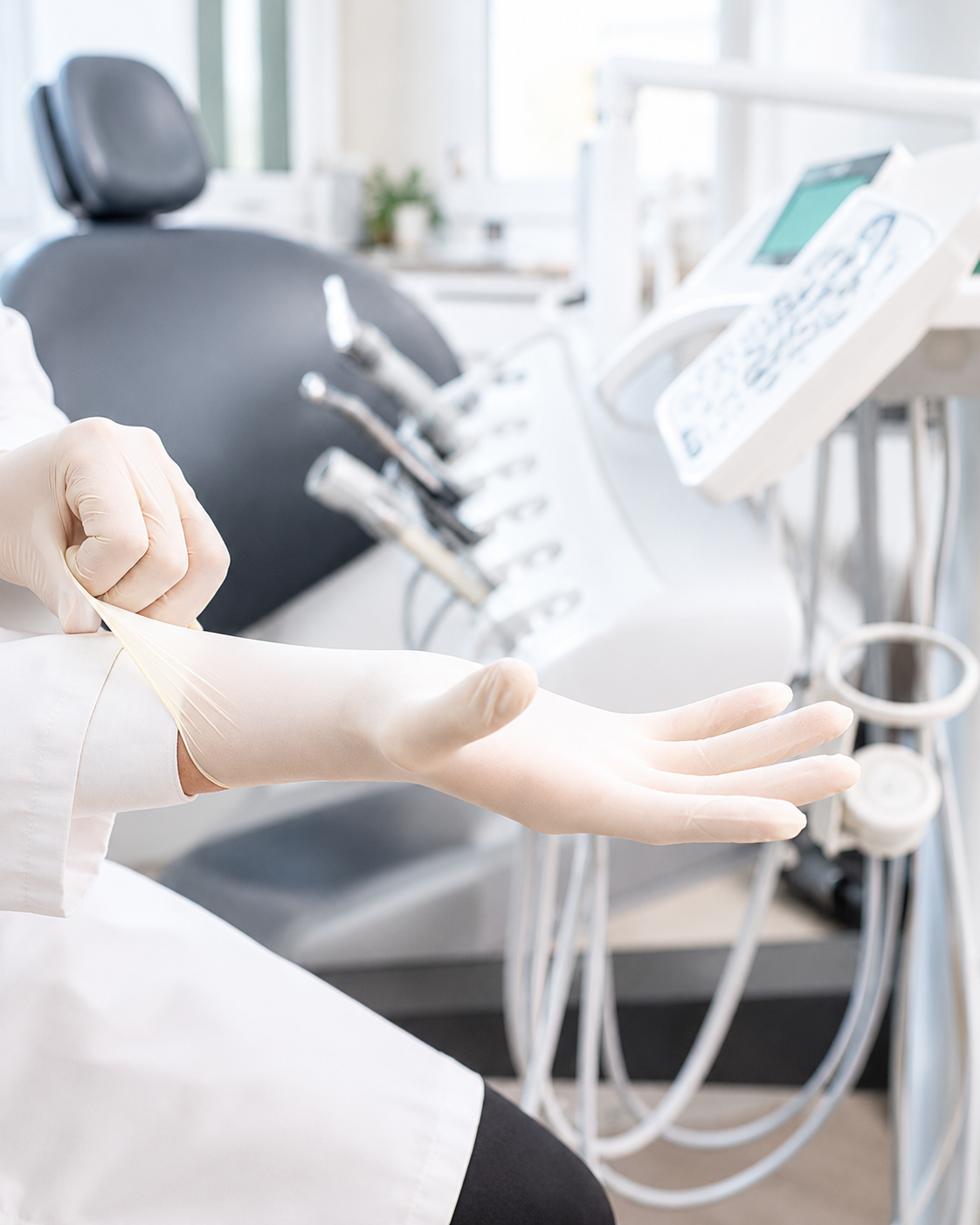
The nerve is not the tooth — it’s a tenant the tooth can evict.
Inside every tooth runs a chamber of soft tissue — the pulp: nerves and blood vessels that built the tooth during its growing years. Here’s the anatomical mercy the whole treatment rests on: a mature tooth no longer needs its pulp to survive. The surrounding tissues supply everything the root requires; the pulp’s remaining job is mostly to report temperature — and, when infected, to hurt.
When deep decay, a crack or trauma lets bacteria reach that chamber, the pulp has no way to heal — it’s a sealed room with no drainage and no immune reinforcements, which is why pulpitis pain escalates rather than resolves, and why antibiotics alone never fix it. Root canal treatment is the eviction and the deep-clean: the chamber and each root canal are cleaned of infected tissue, shaped, disinfected, and sealed with an inert filling material so bacteria have nowhere left to live.
What remains is a tooth that’s quieter than before — no temperature reports, no pain — but also drier and more brittle, which is why the rescue has a mandatory second act: the core rebuild and crown that armour the saved root for real chewing. A root canal without its crown is a rescue left half-finished — our crown page calls these teeth “root-canal graduates,” and graduation requires the ceremony.
Six teeth that end up in this chair — and one that gets sent home.
The decay that went too deep
The classic routeThe final row of our cavity page’s cost-of-waiting table, arrived in person: decay reached the pulp chamber, and the filling conversation became this one. The root is still entirely saveable — that’s the good news the pain obscures.
The night-ache tooth
Irreversible pulpitisThrobbing that arrives unprovoked, worsens lying down, and laughs at painkillers — the signature of a pulp inflamed past recovery inside its sealed chamber. The root canal is the only real analgesic; relief typically begins the day the chamber is opened.
The gum pimple
The quiet abscessA small bump on the gum that comes, goes, sometimes drains a bad taste — a fistula venting a chronic abscess at the root’s tip, often with no pain at all. Deceptively calm, genuinely urgent: the infection is eating bone while it waits, and imaging shows exactly how much.
The darkening front tooth
The old injury’s billA tooth knocked years ago — sports, a fall, a door — slowly greying as its quietly deceased pulp discolours from within. Root canal first, then the aesthetic conversation: internal whitening or a portrait-grade crown, planned as one story.
The re-treatment case
Old root canals, new troubleA previously treated tooth flaring again — missed canal anatomy, a failed seal, or new decay under an old crown. Re-treatment is more intricate than round one and honestly graded: where the root remains rescuable we re-treat; where it doesn’t, we say so with the imaging on screen.
The tooth that just needs a filling
Sent home cheaperSharp cold sensitivity that fades in seconds is usually reversible pulpitis — an irritated nerve that recovers once its cause (a cavity, a leaking filling) is fixed with an resin filling (from ₩50,000). Testing tells the two apart, and we don’t root-canal a tooth that a filling honestly saves.
How a root canal actually goes.
Test & confirm
Imaging plus pulp testing separates reversible irritation from irreversible damage — and maps the tooth’s canal count, which sets the written fee honestly before anything begins.
Numb & isolate
Profound local anaesthesia — inflamed teeth get the time and technique they need to go fully quiet — then the tooth is isolated so the cleaned interior stays sterile while we work.
Clean & shape
The chamber is opened and each canal — one in front teeth, three or four in molars — is cleaned of infected tissue and shaped with fine instruments. For the night-ache patient, this is the step where the pain’s engine is removed.
Disinfect & seal
The canal system is irrigated, disinfected and sealed with an inert filling — sometimes across two visits with a medicated dressing between, where the infection’s severity asks for it.
Rebuild & crown — act two
The core is rebuilt (post ₩150,000 where needed, resin build-up ₩50,000 with crown), and the crown (from ₩450,000) goes on — the armour that makes the rescue permanent enough to forget.
The pain decoder — what your tooth is trying to say.
| What you feel | What’s likely happening | The honest direction |
|---|---|---|
| Sharp cold zing, gone in seconds | Reversible pulpitis — an irritated but recoverable nerve | Fix the cause: usually a filling (from ₩50,000), not a root canal |
| Pain that lingers after hot or cold | Irreversible pulpitis — inflammation past the point of recovery | Root canal territory — testing confirms, treatment relieves |
| Throbbing at night, unprovoked | Advanced pulpitis — pressure building in the sealed chamber | Root canal, promptly — this pain does not negotiate or self-resolve |
| Pain on biting; the tooth feels “tall” | Infection reaching the root tip and the ligament around it | Root canal plus time for the ligament to settle afterwards |
| Gum pimple; bad taste; little pain | Chronic abscess draining through a fistula — quietly consuming bone | Root canal without waiting for it to hurt — calm is not safety here |
| No pain at all — after weeks of pain | Possibly a nerve that has died: silence, not recovery | Testing and imaging — a dead pulp still needs cleaning before infection spreads |
Two rows deserve a highlight: the first — because not every toothache needs this page, and we test before we treat — and the last, because pain that stops on its own is the most misread signal in dentistry: nerves that die go quiet, and the infection they leave behind does not.
How a tooth outlives its nerve — the biology of the rescue.
“Remove the nerve and keep the tooth” sounds like a contradiction until you see the anatomy’s actual org chart:
The pulp’s job was mostly finished anyway
The pulp built your tooth from the inside during its growing years — laying down dentine, extending the root. In a mature tooth that construction is complete, the surrounding ligament and bone handle the tooth’s support and nutrition, and the pulp’s remaining duties are modest: sense temperature, and occasionally overreact.
A sealed room can’t fight or drain
When bacteria breach the chamber, the pulp faces a battle it structurally cannot win: rigid walls mean inflammation has nowhere to swell, pressure crushes its own blood supply, and no drainage means no cleanup. This is why pulpitis escalates, why “waiting it out” fails, and why the infection eventually exits the only door available — the root’s tip, into your bone.
The eviction and the seal
Treatment empties the chamber and canals of infected tissue, disinfects the system, and seals it inertly — converting the tooth’s vulnerable interior into solid, bacteria-proof architecture. The root outside that seal remains living tissue’s neighbour: the ligament still cushions, the bone still holds, your bite still feels through them.
Graduation requires the ceremony
A treated tooth is drier and more fracture-prone than its neighbours — which is why the crown isn’t an upsell but the treatment’s second act: post (₩150,000) and core where needed, armour over the top, and the root-canal graduate goes on to a long, quiet career. Skipping the crown is how saved teeth get lost to fractures the rescue was meant to prevent.
Does a root canal hurt?
The modern honest answer: the root canal is the relief , not the ordeal — the pain patients remember is the pulpitis before treatment, not the procedure under profound anaesthesia, and inflamed teeth get the extra anaesthetic time and technique they need to go fully quiet before we begin. Afterwards, some days of tenderness on biting are normal as the root-tip tissues settle; it fades with ordinary painkillers. The reputation is forty years out of date, and we’re happy to retire it one patient at a time.
How much does a root canal cost in Busan?
The treatment fee scales with the tooth’s real anatomy — a one-canal front tooth is a genuinely smaller job than a four-canal molar — so it’s quoted in your written plan after imaging rather than flattened into one number. The rebuild is published: post ₩150,000 where the core needs internal support, resin core build-up ₩50,000 with the crown (₩100,000 standalone), and the crown from ₩450,000. Total, in writing, before treatment — compare it against an ₩800,000+ implant and the economics of saving your root speak for themselves.
Root canal or extraction — why fight for the tooth?
Because your own root keeps things no replacement fully restores: the ligament that cushions and senses bite force, the gum architecture around a natural neck, and the bone stimulation that keeps the jaw employed. A root canal plus crown typically also costs less than an implant (₩800,000–1,750,000). Extraction wins only when the root is honestly finished — fractured below the gum, resorbed, or failed beyond re-treatment — and when that’s your case, we’ll show you why on the imaging rather than asking you to take it on faith.
How many visits does a root canal take?
Commonly one to two for the root canal itself — straightforward cases can be cleaned and sealed in a single sitting, while active infections sometimes earn a medicated dressing and a second visit so the seal goes into a calm canal. The crown then adds its own preparation-and-fit rhythm. For visitors, the whole sequence maps onto a written visit plan first: message your dates and symptoms on WhatsApp and we’ll tell you honestly what fits your stay before you book anything.
Can I just take antibiotics instead?
No — and understanding why saves teeth: antibiotics travel by bloodstream, and an infected pulp chamber has lost its blood supply, so the drugs physically cannot reach the bacteria camped inside. Antibiotics have a real but supporting role — controlling a spreading abscess or facial swelling around the treatment — but the source itself can only be cleaned mechanically. A tooth that “got better with antibiotics” has usually just gone quiet while the reservoir refills; the follow-up visit is what makes the improvement real.
My tooth stopped hurting on its own — am I in the clear?
Possibly the opposite, and this deserves plain words: severe tooth pain that fades without treatment often means the nerve has died , not healed — dead tissue stops reporting, while the bacteria that killed it continue working silently toward the root tip and the bone beyond. The follow-up signals arrive later as bite tenderness, a gum pimple, or an abscess. A tooth with that history needs testing and imaging even in its quiet phase — especially in its quiet phase.
Care by board-certified specialists in Seomyeon
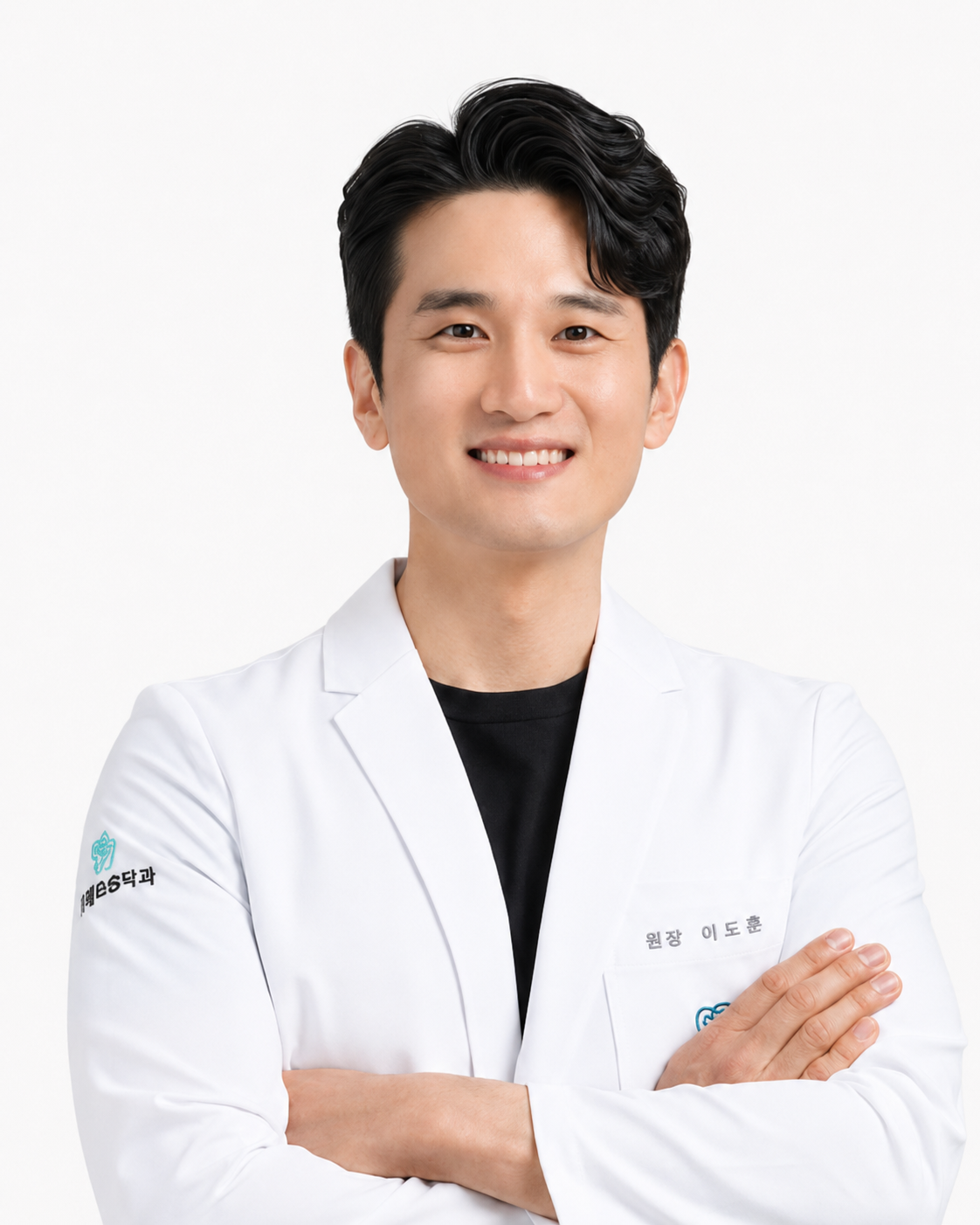
Both directors are board-certified specialists in Advanced General Dentistry, so your cosmetic treatment is planned with your overall dental health in mind.

- Board-certified specialist, Advanced General Dentistry
- M.S. in Orthodontics, Kyungpook National University
- Focus on natural, alignment-led smile improvement
- Conservative, tooth-preserving approach
- Board-certified specialist, Advanced General Dentistry
- DDS, Dankook University College of Dentistry
- Restorative & aesthetic resin filling work
- Focus: natural, durable results
Small truths about root canals.
- Chew on the other side until the crown is on. Between root canal and crown, the tooth is at its most fracture-prone — the one rule that protects the whole investment costs nothing and lasts only weeks.
- Book the crown when you book the root canal. The graduates we lose are almost never lost to failed treatment — they’re lost to postponed crowns and untimely almonds. Treat the two as one appointment series, not a treatment and a suggestion.
- Night pain relief has a posture trick. Pulpitis throbs harder lying flat as head pressure rises — an extra pillow buys real relief while you wait for your appointment. (It buys relief; it doesn’t buy time. Book anyway.)
- The “tall tooth” feeling after treatment is the ligament talking. Days of bite tenderness while the root-tip tissues calm down is the normal epilogue, not a failed treatment — escalating pain or swelling is different, and worth a same-day message.
- Old injuries keep slow accounts. A tooth hit years ago can need this page a decade later, announcing itself by darkening rather than hurting. If a front tooth is quietly greying, testing it now beats explaining it at the implant page later.
When we’ll fight for the tooth — and when we’ll tell you to stop paying for it.
The root canal is right when…
- the pulp is irreversibly inflamed or infected but the root structure is sound — the classic rescue
- an abscess or fistula is draining from a saveable tooth — the calm ones count double here
- an old injury’s tooth is darkening — treat first, then solve the colour as one planned story
- a previously treated tooth can honestly be re-treated — graded on imaging, not optimism
We’ll tell you something else when…
- testing shows reversible pulpitis — a filling (from ₩50,000) fixes the cause, and we send you home cheaper
- the root is fractured below the gum or structurally finished — the honest conversation moves to extraction and an implant, with the imaging on screen
- re-treatment maths stops adding up — a third rescue attempt on a failing root can cost more biology and money than an honest replacement; we’ll show you both columns
- the pain isn’t pulpal at all — sinus pressure, grinding and gum abscesses all impersonate toothache, and treating the actual culprit beats treating the loudest suspect
Root canal FAQ.
The dividing line is whether the nerve can recover. Brief sharp sensitivity that vanishes when the trigger does usually means reversible irritation — filling territory. Pain that lingers after the trigger, arrives unprovoked, wakes you at night, or comes with bite tenderness points to a nerve past recovery. You don't have to self-diagnose: pulp testing and imaging give the answer objectively, and we treat what the tests say — which regularly means sending a worried patient home with a filling from ₩50,000 instead.
Root canal treatment is among the most-studied procedures in dentistry, with a century of evidence behind it — the "root canals cause illness" claims circulating online trace to research from the 1920s that was discredited decades ago and has been contradicted by modern study ever since. The genuinely unsafe option is the untreated infected tooth, which holds an active bacterial reservoir against your jawbone indefinitely. We use MFDS-approved materials, isolate the tooth during treatment, and will happily walk through the evidence at your consult.
The sealed-chamber biology means there is no lucky ending: the infection exits through the root tip into the bone, forming an abscess that either aches acutely or drains quietly while excavating bone — and occasionally escalates into facial swelling that turns a dental appointment into an urgent one. Financially the story runs down our cavity page's cost-of-waiting table: a saveable tooth today, an extraction and ₩800,000+ implant conversation later. Teeth at this stage do not self-rescue; someone has to clean the room.
For small access holes in front teeth, sometimes a filling genuinely suffices — we'll say so when it does. Back teeth are a different physics problem: root-canal-treated molars are drier, more brittle, and often already hollowed by the decay that started everything, and chewing loads split unprotected ones with depressing regularity. The crown redistributes those forces around the tooth instead of through it. Skipping it is the classic way a successful root canal turns into an extraction two years later — the one economy we'll argue against.
A minority do — missed canal branches, complex anatomy, a seal that leaks, or new decay reopening the door. The signals are familiar: returning pain, a new gum pimple, findings on a routine X-ray. The honest menu then: re-treatment where the root remains sound (cleaning out the old filling and resealing — more intricate than round one, routinely worthwhile), or, where the root itself is finished, the extraction-and-implant conversation with both options priced side by side. Teeth treated elsewhere are welcome for exactly this assessment — findings, not lectures, as everywhere on this site.
Message first, fly calmer: acute pain cases get triaged promptly, and the first visit — testing, diagnosis, and usually the cleaning that stops the pain — is the urgent part that fits almost any stay. Whether the full sequence (sealing, core, crown) completes within your trip depends on the tooth and your dates; where it can't, we stabilise honestly, document everything in English, and either schedule your return visit or hand a clean record to your dentist at home. Pain relief doesn't wait for perfect itineraries.
A root canal around your travel.
Describe the pain pattern on WhatsApp — lingering, night-waking, bite-triggered — with your dates. You’ll get an honest triage and a visit map before booking anything.
Testing, imaging, the written plan — then the cleaning that removes the pain’s engine, usually the same day the diagnosis lands. The hardest part of the trip ends here.
Sealing, core (post ₩150,000 where needed), then the crown’s prepare-and-fit rhythm — mapped honestly against your stay, staged across trips where the calendar insists.
Whatever stage your trip completes, you leave with English records and imaging — for our next visit together or your dentist’s at home. Rescues travel well when they’re documented.
Tooth pain has an engine — we remove engines.
Describe your pain on WhatsApp — when it comes, what triggers it, how long it lingers. You’ll get an honest read on whether it’s filling-shaped, root-canal-shaped, or something else entirely — and a prompt appointment if it’s urgent. In English.
Message us on WhatsAppBaro Dental Clinic · 5F, SJ Medical Building, 698-1 Jungang-daero, Busanjin-gu · Seomyeon Station Exit 2, 4 min
Explore the options in Busan.
Crowns & Bridges
From ₩450,000 — the mandatory second act that armours the saved root.
Explore →Cavity & Fillings
From ₩50,000 — the earlier, cheaper chapter of the same story.
Explore →Single Tooth Implant in Busan
The honest alternative when the root itself is finished — priced side by side.
Explore →Front Tooth Solutions in Busan
When the darkened or damaged tooth sits in the portrait zone.
Explore →Medical information on this page is provided for general education and does not replace an individual examination and diagnosis. Whether root canal treatment, re-treatment or another route suits your tooth — including pulp testing, canal-count assessment and the written fee — is confirmed at an in-person consultation with imaging. Individual results vary.