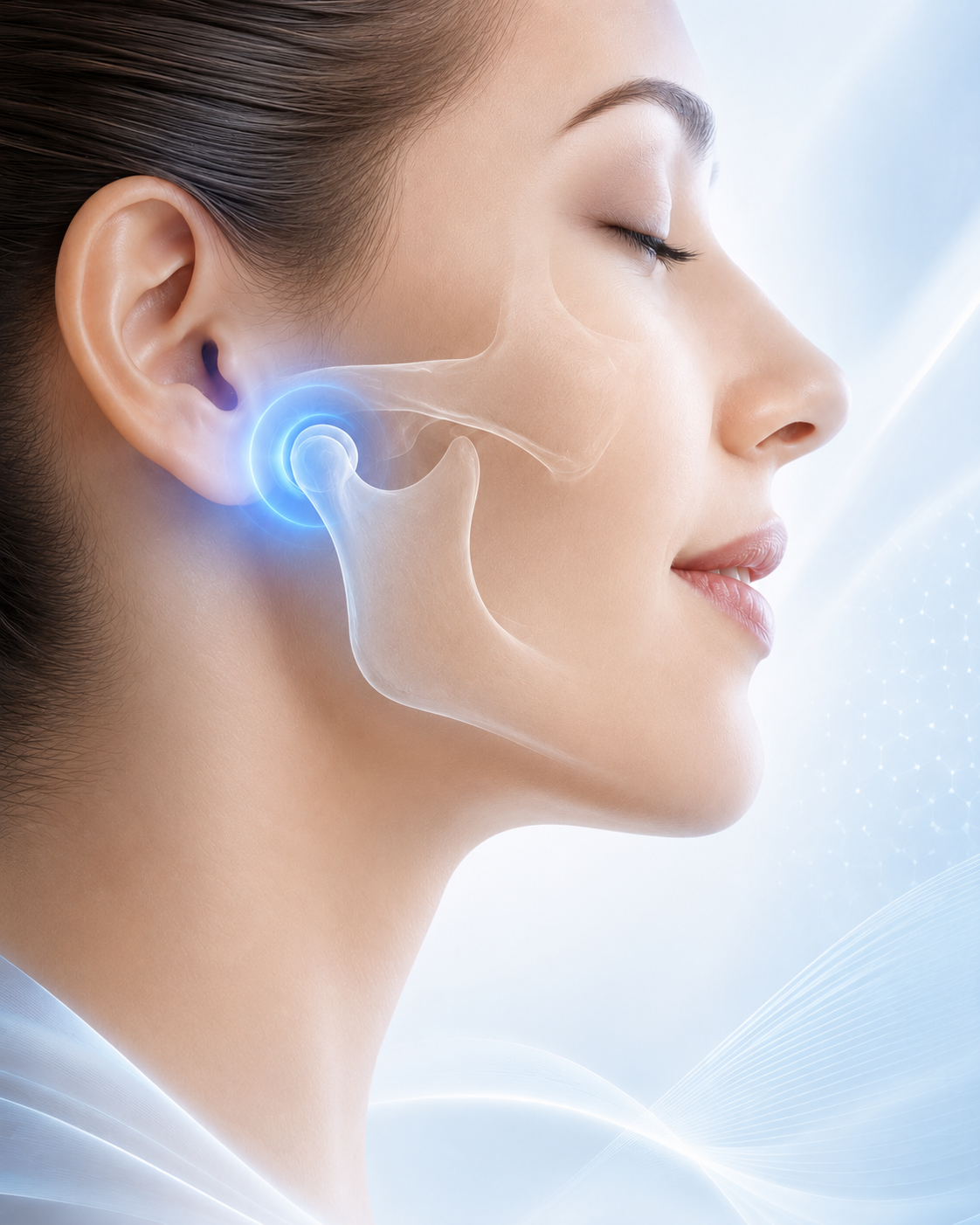
TMJ & jaw pain treatment in Busan Seomyeon — conservative care, honest limits.
Relief for jaw pain, clicking and clenching through diagnosis-led conservative care — honest about what helps and about our limits, from board-certified specialists, in English.
Build your first message.
Tap what you need — we'll open WhatsApp with your message ready to send.Nothing sends until you press send in WhatsApp. Describing when the pain or clicking happens helps us advise you accurately.
What is a TMJ disorder?
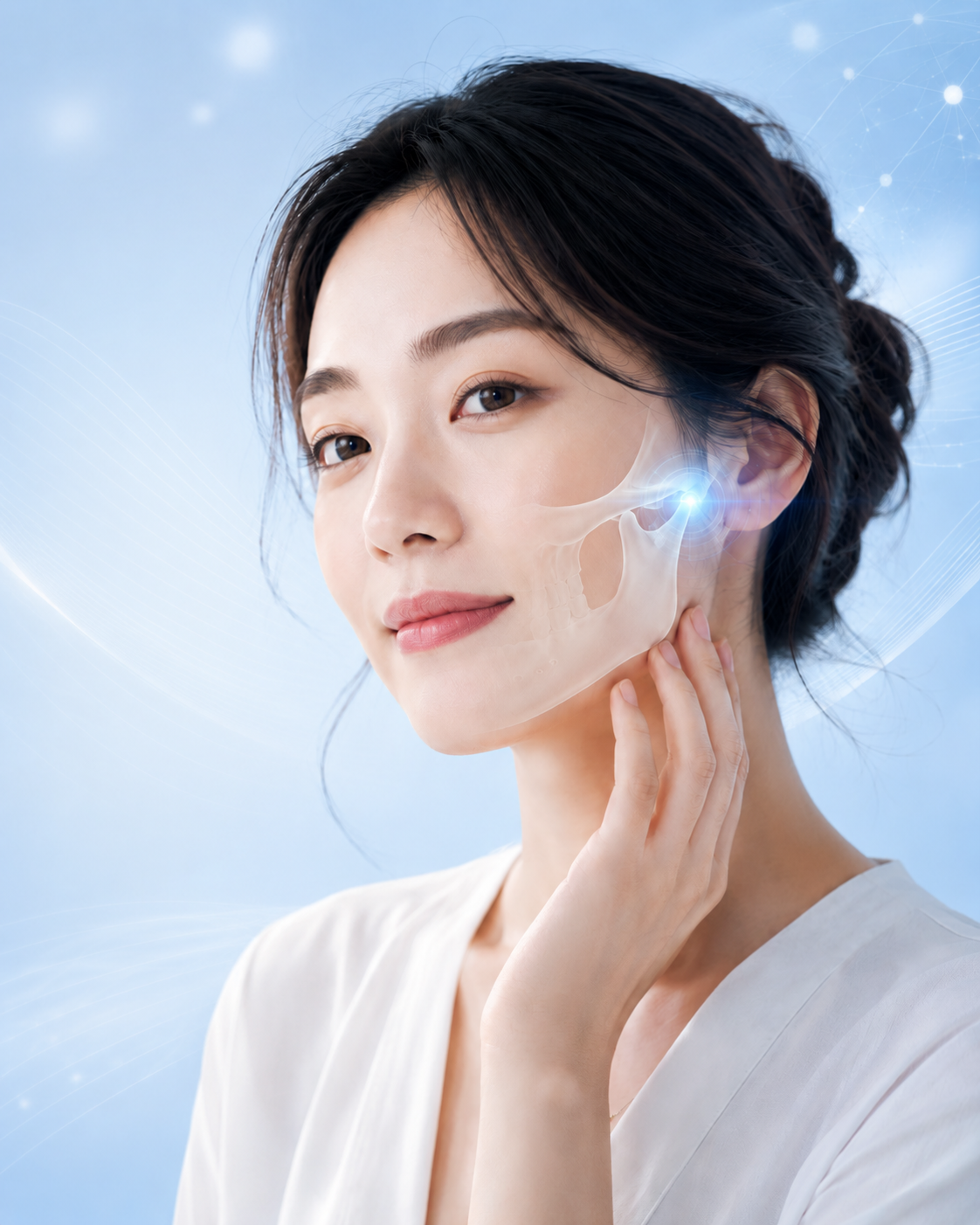
Your temporomandibular joints (TMJ) connect your jaw to your skull, just in front of each ear. When they and the surrounding muscles are strained — often by clenching, grinding or bite imbalance — you can develop pain, clicking or popping, tenderness, and difficulty opening comfortably. This is called a TMJ disorder (TMD).
At Baro Dental we take a conservative, evidence-based approach, focused on protecting the joint and relieving the strain rather than jumping to invasive treatment.
Common signs & symptoms
TMJ disorders show up in different ways. If several of these sound familiar, it's worth an assessment.
Jaw-related signs
- Pain or tenderness around the jaw or ear
- Clicking, popping or grating when you open or chew
- Jaw stiffness, or a feeling it may "lock"
- Discomfort when opening wide or chewing
Related signs
- Teeth grinding or clenching, often during sleep
- Waking with a sore jaw or tension headache
- Worn, sensitive or flattened teeth
- Facial-muscle tightness or fatigue
Can TMJ pain go away on its own?
Often, yes — many flare-ups settle within weeks with jaw rest, soft foods, warm compresses and awareness of daytime clenching. That's exactly why our first-line care is conservative. What deserves an exam: pain lasting beyond a few weeks, locking, or clicking that's getting worse rather than better.
How much does TMJ treatment cost in Busan?
Conservative care keeps costs modest: a CT scan is ₩30,000 when imaging is needed, a custom night guard ₩300,000, and short-term medication is quoted at consultation. There's no expensive device programme to sign up for — and if your case needs specialist care beyond our scope, we tell you before you spend anything.
Is my jaw clicking something to worry about?
Clicking without pain is usually not dangerous — many jaws click for years without trouble. The combination that warrants an assessment is clicking plus pain, restricted opening, or episodes of locking. A short exam and, where needed, a CT tell us whether it's muscle, disc or bite-related — and each is managed differently.
Why does my jaw hurt in the morning?
Morning jaw pain and temple headaches usually point to night-time clenching or grinding — forces your joint absorbs for hours while you sleep. A custom night guard (₩300,000) spreads and cushions that load, and daytime habit coaching handles the daytime clenching you don't even notice at your desk until someone points it out.
The technology behind your assessment
Understanding your jaw starts with a careful assessment. These are the tools we use.
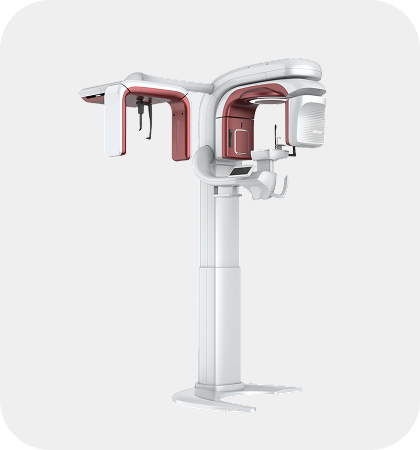
Osstem T2 Plus CT
3D cone-beam CT that images the jaw joints and bite relationship to help assess TMJ strain.
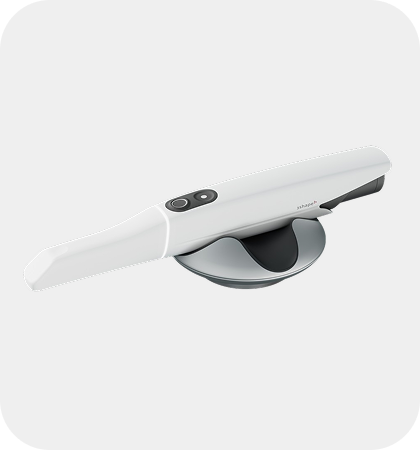
Trios 5 Scanner
A digital intraoral scanner used to capture your bite precisely when a custom night guard is being made.
Care by board-certified specialists in Seomyeon
Both directors are board-certified specialists in Advanced General Dentistry in Busan, assessing your jaw and bite as part of your overall dental health.

- Board-certified specialist, Advanced General Dentistry
- M.S. in Orthodontics, Kyungpook National University
- Bite & occlusion assessment
- Focus: conservative TMJ care

- Board-certified specialist, Advanced General Dentistry
- DDS, Dankook University College of Dentistry
- Occlusal & restorative assessment
- Focus: conservative, honest care
How we treat TMJ in Busan Seomyeon
We focus on the conservative, first-line measures that help most TMJ cases — protecting the joint and easing the strain.
Accurate Diagnosis First
An exam and low-dose CT distinguish muscle strain, joint (disc) problems and bite-driven overload — because those three are managed differently, and guessing helps nobody.
Short-Term Medication
Where helpful, short-term medication settles pain and inflammation during a flare-up — a bridge that lets the joint calm down, not a long-term fix on its own.
Habit & Self-Care Coaching
Most flare-ups respond to load management: soft-food periods, clenching awareness, warm compresses and jaw-rest habits — we coach you through exactly what to do and for how long.
Night Guard Protection
When night-time grinding or clenching drives the strain, a custom night guard (₩300,000) protects teeth and reduces morning jaw fatigue — made and fitted in-clinic.
TMJ treatment pricing in Busan
Fees in KRW. Please read the note on insurance below — it matters for international patients.
Your TMJ care, step by step
Planned around your visit — a clear path from assessment to relief.
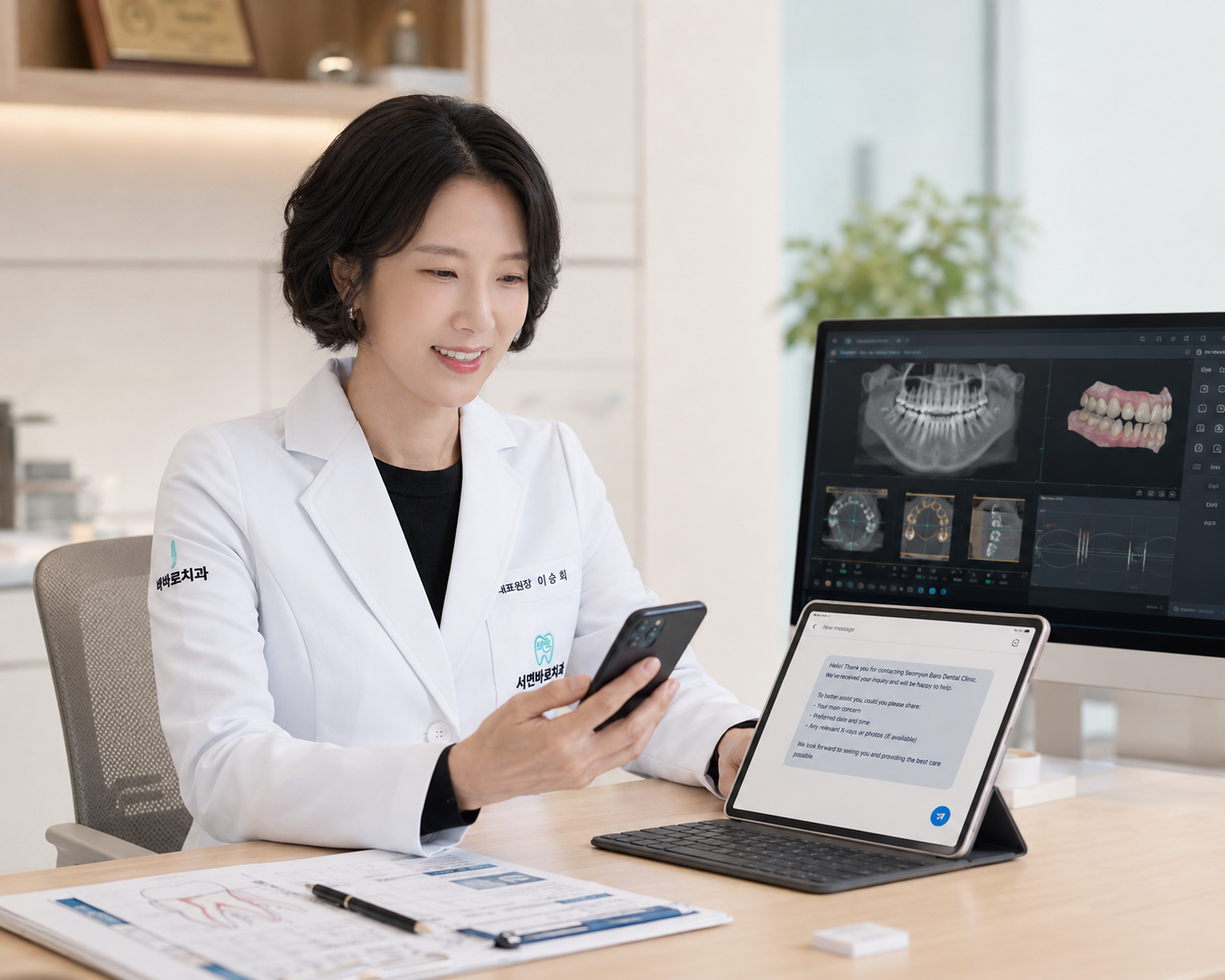
Message us
Describe your jaw symptoms on WhatsApp — pain, clicking, grinding. We advise and help you plan a visit in English.
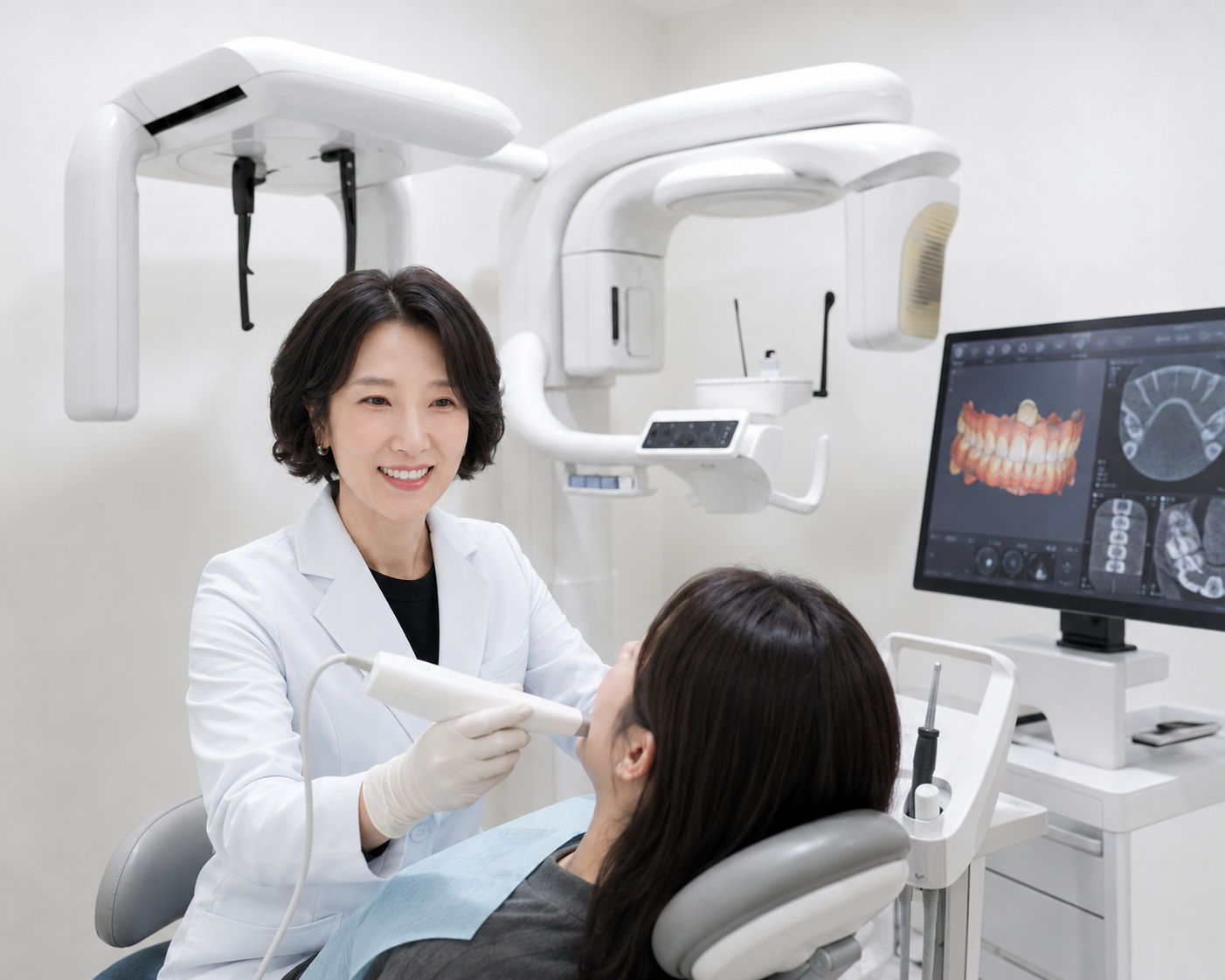
Assessment
A specialist examines your jaw, bite and teeth to understand what's driving the strain, and explains your options.
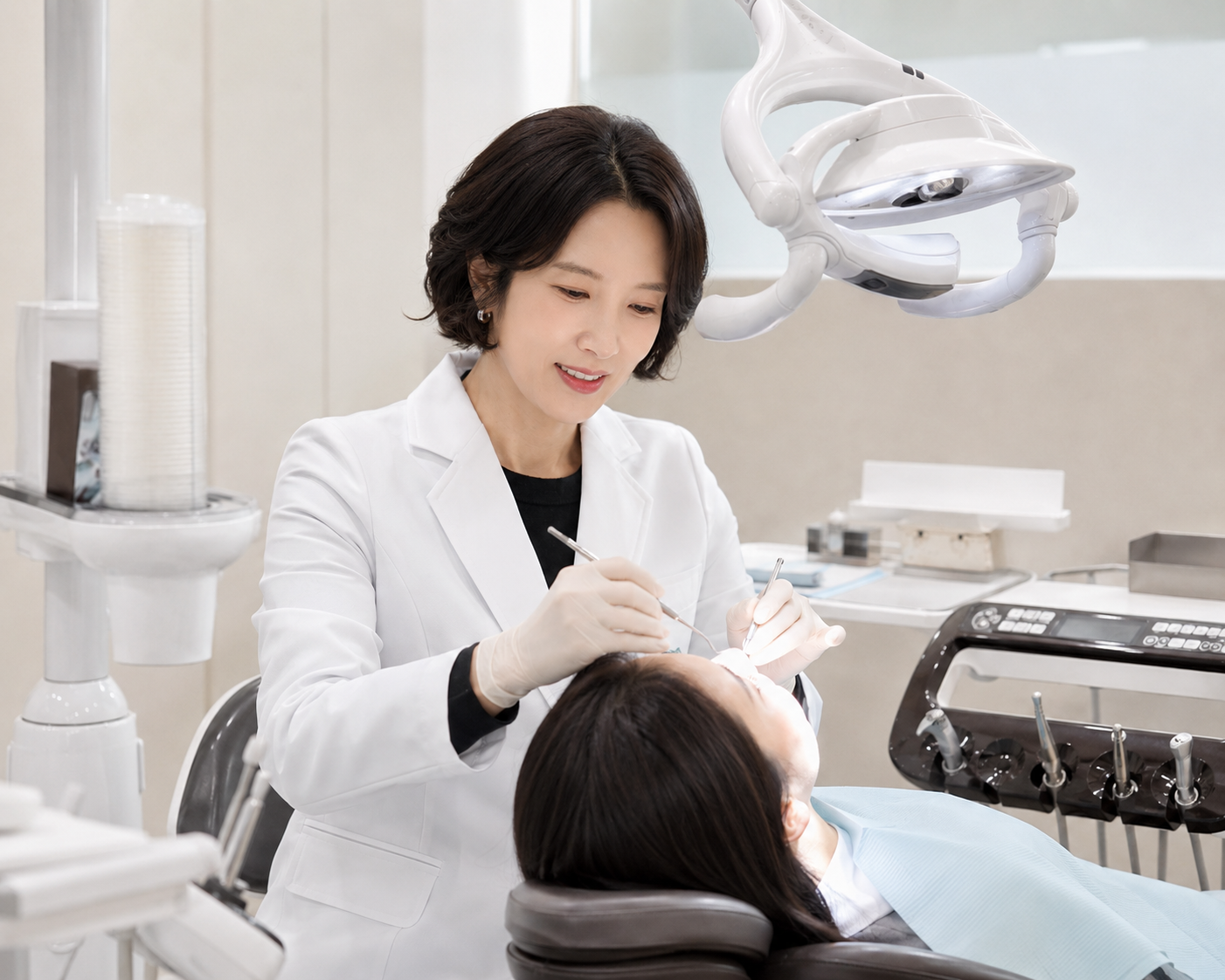
Care & protection
Your plan starts: habit coaching, short-term medication if a flare-up needs it, a night guard where grinding drives the strain — and clear instructions for wear.

Follow-up
We review how you're responding and adjust as needed, staying reachable on WhatsApp after you fly home.
TMJ & jaw FAQ
It's usually a combination of factors — most commonly clenching and grinding (often during sleep and stress), an uneven bite, or strain on the jaw muscles and joint. Because the causes overlap, an assessment of your jaw, bite and teeth helps pinpoint what's driving your symptoms so treatment targets the real source.
We use conservative, first-line care: precise diagnosis to find what is driving the strain, coaching on jaw-rest and habits, short-term medication for flare-ups, and a custom night guard where grinding, supported by short-term medication during flare-ups where helpful. This approach settles the strain for most cases without invasive treatment.
No — we focus on conservative dental-side care: diagnosis, habit coaching, short-term medication and night-guard protection, which are the first-line measures that help most people. We don't provide in-clinic physical therapy or jaw surgery. If your case needs care beyond this scope, we'll be honest with you and guide you toward the right specialist rather than over-treat.
They're related but not identical. A night guard mainly protects your teeth from grinding, while an occlusal splint is designed and adjusted to also relieve strain on the jaw joint and muscles. For grinding-related tooth protection, see our night guard page; our in-clinic solution is the night guard (₩300,000); when a case genuinely needs a joint-focused splint built and adjusted over time, we refer you honestly to a TMJ specialist rather than improvise.
Often, yes. The assessment and CT can happen on day one, self-care coaching starts immediately, and if a night guard is indicated we take records early in your stay and fit it once it's ready — many patients manage this within a visit, and we can plan around your dates. Message us your travel window and symptoms and we'll map out what's realistic.
Some TMJ care is covered by Korea's national health insurance for Korean residents. If you don't have Korean NHI, treatment is charged at the standard non-covered rate, which we confirm at your visit. Reach out on WhatsApp and we'll give you guidance on what to expect before you travel.
Rest the joint: soft foods for a week or two, avoid wide yawning and chewy or crunchy food, apply a warm compress to the jaw muscles, and catch yourself clenching during the day — teeth should only touch when eating. If pain persists beyond a few weeks or the jaw locks, come in for an assessment rather than pushing through. And skip the habit of testing the click repeatedly — probing the joint to see if it still hurts only keeps it irritated.
No referral is needed — message us directly on WhatsApp with your symptoms and we'll advise whether a visit makes sense. If our assessment finds your case needs joint-specialist care, physical therapy or surgical evaluation, we provide the honest referral ourselves, with your records and imaging to take along.
Ask about jaw pain or clicking
Describe your symptoms on WhatsApp for honest guidance — what would genuinely help your jaw, what to expect and a written KRW estimate, in English.
WhatsApp +82-10-3939-9980We reply in English · KST 10:30am–9pm