Root canal cost in Busan, and why the quote changes by tooth.
A root canal in Korea is two bills that patients often hear as one: the insured treatment of the canals, priced by how many canals the tooth has, and the non-covered crown that usually follows. This guide separates them, puts the Baro Dental crown figures next to the insurance logic, and explains why a molar and a front tooth are never the same quote.
By Baro Dental Clinic, Seomyeon · October 2026 · 10 min read
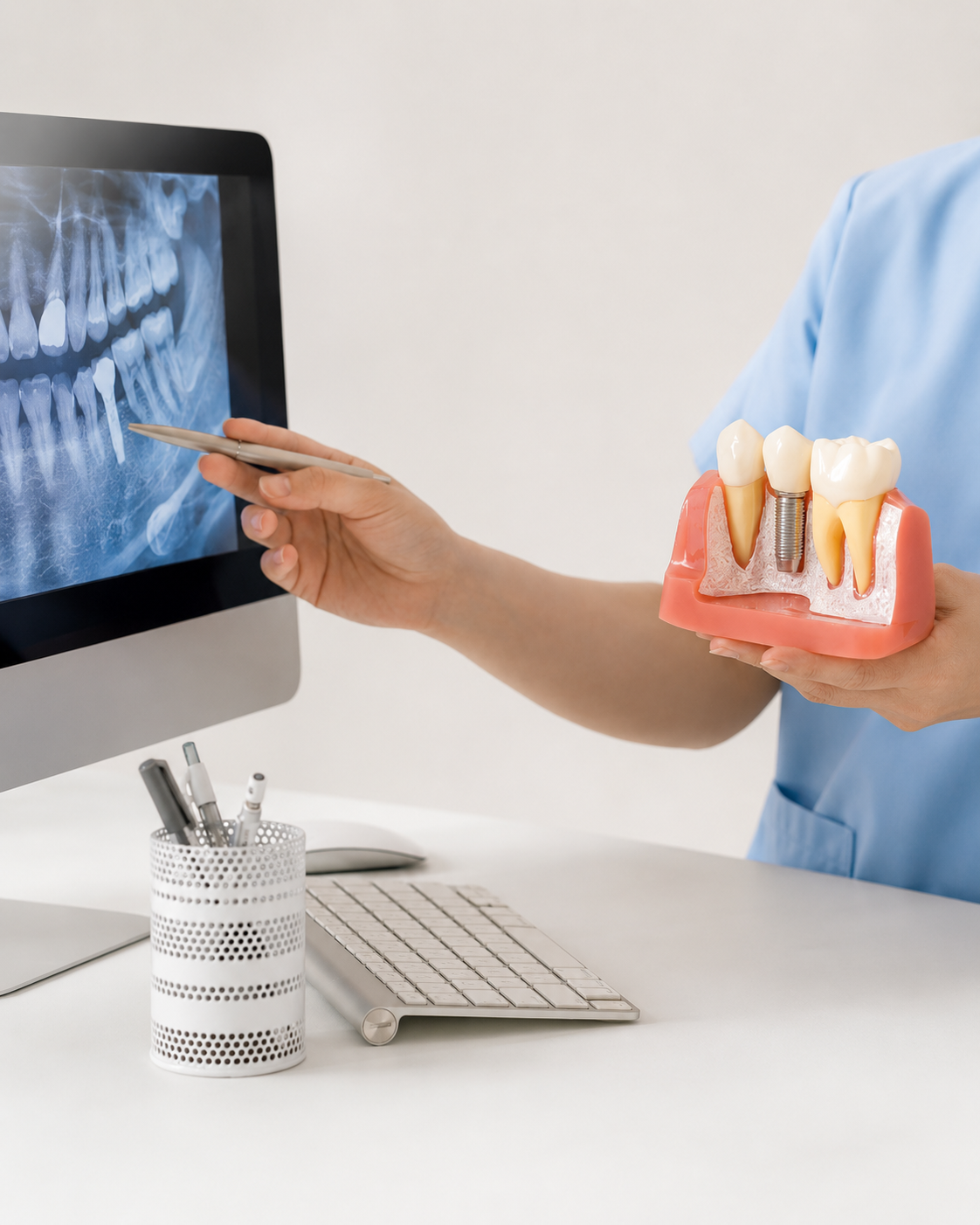
In Busan, the root canal itself is an insured-schedule procedure — the fee follows Korea's national health insurance table and rises with the number of canals, which is why a front tooth (one canal) costs a fraction of a molar (three or four). The crown that protects the tooth afterwards is non-covered, and that is the figure a clinic actually sets: at Baro Dental a posterior zirconia crown is ₩500,000, published and the same for every passport. Read your own tooth into those two parts and most of the mystery in root canal pricing disappears. Here is how the insured part is calculated, what uninsured visitors pay instead, when a crown is genuinely needed, and how the visits fit a stay in Busan.
- Two bills, not one: the canal work and the crown
- Why the insured fee follows the number of canals
- What NHI members pay in Busan
- Without Korean insurance — what visitors pay
- The crown: the published part of the quote
- How many visits, and how they fit a trip
- Root canal or extraction — the honest comparison
What people ask before a root canal in Busan
- A clinic said the root canal was “cheap” — and then the final bill had a crown on it I hadn't budgeted for.
- Why would the same procedure cost three times more on a back tooth than a front one?
- I'm on Korean insurance through my job — is a root canal actually covered, or only partly?
- I have eight days in Busan. Can a root canal and crown be finished before I fly?
- Is it cheaper to just pull the tooth and put an implant in later?
Two bills, not one: the canal work and the crown
Start with the structure, because it is where most confusion lives. Part one is the endodontic treatment — opening the tooth, cleaning and shaping the canals, disinfecting them, and sealing them. In Korea this is on the insurance schedule: the fee per step is fixed nationally, and NHI members pay 30% of it. Part two is the restoration — a core build-up and, for most back teeth, a crown — and this is non-covered, which means each clinic publishes its own price. At Baro Dental those are on the pricing page: zirconia crown ₩500,000 posterior and ₩550,000 anterior with the resin core build-up included, and a post ₩150,000 where the tooth needs one.
When a clinic quotes “a root canal” and the figure sounds low, it is almost always part one alone. When it sounds high, part two is inside it. We write both parts on separate lines, so the number you compare against another clinic is the number that will actually be on your receipt. Our root canal treatment page goes into the clinical sequence; this guide is about the money.
Why the insured fee follows the number of canals
The insurance schedule prices endodontics per canal, and teeth do not have the same number. Front teeth (incisors and canines) have one canal. Premolars have one or two. Molars have three, and sometimes four. Each canal is located, measured, shaped and filled separately, so the fee for a lower molar is roughly three to four times that of an upper incisor — not because the clinic decided so, but because the schedule counts canals.
Two more schedule variables move the quote. A tooth being treated for the first time is one fee; a re-treatment of a previously filled root canal is a higher one, because old material has to be removed first. And the number of visits adds small per-visit items — the medicated dressing between appointments, the X-rays that confirm the canal length and the final fill. None of these are large individually; together they explain why the final insured figure for a molar lands where it does.
What NHI members pay in Busan
For patients enrolled in Korean national health insurance, the patient share at clinic level is 30% of the schedule fee. Spread across the two or three visits a root canal usually takes, that typically puts the whole endodontic part in these ranges: a front tooth in the tens of thousands of won; a premolar somewhat higher; a molar higher again, generally reaching the upper tens of thousands to around a hundred thousand won for a first-time treatment, and more for a re-treatment. The schedule is revised each year, so treat these as the shape of the figure rather than the figure.
What you then add is the restoration, which insurance does not touch: for a molar that means the ₩500,000 zirconia crown, core build-up included, giving a complete molar — canals, core and crown — that most enrolled patients finish for around ₩600,000 all in. Enrolment is confirmed from your Alien Registration Card at reception; our insurance guide for foreign patients explains who qualifies and when coverage starts.
| Tooth | Canals | Insured part (NHI 30% share, all visits) | Restoration (non-covered, published) |
|---|---|---|---|
| Incisor / canine | 1 | tens of ₩10,000s | Often resin only; crown ₩550,000 if the tooth is weakened |
| Premolar | 1–2 | higher ₩10,000s | Inlay/onlay ₩300,000 or crown ₩500,000 |
| Molar, first treatment | 3–4 | upper ₩10,000s to ~₩100,000 | Zirconia crown ₩500,000 (core included) |
| Molar, re-treatment | 3–4 | above first-treatment fee | Crown ₩500,000 (core included); post ₩150,000 if needed |
| CT where indicated | — | ₩30,000 (non-covered) | Curved or hidden canals, suspected fracture |
Insured figures are illustrative of Korea's national fee schedule, revised yearly; the exact number for your tooth is written down at the examination. Restoration prices are from our published list.
Without Korean insurance — what visitors pay
If you are not enrolled — visiting Busan, or in your first months before coverage begins — the endodontic part is charged at the full schedule rate rather than the 30% share: roughly three and a third times the insured figures above. For a molar, that moves the canal work into the low hundreds of thousands of won, with the same ₩500,000 crown on top. It is still, for most of our patients from abroad, a fraction of the quote they carried from home.
We state the figure in writing before the first canal is opened, and it does not move between the chair and the front desk. There is no foreigner surcharge — the uninsured rate is the published schedule rate that a Korean citizen without coverage would also pay — and the receipt itemises in English for any insurer you want to claim from. The guide to receipts and documents for an overseas claim lists exactly what to ask for.
Not sure whether your tooth needs a root canal at all? Send a photo and describe the pain — how long it lasts after cold, whether it wakes you at night. We will tell you honestly whether it sounds like a filling, a root canal or something to watch, and what each would cost in your situation. Message us on WhatsApp →
The crown: the published part of the quote
A root-treated tooth has lost its nerve and blood supply and, more importantly, a good deal of its structure. Back teeth take hundreds of kilograms of chewing force a day, and a molar left with only a filling after a root canal is the classic fracture waiting to happen — which is why the crown is not an optional extra on molars but the part of the plan that makes the root canal worth doing. Front teeth, which take less load, can sometimes be finished with a resin filling alone if enough tooth remains.
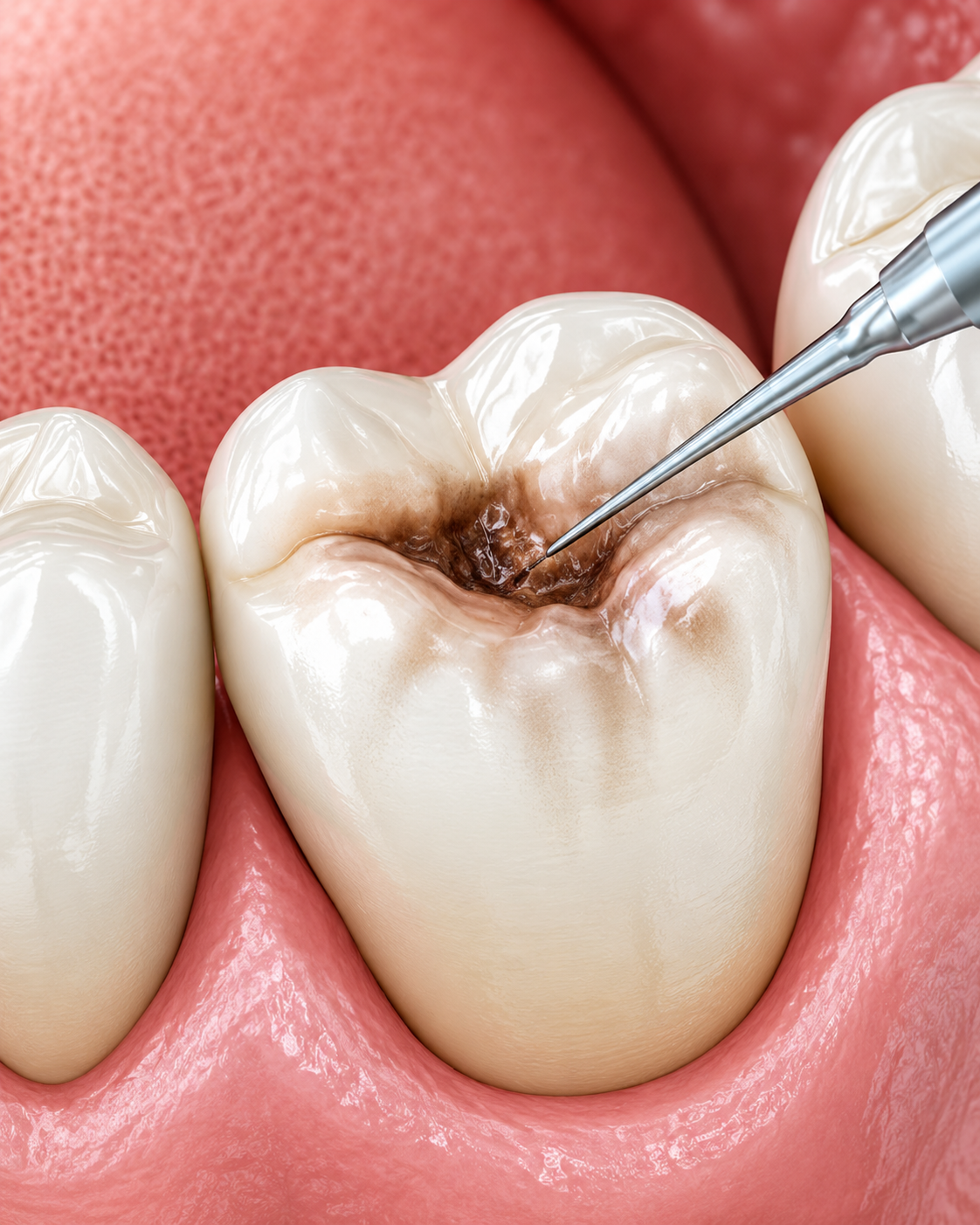
The crown figures are the ones a clinic actually controls, so compare them directly: at Baro Dental a zirconia crown is ₩500,000 on a back tooth and ₩550,000 on a front tooth, a layered esthetic zirconia crown ₩650,000 where the smile line demands it, and a gold crown ₩900,000. The crown needs one appointment to prepare and scan the tooth and a second, after a lab interval of roughly a week, to fit it. Our crown cost guide and zirconia vs E-max comparison go deeper into the material choice.
How many visits, and how they fit a trip
A first-time root canal is usually two or three visits: the first to remove the nerve and relieve pain, the second (sometimes third) to shape, disinfect and seal the canals once the tooth is quiet. The crown then adds two more — preparation and fitting — separated by the lab week. A molar from toothache to final crown is therefore about two to three weeks with four or five short appointments.
For visitors, that is the honest planning number. Eight to ten days in Busan can complete the canal work and have the crown prepared, with the final fit either on a return visit or — if your dates are known in advance — compressed by booking the first appointment for the day you land. Tuesday and Thursday evenings to 9 PM help enormously here, as does the clinic being four minutes from Seomyeon Station Exit 2, so the appointments cost you little of the trip. Tell us your flight dates in the first message; the plan is built around them.
Root canal or extraction — the honest comparison
Patients sometimes ask whether it is cheaper to extract the tooth and “deal with it later”. The extraction itself is insured and inexpensive. But the gap it leaves is not free: a single implant with crown is from ₩800,000 (DIO) to ₩1,750,000 (Straumann) at our clinic, and a bridge involves crowning two neighbours. A root canal and crown that save a restorable tooth cost less than any replacement, and keep the tooth's own root in the bone. Our root canal vs extraction guide sets out when each is the right call.
The honest exceptions are a tooth cracked below the gum, one with too little structure to hold a crown, or a failed re-treatment — in those cases we say so and quote the replacement instead of selling a root canal that will not last. Either way, you will see your own X-ray on screen, with each option and its written figure beside it, before deciding.
- Two lines on every root canal quote: the insured canal work and the non-covered crown — compare both, not one.
- Canals set the insured fee: one for a front tooth, up to four for a molar; the schedule counts them, not the clinic.
- NHI members pay 30%: a complete molar — canals and ₩500,000 zirconia crown, core included — usually finishes well under ₩600,000.
- Uninsured pays the schedule rate: about three times the insured share; still written before treatment, never a foreigner price.
- Plan two to three weeks for a molar: or tell us your flight dates and we will stage the visits around them.
The dentists behind every guide on this site


FAQ
Yes — root canal treatment is on the national insurance schedule, and enrolled patients pay 30% of the fee at clinic level. The crown that usually follows is non-covered and priced by the clinic; ours is ₩500,000 for a posterior zirconia crown.
Because the insured fee is counted per canal and molars have three or four while front teeth have one. Molars also more often need a crown afterwards, where front teeth can sometimes be finished with a filling.
Sometimes, for a tooth without active infection. More often two or three visits give a better result because the tooth is allowed to settle between appointments. We will say which your tooth needs after the X-ray, and the fee for the canal work does not rise because an extra visit was clinically sensible.
On molars and most premolars, yes — the tooth has lost strength and a crown prevents the fracture that would otherwise end its life. On a front tooth with plenty of structure left, a resin filling can be enough. We show you the tooth on screen and explain which applies.
Yes. Once the canals are sealed and a temporary or final restoration is in place, flying is not a problem. If the final crown is being fitted on a return trip, we provide a sturdy temporary and written notes for your dentist at home, and the WhatsApp thread stays open for any question in between.
Root Canal Treatment in Busan
The treatment page — sequence, re-treatment and when a tooth is saveable.
Crowns & Bridges
Zirconia ₩500,000 posterior — the published part of every root canal quote.
Published Prices
Every non-covered figure in KRW, the same page for every passport.
Root canal or extraction?
Related guide in this series.
Dental crown cost in Busan
Related guide in this series.
Korean health insurance and dental care for foreigners
Related guide in this series.
Read enough? Start the thread.
Describe the tooth and the pain, add a photo if you have one, and say whether you hold Korean insurance — the reply is an honest read on what it needs and a written range for both parts of the quote.
Medical information in this guide is provided for general education and does not replace an individual examination and diagnosis. Prices shown are current at the time of writing; insured-schedule items follow Korea's national fee schedule and are quoted in writing at your visit. This clinic does not provide 24-hour service. Individual results vary.