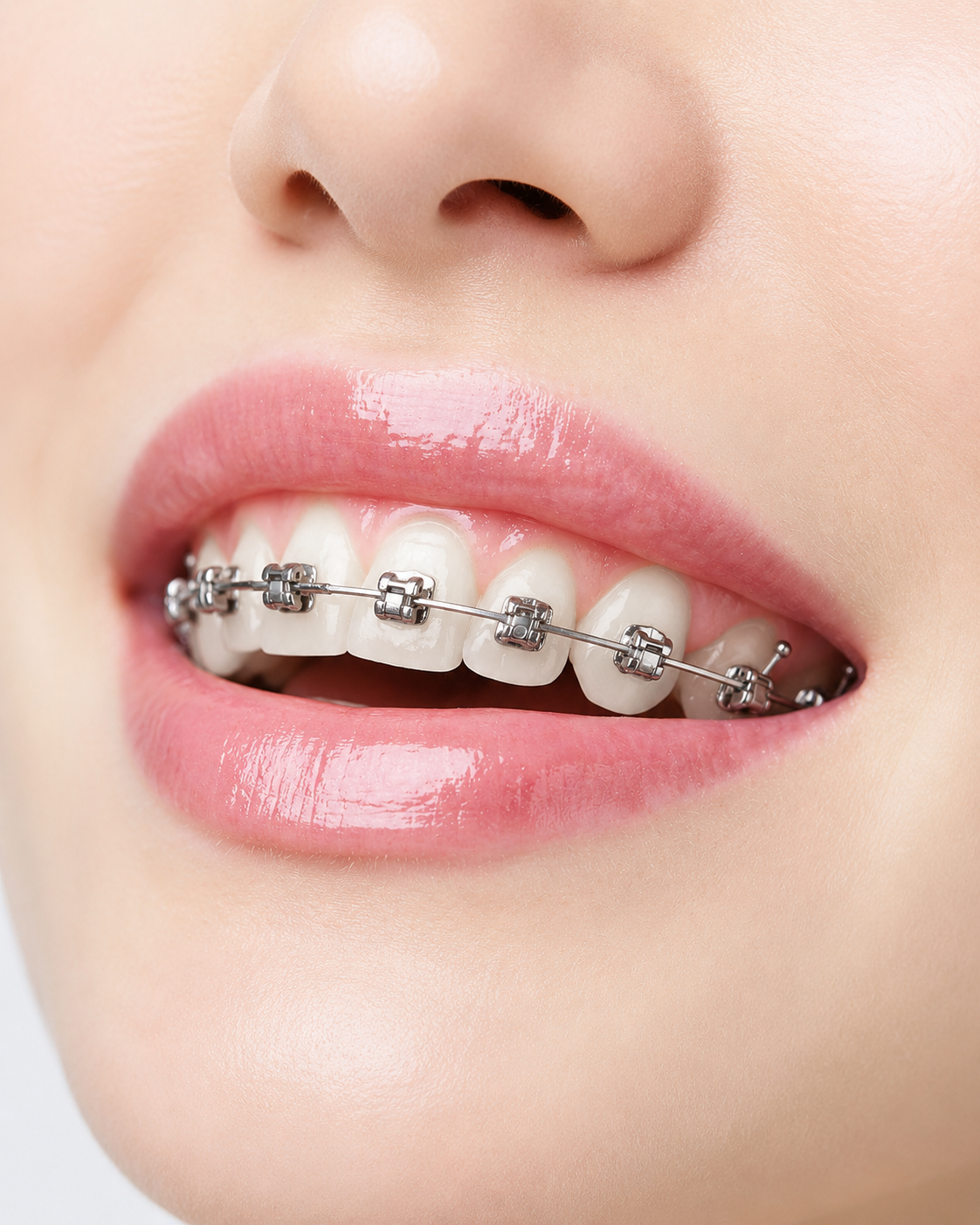
Metal braces in Busan Seomyeon — the workhorse for the hard cases.
Fixed metal braces remain orthodontics’ most capable tool — the one we reach for when extraction space must close, rotated teeth must turn, or tipped teeth must stand upright. Standard brackets ₩4,300,000; self-ligating Clippy-C ₩5,100,000 — published, and fixed in writing at diagnosis.
Ask about braces.
Tap what fits — we’ll open WhatsApp with your message ready to send.Nothing sends until you press send in WhatsApp. Bite photos help us give an honest first read — tray-sized or bracket-sized, and which system.
Why choose metal braces in Busan — when clear aligners exist?
Because some movements are simply braces’ movements. Closing extraction spaces, turning badly rotated teeth, standing up teeth that have tipped over — fixed brackets grip each tooth continuously and steer it in three dimensions, which trays that snap on and off can’t match at the extremes. Standard metal runs ₩4,300,000; self-ligating Clippy-C ₩5,100,000 — fixed in writing at diagnosis (₩100,000, credited).
We treat with both systems, and this page exists precisely because our aligner pages keep their promises small: where a case is honestly tray-sized, we say so and it costs what trays cost. Where the millimetres or the mechanics point here — and the cases photographed below show what “here” looks like — braces are the recommendation you’ll get, with the reasons shown on your own scan.
Brackets, wire, and why the combination wins.
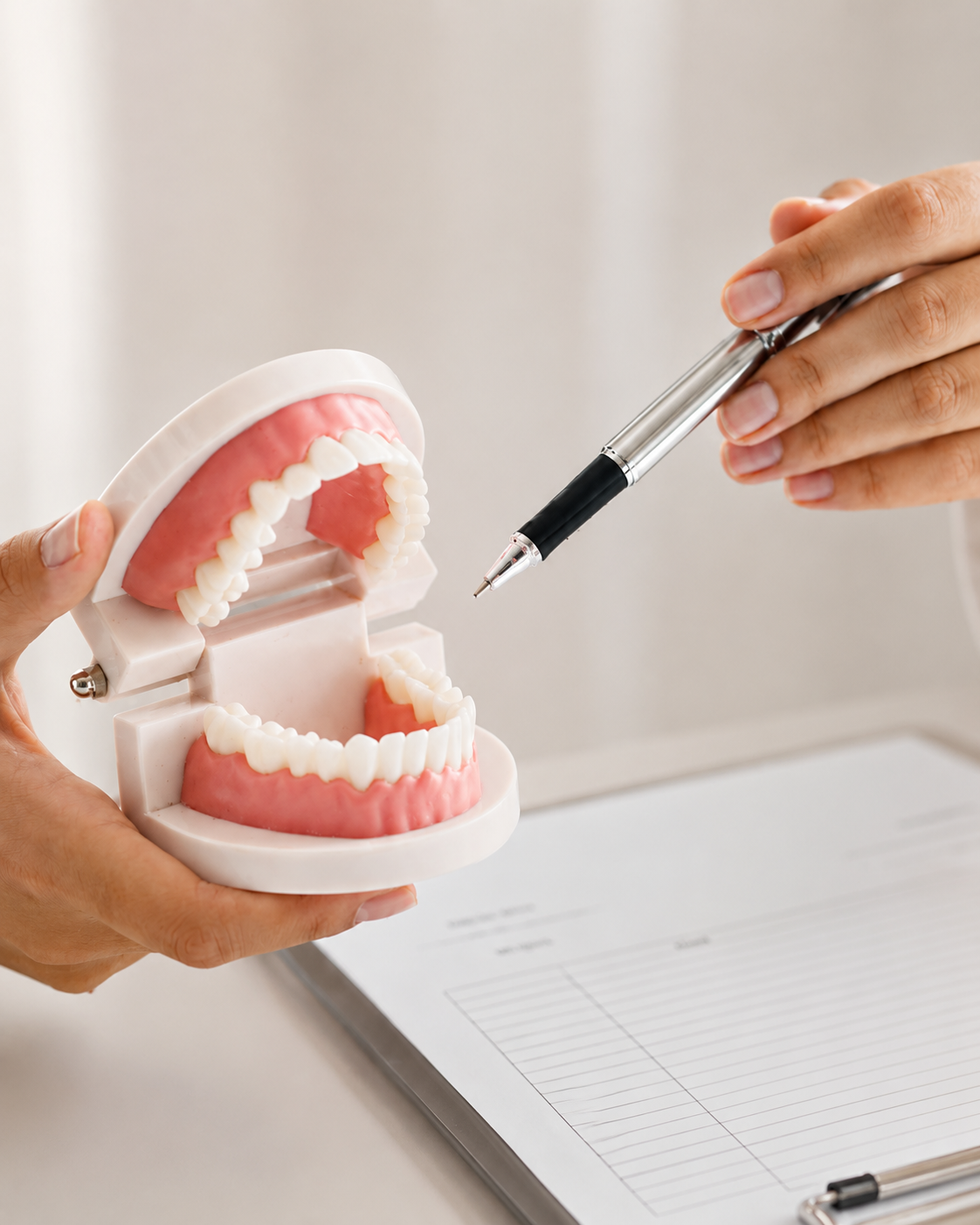
A fixed appliance has three working parts. Brackets — small precision attachments bonded to each tooth, each machined with a slot at an angle chosen for that tooth’s ideal position. The archwire — a shape-memory wire threaded through every slot, constantly trying to return to the ideal arch form and carrying each tooth along with it. And the ligation — how the wire is held in each slot: tiny elastic rings on standard brackets, or built-in sliding doors on self-ligating systems like Clippy-C.
The mechanical advantage over removable systems is continuity and grip. A bonded bracket never comes off for lunch; the wire works every hour of every day, and because the bracket wraps the tooth’s surface at a precise angle, it can express torque — controlled root movement, not just crown tipping. That’s the capability that closes extraction gaps bodily, uprights a tooth that’s leaned for a decade, or rotates a turned tooth through its full correction.
The honest trade-offs are the visible metal, the cleaning discipline brackets demand, and adjustment visits — all covered candidly further down. What you get in exchange is the deepest toolbox in orthodontics, at this clinic’s most transparent prices.
Six cases where brackets are the home ground.
Not a sales list — a mechanics list. These are the situations where our aligner pages themselves point patients here.
Extraction-space closure
The classic braces caseHeavy protrusion needing a premolar’s width of retreat: brackets pull teeth bodily along the wire into the space, roots and all — the movement that defines fixed appliances.
Severely rotated teeth
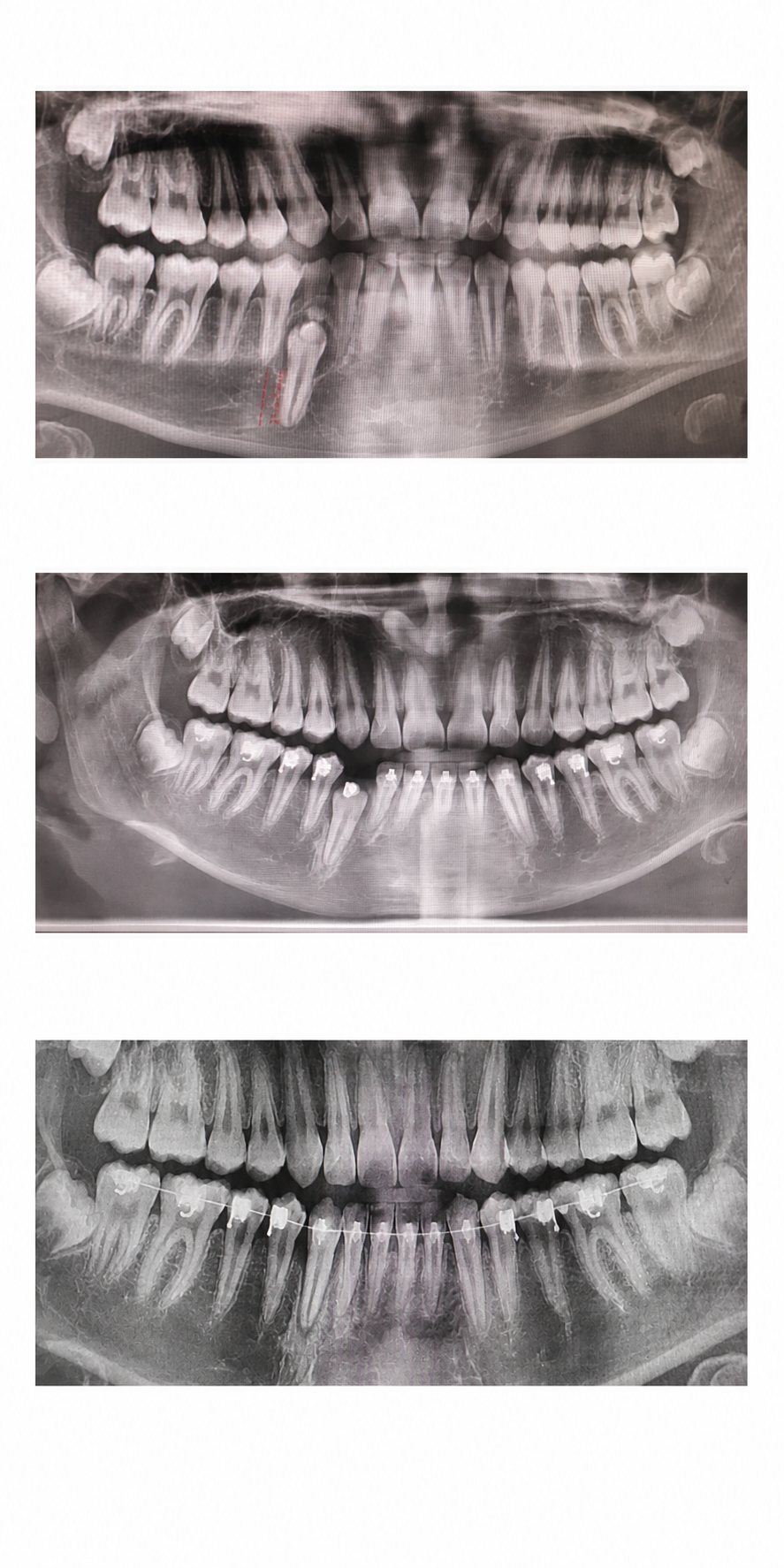
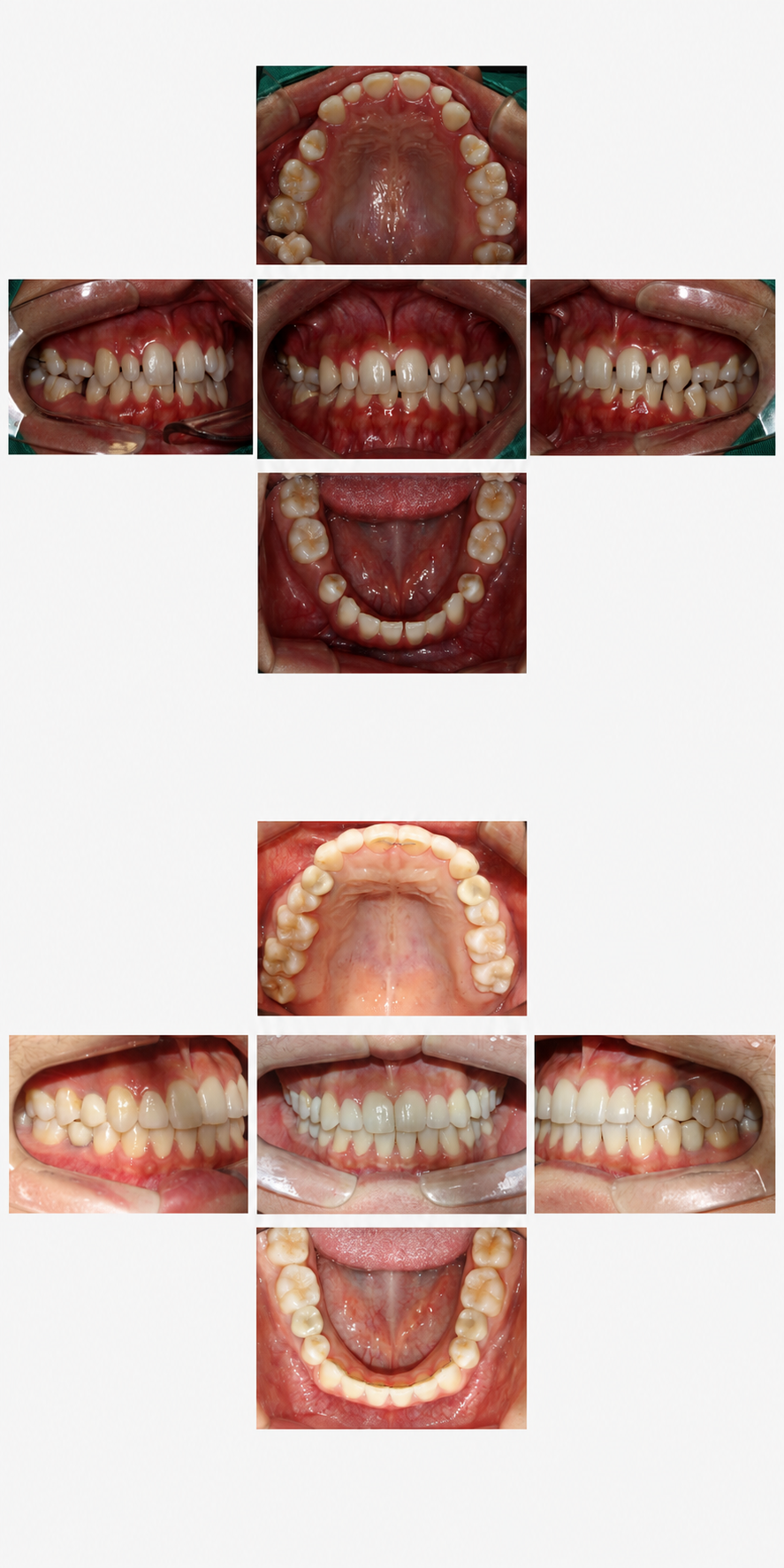
See the rotation case belowA tooth turned far past what trays grip: the bracket bonds to the rotated surface itself and the wire unwinds it degree by degree, through the full turn. One of the five photographed cases on this page.
Up-righting tipped teeth
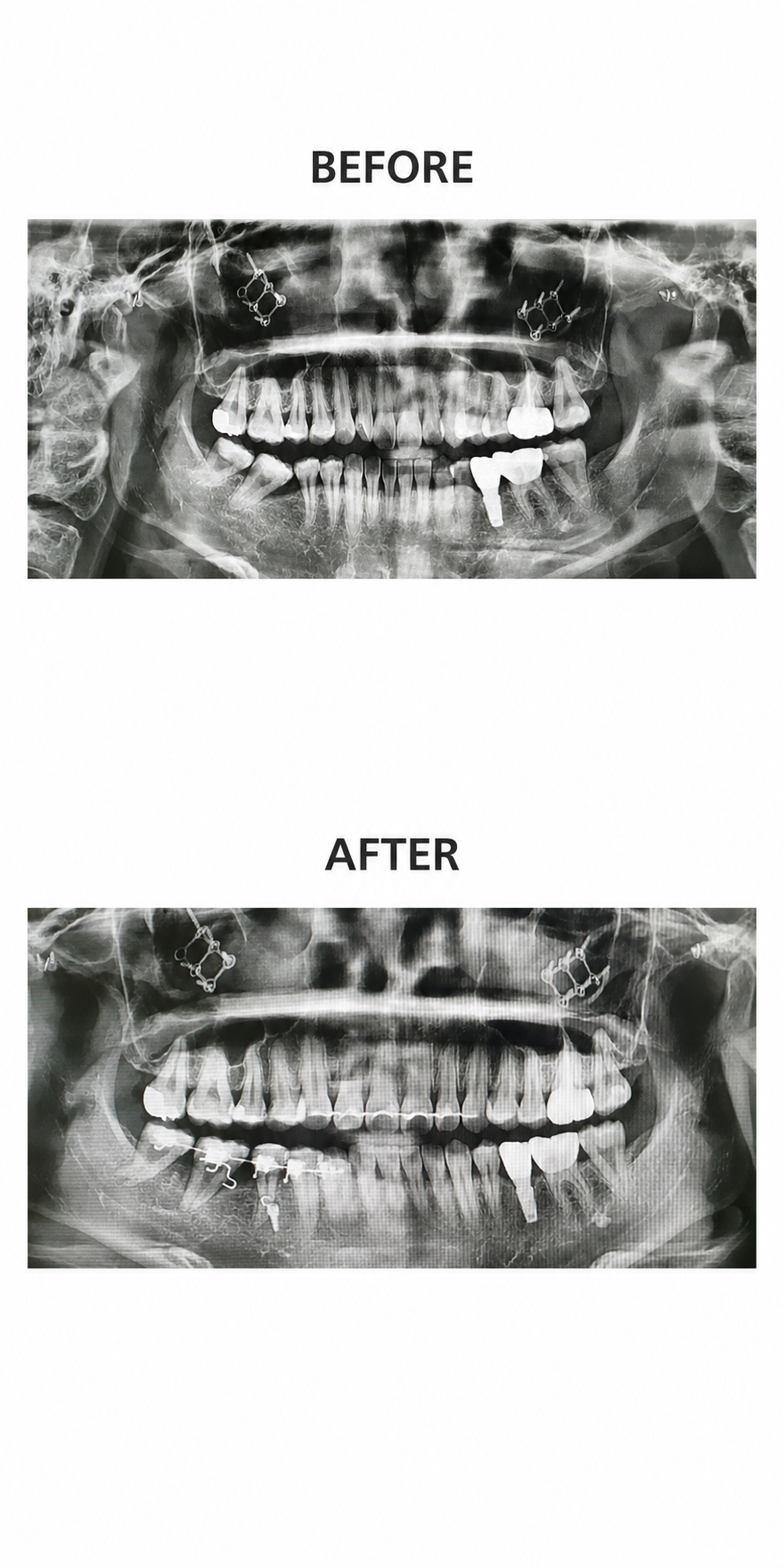
Roots, not just crownsTeeth that leaned into a gap for years need their roots moved, not just their crowns tipped back — torque work brackets excel at, often clearing the ground for an implant to follow. Also photographed below.
Severe crowding
Beyond tray-sizedWhere crowding exceeds what IPR and expansion honestly supply, extraction-assisted braces resolve what trays would only rearrange. The scan’s arithmetic decides, transparently.
Complex multi-direction cases
One system, all axesWhen rotation, vertical and space problems stack in one mouth, brackets handle every axis in a single continuous system — the three complex cases photographed below are exactly this category.
Transfers & restarts
Welcome, without blameAligner treatment stalled elsewhere, or a plan that outgrew its tool: cases arrive mid-journey and are re-diagnosed from scratch (₩100,000, credited) — what remains is mapped honestly, whichever system finishes it.
How braces treatment actually goes.
Diagnose & decide the system
Scan, photos, CT where indicated (₩30,000): the full movement inventory your case needs, whether extraction is part of the honest answer, and standard-versus-Clippy-C — with the written price for each (₩100,000 diagnosis, credited).
Bonding day
Brackets are positioned and bonded tooth by tooth — unhurried precision work, since every bracket’s angle becomes an instruction the wire follows for the whole treatment. The first light wire goes in the same visit.
Wire progression
Treatment advances through a sequence of wires — flexible ones untangle and level first; progressively firmer ones take over for space closure and root control. Each adjustment visit is a deliberate gear change, not a routine tightening.
The heavy lifting
Extraction gaps close along the wire, rotations unwind, tipped roots upright — the phase where braces do what nothing else does, tracked with photos so you watch the mechanics work.
Debond & retain
Brackets come off in one appointment — the day everyone remembers — surfaces are polished clean, and retention begins immediately: clear retainer ₩100,000 or fixed wire ₩150,000–200,000, first-year adjustments covered.
Standard metal vs Clippy-C self-ligating — what ₩800,000 buys.
| Standard metal — ₩4,300,000 | Clippy-C self-ligating — ₩5,100,000 | |
|---|---|---|
| How the wire is held | Small elastic rings ligate the wire into each bracket | A built-in sliding door on each bracket clips over the wire |
| Friction | Elastics grip the wire — more friction as teeth slide | The wire glides freer in the slot — lower friction, gentler force |
| Adjustment visits | Elastic rings are replaced at each visit; slightly longer chair time | Doors open and close in moments — typically quicker visits, often spaced wider |
| Hygiene | Elastic rings can hold plaque and staining between visits | No elastics to trap plaque — a modest but real cleaning advantage |
| Capability ceiling | Identical — both close extraction spaces, rotate and upright; the destination is the same, the ride differs | |
| Honest bottom line | Every won of capability at the lower price | Comfort, visit convenience and hygiene — worth it to many, essential to none |
We’ll tell you plainly at diagnosis whether your case gains anything real from Clippy-C — and when the honest answer is “standard does everything yours needs,” you’ll hear that too. The ₩800,000 difference should buy you something, not just reassure you.
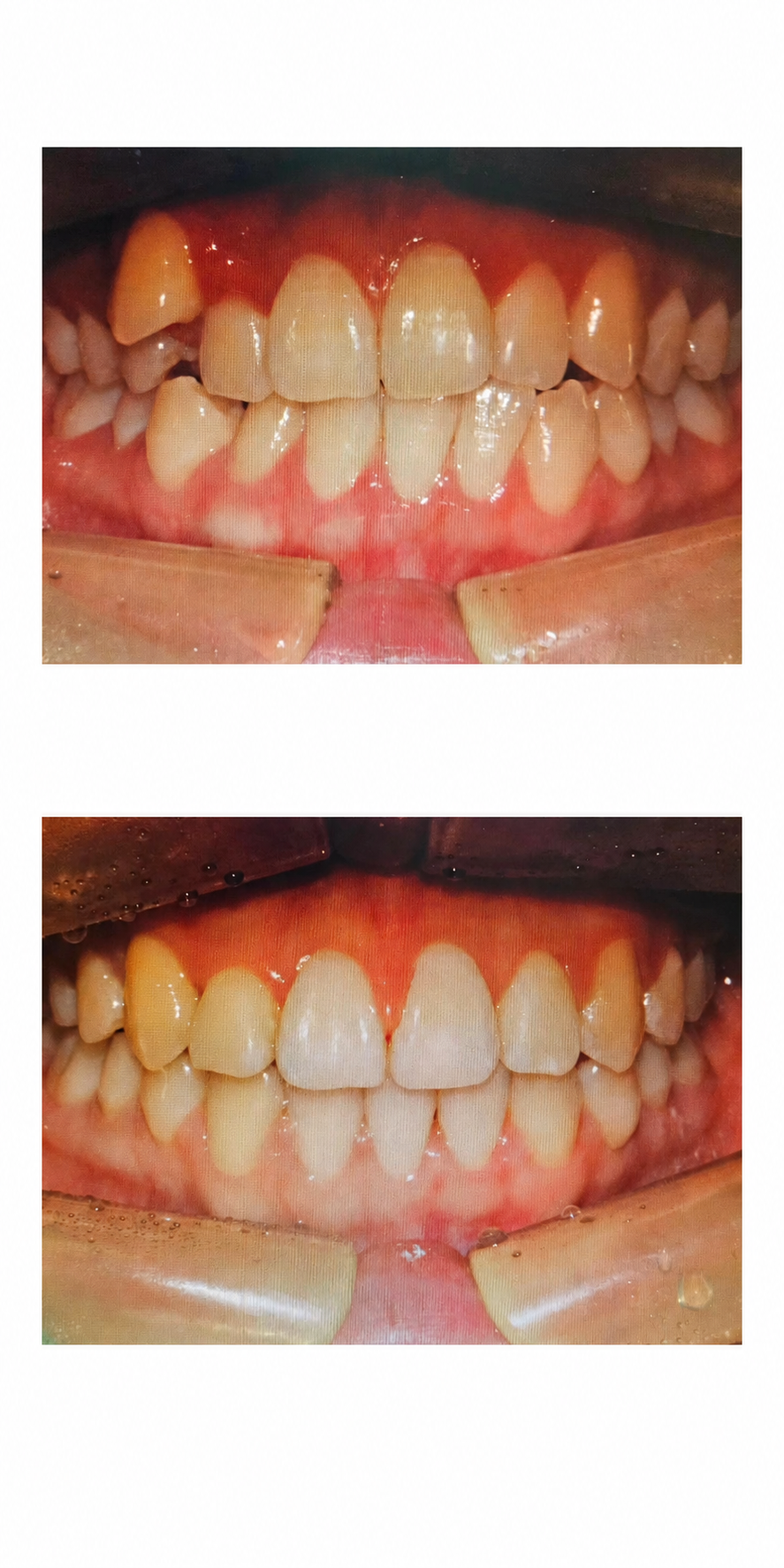
Complex cases — before and after.
Fixed-appliance and complex orthodontic cases treated at Baro Dental, photographed the same way before and after. Shown with patient consent; every case is individual and results vary.
The physics of fixed appliances — four advantages, plainly told.
The force never clocks off
A bonded system works 24 hours by construction — there is no wear discipline to keep, no hours to lose to lunches and laziness. For long, demanding movements, that unbroken continuity is compounding interest.
Grip on every surface, every angle
Trays push on the crown shapes they can wrap. A bracket is bonded to the tooth — even a severely rotated or half-erupted one — so the wire has a handle exactly where the case needs one. That’s why the rotation case above was a braces case.
Roots move, not just crowns
The bracket slot’s angled geometry lets the wire torque the whole tooth — steering the root through bone, not merely tipping the visible crown. Bodily space closure and true up-righting live on this advantage alone.
Millimetre-grade finishing
End-stage detailing — a wire bend here, a re-angled bracket there — lets the final contacts be sculpted individually. It’s the least visible advantage and the one your bite feels every day afterward.
How much do metal braces cost in Busan?
Published and flat at this clinic: standard metal ₩4,300,000, Clippy-C self-ligating ₩5,100,000 — fixed in writing at diagnosis (₩100,000, credited), CT where needed ₩30,000, retention afterwards ₩100,000 clear / ₩150,000–200,000 fixed with first-year adjustments covered. No mid-treatment surprises, no per-visit adjustment fees stacked on top — the written figure is the figure.
Do braces hurt more than aligners?
Differently, honestly. The first week after bonding is the adjustment period — teeth ache under first pressure and cheeks negotiate with brackets until they toughen (wax helps, and we supply it). After each wire change, a day or two of tenderness, managed with ordinary pain relief. Between visits, most patients report forgetting the braces are there — the discomfort is episodic, not constant.
Am I too old for metal braces?
No — and adult braces cases are routine here. Teeth move through healthy adult bone at any age; what changes with adulthood is the checklist, not the eligibility: gum health verified first ( treated if needed), existing crowns and fillings mapped so brackets bond correctly. Many of our fixed-appliance patients are professionals in their 30s–50s whose cases outgrew what trays honestly deliver.
Will I need teeth extracted for braces?
Only when the space arithmetic says so — extraction is a solution to a measured shortage, not a braces entrance fee. Many fixed-appliance cases run extraction-free; where heavy protrusion or severe crowding genuinely needs a premolar’s width, you’ll see the calculation on your own scan at diagnosis, with the why explained before anything is decided. The decision is arithmetic shown to you, never a surprise sprung on you.
How do I eat and clean with braces on?
Eating: the real blacklist is short — hard things that snap wires (nuts, ice-chewing, whole apples un-sliced) and sticky things that pull brackets (caramels, gummy candy). Everything else, cut smaller. Cleaning: brushing angled at the bracket line plus interdental brushes threaded under the wire, shown to you hands-on at bonding — and professional scaling (₩60,000) during treatment keeps the foundations honest.
Can I switch from aligners to braces mid-treatment?
Yes, and without a lecture — cases arrive mid-journey when trays stalled or the plan outgrew the tool, and the right response is a fresh diagnosis (₩100,000, credited), not blame. What’s completed stays completed; what remains is mapped onto the system that can actually finish it, with the written price for the remaining work. Sometimes the honest answer even runs the other way — braces finishing into trays for detailing.
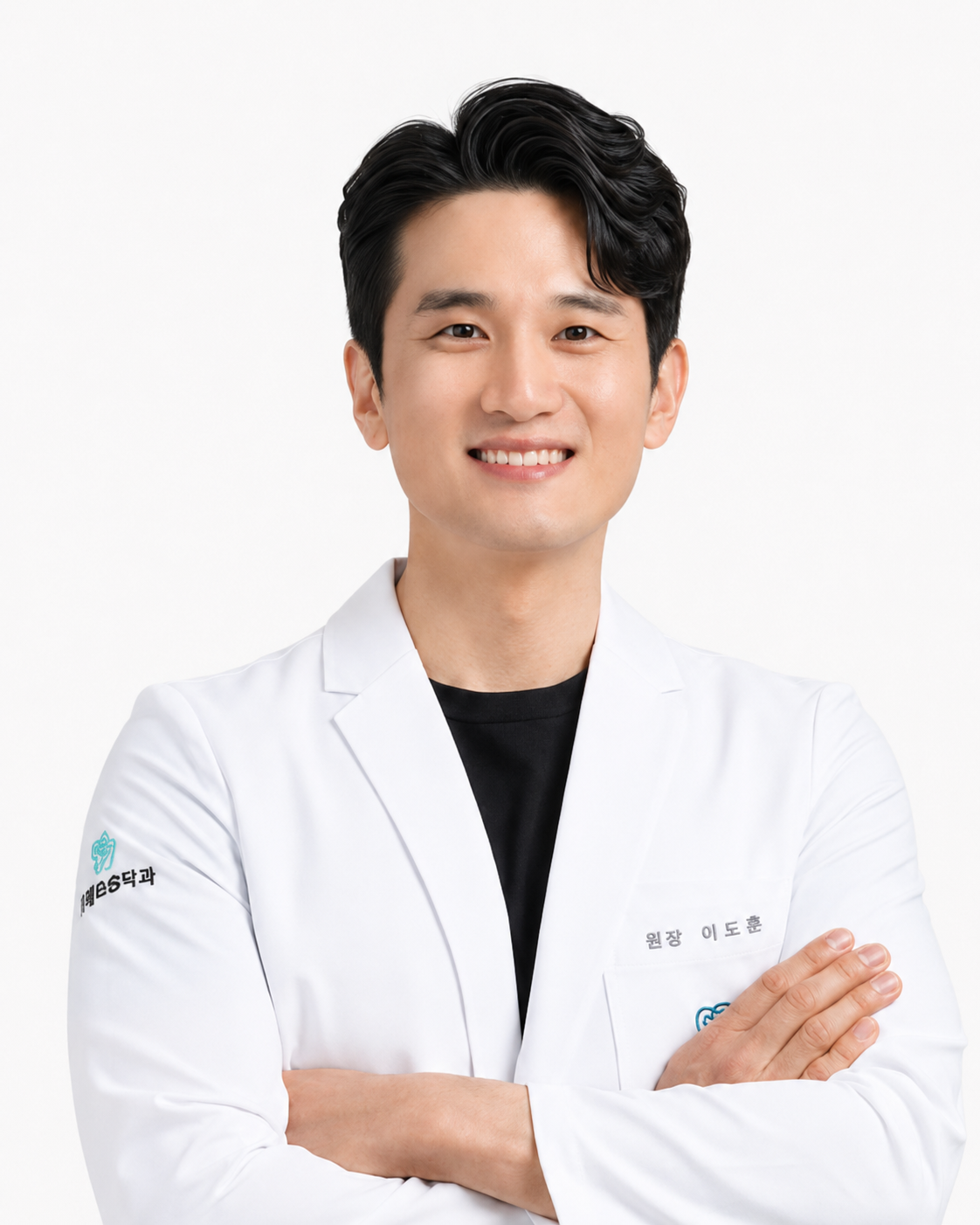
Care by board-certified specialists in Seomyeon
Both directors are board-certified specialists in Advanced General Dentistry, so your cosmetic treatment is planned with your overall dental health in mind.

- Board-certified specialist, Advanced General Dentistry
- M.S. in Orthodontics, Kyungpook National University
- Focus on natural, alignment-led smile improvement
- Conservative, tooth-preserving approach
- Board-certified specialist, Advanced General Dentistry
- DDS, Dankook University College of Dentistry
- Restorative & aesthetic resin filling work
- Focus: natural, durable results
Small truths about life in brackets.
- The first week is the whole initiation. Cheeks toughen, speech normalises, and the ache of first pressure fades — nearly everything people fear about braces concentrates into days one through seven. Wax, soft food and patience carry you across.
- Wire pokes are a fix, not an emergency. A wire end working loose at the back is braces’ commonest nuisance — wax covers it tonight, a two-minute clip fixes it here. International patients get the WhatsApp-first protocol so a poke never ruins a travel week.
- Adjustment days deserve soft dinners. Plan noodle soup, not barbecue ribs, for wire-change evenings — a small scheduling trick that makes the whole treatment feel gentler than its reputation.
- Metal shows — and costs less partly because it does. If visibility is your main hesitation, ceramic brackets (₩5,300,000, self-ligating) trade discretion for won; front-section-only cases may suit partial braces (₩2,500,000). The full menu is published, so the choice is genuinely yours.
- Debond day has a ritual. Brackets off, surfaces polished, and then the tongue-sweep across suddenly-smooth teeth — patients describe it as the strangest, best sensation of the whole journey. The retainer fitted the same day is what makes it a result instead of a phase.
When metal braces are right — and when something else is.
Braces are the right call when…
- extraction space must close bodily — the movement brackets were built for
- severe rotations or tipped roots need true three-dimensional control
- multiple problems stack — one continuous system handles every axis
- wear discipline is a worry — a bonded system removes the temptation entirely
We’ll point elsewhere when…
- your case is honestly tray-sized — Cerafin aligners (₩3M–6M) with all the lifestyle advantages, recommended without upsell
- only the front section needs work — partial braces (₩2,500,000) cost and treat proportionately
- visibility genuinely matters to your work or life — ceramic brackets exist precisely for you
- gum disease is active — foundations get treated first, always; brackets on inflamed gums help no one
Metal braces FAQ.
The ligation — how the wire is held. Standard brackets tie the wire in with small elastic rings; Clippy-C brackets have a built-in sliding door that clips over it. Less friction as teeth slide along the wire, quicker adjustment visits, and no elastics to trap plaque. What Clippy-C does not buy is capability — both systems reach the same destinations. At ₩5,100,000 versus ₩4,300,000, it's a comfort-and-convenience upgrade, recommended when your case actually benefits.
Adjustment rhythm follows your wire sequence and case — visits are scheduled weeks apart, with self-ligating systems often stretching the interval further. For Busan-based patients it's a routine calendar item; for international patients we design the wire plan around your realistic travel pattern from the start, front-loading in-clinic stages and using WhatsApp photo checks between trips. Your visit map is part of the written plan at diagnosis.
The brackets themselves don't harm enamel — bonding and debonding are routine, and surfaces are polished clean afterwards. The honest risk is hygiene: plaque left around brackets can demineralise enamel into white spots that outlast the braces. That's why cleaning technique is taught hands-on at bonding, checked at every adjustment, and supported with in-treatment scaling (₩60,000) — the marks are preventable, and prevention is part of the treatment here, not an afterthought.
Both, with adjustments. Contact sports call for an orthodontic mouthguard sized to fit over brackets — worth arranging before the season, not after the first collision. Wind and brass players typically need an adaptation period as the embouchure renegotiates with the brackets; wax smooths the transition. Neither is a reason to delay treatment — just tell us at diagnosis so the practical side is planned in.
It happens — usually to a caramel or an un-sliced apple — and it's a repair, not a crisis. The loose bracket typically stays threaded on the wire; a short visit re-bonds it. The honest cost is momentum: that tooth pauses until re-bonded, so repeat offenders slow their own treatment. International patients message us a photo first — we'll tell you whether it waits for your next trip or needs a local re-bond.
Yes, with honest structure: fixed appliances need in-person adjustments, so this suits patients with a regular Busan rhythm — work, family, or frequent travel. Bonding and key wire changes are grouped into your trips; photo check-ins run between them, and the poke-and-repair protocol works over WhatsApp first. If your travel pattern can't support the visit map, we'll say so at diagnosis and talk honestly about what can.
Braces treatment across visits.
Send front and side bite photos on WhatsApp, plus your realistic Busan visit rhythm. You’ll get an honest read on whether a fixed-appliance plan fits your travel life before booking anything.
Full diagnosis — scan, CT where indicated (₩30,000), extraction arithmetic if relevant, standard-vs-Clippy-C recommendation, and the written price (₩100,000 diagnosis, credited). Bonding can follow in the same trip.
Photo check-ins on WhatsApp; wire changes grouped into your Busan trips on a visit map planned at diagnosis. Pokes and loose brackets go through the message-first protocol — most wait safely, a few get local fixes.
Debond, polish, and same-day retention fitting (clear ₩100,000 / fixed ₩150,000–200,000, first-year adjustments covered) — the appointment worth flying for.
Find out if yours is a braces case.
Send bite photos on WhatsApp — we’ll tell you honestly whether your case reads tray-sized or bracket-sized, and what each route costs at published prices. In English.
Message us on WhatsAppBaro Dental Clinic · 5F, SJ Medical Building, 698-1 Jungang-daero, Busanjin-gu · Seomyeon Station Exit 2, 4 min
Explore the options in Busan.
Ceramic Braces in Busan
₩5,300,000 self-ligating — the same capability in tooth-coloured discretion.
Explore →Partial Braces in Busan
₩2,500,000 — front-section correction priced for front-section problems.
Explore →Clear Aligners in Busan
₩3M–6M — where tray-sized cases belong, recommended without upsell.
Explore →Children’s Orthodontics in Busan
Growing jaws, different toolbox — timing questions answered honestly.
Explore →Medical information on this page is provided for general education and does not replace an individual examination and diagnosis. Whether fixed braces suit your case — including any extraction decision, system choice and visit plan — is confirmed at diagnosis with appropriate imaging. Before-and-after photographs show real patients of this clinic, published with consent; individual results vary.