Your dental implant recovery calendar.
An implant journey is mostly waiting done well: a surgical week that’s gentler than its reputation, months in which titanium and bone quietly fuse while you live normally, and a crown phase that feels almost administrative. This calendar maps every stage — what’s normal, what each phase permits, which windows travel freely — and the rare signals that earn a message instead of patience.
By Baro Dental Clinic, Seomyeon · August 2026 · 13 min read
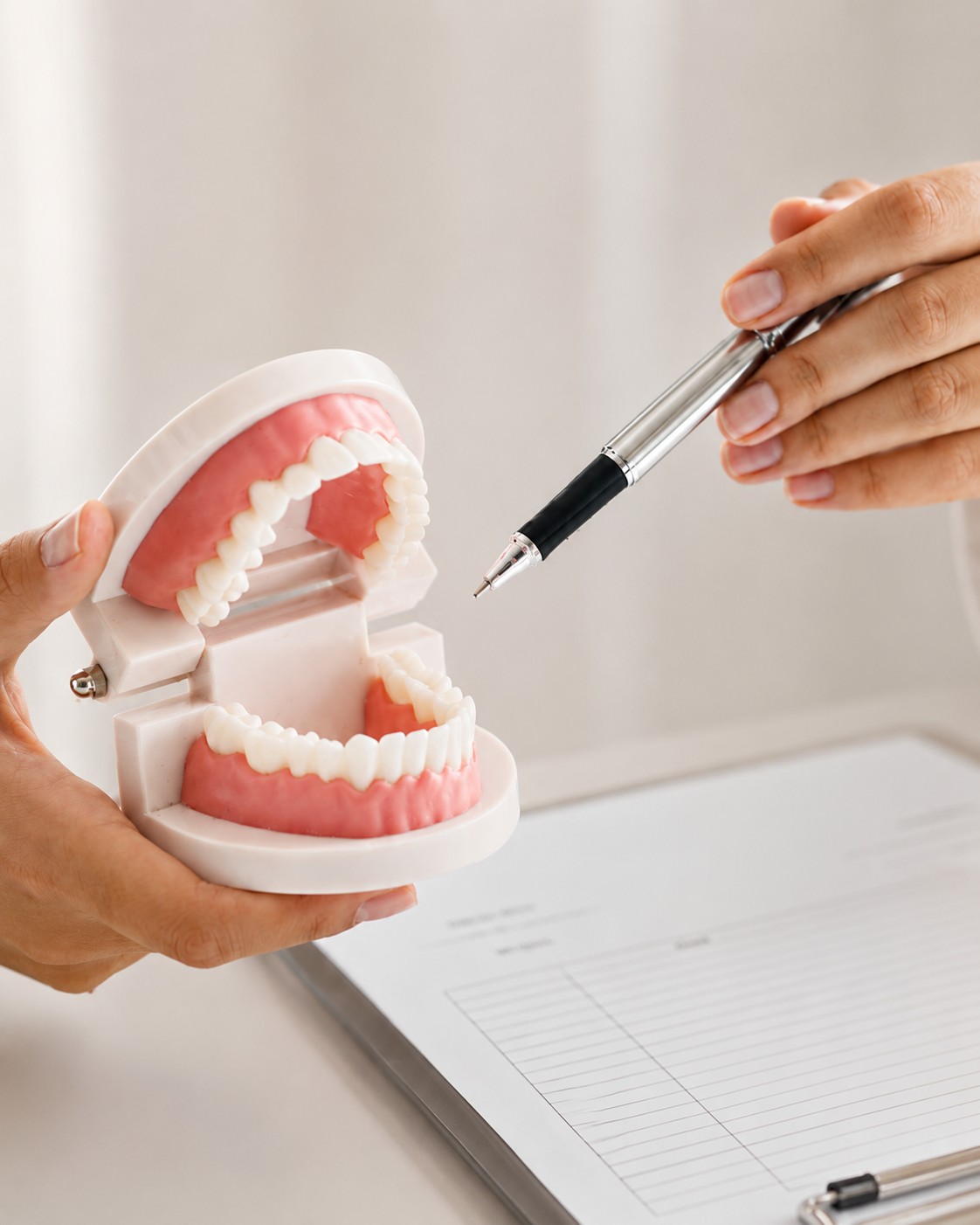
The honest calendar: surgery day and the first week run a gentler version of the extraction arc — swelling peaking around day two or three, soft eating, the same clot-and-site care; then integration takes over, commonly a few months set case by case, during which the fixture fuses with bone while you live, work and fly without restriction; then the crown phase — an impression visit and a fitting — completes the tooth. Two honest footnotes shape individual calendars: bone grafts and sinus work add healing months stated up front per your scan, and smoking is integration’s most damaging controllable enemy — said plainly before surgery, not just after. Failure signals are rare and specific (persistent or worsening pain past the first weeks, any looseness of the fixture, gum trouble at the site) and they message the thread rather than wait. Everything else on this page is the far more common story: quiet, boring, successful healing.
- Surgery day and the first week — gentler than its reputation in Busan
- The integration months — the quiet phase that is the whole point
- The crown phase — the almost administrative finish
- The whole calendar, in one honest table
- Grafts, sinus work, and the calendars that honestly run longer
- What going wrong actually looks like — rare, specific, and worth knowing
- How the calendar runs at our Busan Seomyeon clinic — and your next step
What implant patients actually ask
- How bad is the week after implant surgery, honestly?
- What am I allowed to do during the integration months?
- How do I know the implant is actually fusing — can I feel it?
- Does a bone graft or sinus lift change my calendar?
- What would going wrong actually look like?
Surgery day and the first week — gentler than its reputation in Busan
The honest expectation first, because it defuses most pre-surgery dread: for a routine single implant, the week after surgery is commonly milder than the same week after a difficult extraction — the site is placed precisely rather than torn, and most patients report soreness managed comfortably on the ordinary analgesic plan, back at desk work within a day or two per the working-schedule numbers. The arc borrows the extraction calendar’s shape wholesale: swelling peaking around day two or three (worse-looking is not worse), bruising that surfaces and drifts, cold packs on day one, warmth after the peak, head elevated the first nights.
The site-care rules, familiar from that guide and repeated because they matter identically here: the first 24 hours protect the surgical site — no rinsing or spitting today, no straws, gentle everything; from 24 hours, the soft salt-water rinse rhythm begins; brushing continues everywhere except the site’s immediate neighbourhood for the first days; and stitches — nearly always placed here — either dissolve over one to two weeks or carry their removal date in writing, with the suture check commonly scheduled in the first one-to-two weeks as the calendar’s first formal checkpoint.
Smoking gets its own paragraph again, with harder numbers behind the plain talk: beyond the early clot risks the extraction guide maps, smoking impairs exactly the biology this entire journey depends on — the bone-to-titanium fusion of the months ahead — and implant failure rates run meaningfully higher in smokers across the literature this clinic will discuss with you honestly. The pre-surgery conversation here includes the smoking one before scheduling, per house habit: the best implant calendar is one placed into a window where not-smoking is realistic, and helping you find that window is treated as part of the treatment.
And the eating-and-travel notes that bracket the week: the soft-and-cool tier carries the first days, chewing away from the site as comfort dictates through the week; and the flight buffer — commonly two to three days before flying after placement — is honoured in the schedule itself for visitors, with the sinus-adjacent case’s longer, surgeon-cleared window flagged before any ticket exists, per that guide’s one unbending rule.
The integration months — the quiet phase that is the whole point
What’s actually happening, in one honest paragraph: osseointegration — bone growing onto and into the fixture’s surface until titanium and jaw behave as one structure — is the biological event the entire implant concept stands on, and it runs on bone’s timetable, not enthusiasm’s: commonly a few months, set case by case at your visit based on bone quality, site, and whether grafting shared the surgery. It cannot be rushed, felt, or usefully monitored in a mirror — which is precisely why the calendar has checkpoints instead of guesswork.
What the phase permits, stated generously because patients under-ask: essentially normal life. Work, exercise once the surgical week clears, travel without restriction per the flight guide’s integration-months verdict, ordinary eating — with the one standing behaviour: the site chews last. A healing fixture (typically sitting under the gum or wearing a small healing cap) isn’t load-bearing yet, so deliberate chewing on it — and the famous Korean chewy-and-hard tier: dried squid, ice, hard candies — waits for the crown. Any temporary tooth worn over the site during this phase is cosmetic, not structural, and its own care notes come in writing.
The hygiene layer, because implant success is a gum story long before it’s a hardware story: the site’s neighbourhood returns to full, gentle cleaning as the surgical week closes — plaque control around a healing fixture matters exactly as much as around teeth, per the gum series’ whole logic — and the integration months are the right time to build the interdental habits the finished implant will need for decades. The ₩60,000 recall rhythm doesn’t pause for integration; it’s how the checkpoints and the cleaning share visits.
And the checkpoint that ends the phase: integration is verified before anything is loaded — the fixture’s stability assessed clinically and on imaging at the scheduled check, and only a verified fixture proceeds to the crown phase. Where verification says “not yet,” the honest answer is more calendar, not more force — rare, undramatic, and vastly preferable to loading early. The waiting is the treatment; the checkpoint is how the waiting knows it’s done.
The crown phase — the almost administrative finish
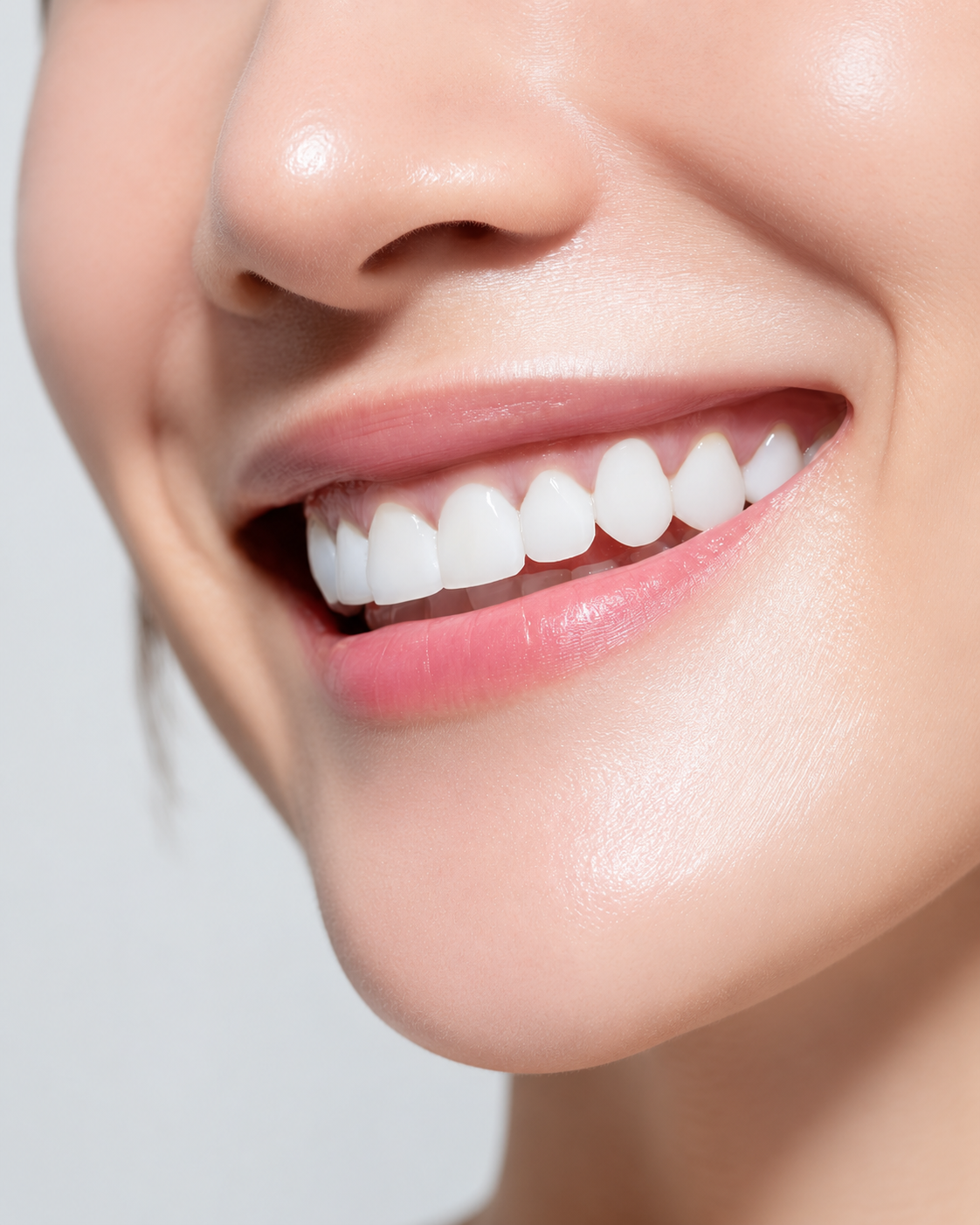
The sequence, mapped: once integration is verified, the abutment and impression visit connects the fixture’s working surface and captures the geometry the lab builds to — the same lab rhythm every crown guide in this series prices, running its interval while you live normally — and the fitting visit seats and secures the final crown, adjusts the bite until it disappears among its neighbours, and completes the tooth. For visitors, this phase is the classic two-trip rhythm: impressions one trip, fitting the next, per the pattern this series has mapped across every strait and timetable it serves.
What the finished implant feels like, honestly: like a tooth, with two asterisks. It chews at near-natural force and reads to the tongue as simply yours within weeks — and it lacks a natural tooth’s ligament, so it senses pressure more bluntly (most people never notice; heavy grinders should, per the note below) and it can never decay — while its gums absolutely can fail, which is the maintenance section’s entire subject. The first days with the new crown: mild awareness fading fast, a bite that should feel immediately even — a high spot that persists past the first days is a five-minute adjustment visit, not a live-with-it.
The grinder’s asterisk, cross-referenced because it protects the investment: bruxism and implants deserve a deliberate conversation — the grinding guide’s forces land harder on a ligament-less fixture, and where wear findings vote, the ₩300,000 night guard is the same “protect first, then invest” arithmetic that guide runs for every restoration — had before the crown seats, not after something chips.
And the paperwork that closes the file properly: the implant passport — fixture brand, dimensions and lot, per the verification standard and the records-that-travel rule — goes home with you in writing, making this implant serviceable by any competent dentist on any continent for the decades it’s built to run. The tooth is finished; the documentation is what keeps it finished anywhere.
Mid-integration and something feels different? Your phase, day-count and symptom in two sentences — photo if anything shows — and the honest reassure-adjust-or-examine read comes back same-day. Message us on WhatsApp →
The whole calendar, in one honest table
Every phase, its normal, and its travel verdict:
| Phase | Normal here | Travel verdict |
|---|---|---|
| Surgery day + first week | The extraction arc, commonly gentler: day 2–3 swelling peak · soft eating · site-care rules · suture check in weeks 1–2 | Fly commonly 2–3 days after placement — sinus cases: the surgeon’s specific window, before any ticket |
| Integration — commonly a few months, case-set | Boring by design: normal life, work, exercise · the site chews last · hygiene builds the decades’ habits | No restrictions — live, work and fly freely; the thread holds remote checkpoints |
| The verification gate | Stability confirmed clinically and on imaging before any load | — a visit, not a phase; “not yet” means more calendar, not more force |
| Crown phase — abutment, impression, fitting | The lab rhythm · a bite that feels immediately even · mild awareness fading fast | The classic two-trip pattern for visitors — impressions one trip, fitting the next |
| The finished years | A tooth with two asterisks: blunter pressure sense, zero decay risk — and gums that absolutely can fail | Unlimited — with the ₩60,000 recall as the real warranty, wherever you keep it |
| Longer calendars — grafts, sinus, full-arch | Added months stated per scan, in writing, before scheduling — never discovered mid-journey | Sinus: pressure-care window is the surgeon’s call, absolutely |
Failure signals are rare and specific: pain persisting past the first weeks, any fixture movement, gum trouble at the site — message the day you notice, don’t wait. Smoking is integration’s most damaging controllable enemy; the scheduling conversation happens before surgery, plainly and without scolding.
Grafts, sinus work, and the calendars that honestly run longer
Bone grafting — placed either alongside the fixture or as its own preparatory stage — adds healing months stated per your scan up front, exactly as the implant guide’s seam-item honesty prices it (₩300,000–500,000 where the scan votes): a same-day graft commonly stretches the integration phase; a staged graft runs its own consolidation months before fixture placement begins the standard calendar. Neither is a complication — both are the plan working with the bone you actually have, and both appear in the written plan before anything is scheduled.
Sinus work carries the longest and most individual calendar on this page — consolidation runs on its own multi-month schedule per your case, and it imports the flight guide’s one absolute: the no-fly and pressure-care window after sinus procedures is the surgeon’s specific call, never a webpage’s — stated before scheduling so tickets and sinuses never argue. Divers, per that guide’s footnote, double every caution and say so in the first message.
The full-arch and multiple-fixture calendars scale the same phases rather than inventing new ones — more sites healing on the same arc, staged sequences where the plan phases work across months, and the same integration-verification gate before any definitive load — with the specific shape mapped in the written plan per the spectrum guide’s honest columns. The one universal across every variant: no calendar on this page is discovered mid-journey — grafts, sinus months, staging and verification gates all appear in writing at the start, per the no-surprises rule this clinic runs everywhere.
And the smoker’s calendar, named once more because it’s the variant most within your control: every added-risk conversation above compounds with smoking, and the honest framing this clinic uses is scheduling, not scolding — the journey placed into the season where the smoke-free weeks are realistic, support acknowledged as part of the plan, and the arithmetic (a ₩750,000-plus investment protected by the highest-leverage free decision available) left to make its own case. It usually does.
What going wrong actually looks like — rare, specific, and worth knowing
The base rate first, so this section informs without alarming: modern implants succeed at rates that make failure the notable exception — and failures cluster around knowable factors (smoking, uncontrolled gum disease, loading before integration, untreated grinding) rather than striking randomly. This section exists because the signals are specific and the responses are better early — the same trend-beats-snapshot logic the warning-signs guide applies to all aftercare, tuned to this journey’s phases.
In the surgical weeks: the extraction guide’s worry-list applies wholesale — swelling still expanding after day three, fever with the site, the swallowing-or-breathing red line that goes to a hospital ED first, always — plus the implant-specific one: pain that persists or worsens past the first weeks instead of trending down, which earns the message-and-look rather than more patience. In the integration months: the phase should be boring — so any new pain at the site, swelling or pus at the gum, or (the unambiguous one) any sensation of the fixture or healing cap moving messages the same day; a loose healing cap is often a trivial re-tighten, and distinguishing it from the serious version is exactly what the visit is for.
In the finished years: the enemy is peri-implant gum disease — the implant’s version of the periodontal story, arriving as bleeding, puffiness or deepening pockets at the implant’s gumline, progressing quietly exactly as gum disease does everywhere, and answered by the same measured-and-treated logic — which is why the ₩60,000 recall habit is the implant’s real warranty, whatever the paperwork says, per the warranty guide’s honest framing. A crown that chips or loosens in the finished years is hardware — commonly repairable or re-securable at its published tier — and distinct from the fixture-level trouble this paragraph exists to catch early.
The response protocol, identical at every phase and stated once: day-count, symptom in two sentences, photo if anything shows — to the thread, the day you notice. The honest answers come in the same three lanes as everywhere in this series: reassure (most messages), adjust (the re-tighten, the bite touch-up, the dressing), or examine (the imaging that settles what a photo can’t). Rare problems caught at message-speed stay small; that’s the entire economics of this section.
How the calendar runs at our Busan Seomyeon clinic — and your next step
What you hold at each stage, concretely: the written plan before surgery with every phase, month-range, seam item and figure per the implant guide’s complete-ledger rule; the aftercare sheet at surgery matching this page’s first week; the checkpoint schedule — suture check, integration verification, crown visits — dated in writing; and at the end, the implant passport that makes the tooth serviceable anywhere for decades. No phase on this journey is navigated from memory.
For visitors, the journey’s travel shape assembled from this series: placement with its flight buffer inside trip one (overnight-plus for the KTX pattern, the longer first trip for the Japan pattern), integration months at home with the thread holding the remote checkpoints by photo and question, and the crown phase riding the two-trip rhythm — the whole architecture this Travel series built, converging on its longest journey.
The maintenance decade, framed honestly at the finish: the implant’s lifetime is a partnership — the hardware’s engineering on one side, your gum health and the recall rhythm on the other — and the ₩60,000 habit that runs through every guide in this series is nowhere more literally an investment’s insurance than here. The fitting visit ends with the first recall dated; the relationship the journey built simply continues at maintenance cadence.
One message starts whatever stage you’re at: pre-journey, your scan questions and travel shape; mid-recovery, your day-count and symptom; integration months, the is-this-normal photo from wherever you are; finished years, the recall booking or the gum question. The journey is mostly waiting done well — and the thread, the checkpoints and the written calendar are how the waiting stays well-done, at whatever distance you’re doing it from.
- The surgical week is gentler than its reputation — the extraction arc’s shape, commonly milder, desk work in a day or two.
- Integration is boring by design: normal life, unrestricted travel, the site chews last — and it’s verified before anything loads.
- Longer calendars are stated, never discovered: grafts and sinus months appear in the written plan per your scan, up front.
- The finished implant can’t decay — its gums can fail: the ₩60,000 recall is the real warranty, whatever the paperwork says.
- Rare trouble is specific and early-caught: persisting pain, any fixture movement, gum trouble at the site — message the day you notice.
The dentists behind every guide on this site


FAQ
Commonly milder than people brace for — for a routine single implant, often gentler than a difficult extraction's week: soreness handled on the ordinary analgesic plan, swelling peaking around day two or three per the standard arc, desk work within a day or two for most. The site-care rules mirror the extraction guide's first days: protect the site for 24 hours, salt rinses after, soft-and-cool eating, head elevated at night. Grafted and multi-site surgeries run the same arc a little louder, stated honestly at planning.
Essentially everything: work, exercise once the surgical week clears, fly without restriction, eat normally — with one standing behaviour: the healing site chews last, and the hard-and-chewy tier (dried squid, ice, hard candy) waits for the crown. The phase is boring by design; the fixture fuses on bone's timetable while you live yours. What the months are genuinely for, besides fusing: building the cleaning habits around the site that the finished implant will need for decades.
No — and neither can a mirror, which is why the calendar runs on checkpoints instead of sensations: integration is verified clinically and on imaging at the scheduled gate before anything is loaded. What you can feel is the absence of trouble — the phase should be quiet, so any new pain at the site, gum swelling, or any sensation of movement in the fixture or healing cap is a same-day message, not a wait-and-see. A loose healing cap is often a trivial re-tighten; distinguishing it from the rare serious version is exactly what the visit is for.
Yes, honestly and predictably: a same-day graft commonly stretches the integration months; a staged graft adds its own consolidation period before fixture placement starts the standard calendar; and sinus work carries the longest, most individual schedule on the page — including the one absolute this series repeats: the post-sinus pressure-care and no-fly window is your surgeon's specific call, stated before any ticket exists. Every added month appears in the written plan per your scan, up front — no calendar here is discovered mid-journey.
Rare, specific, and clustered around knowable factors — smoking, uncontrolled gum disease, early loading, untreated grinding — rather than random. The signals by phase: pain persisting or worsening past the surgical weeks instead of trending down; anything moving during integration; and in the finished years, peri-implant gum disease — bleeding, puffiness or deepening pockets at the implant's gumline, the quiet progression the recall rhythm exists to catch. Response is identical at every phase: message the day you notice, and the honest reassure-adjust-or-examine read comes back fast.
Single Implant in Busan
The ₩750,000 crown-included journey this calendar maps.
Bone Graft in Busan
The seam item that adds honest months — priced per your scan.
Sinus Lift in Busan
The longest calendar on the page — surgeon-set, absolutely.
Night Guard
The grinder's protect-first arithmetic, before the crown seats.
Tooth extraction recovery, day by day
Related guide in this series.
Flying after dental treatment: what to know
Related guide in this series.
Dental implant costs in Busan, itemized honestly
Related guide in this series.
Mostly waiting, done well. The calendar and the thread do the rest.
Whatever stage you're at — scan questions, day-three swelling, an integration-month photo from another country, the recall booking years on — one message gets the honest read, and the written calendar means nothing on this journey is ever navigated from memory.
Medical information in this guide is provided for general education and does not replace an individual examination and diagnosis. Prices shown are current at the time of writing; insured-schedule items follow Korea's national fee schedule and are quoted in writing at your visit. This clinic does not provide 24-hour service. Individual results vary.