Does Korean health insurance cover dental care for foreigners?
Yes — if you are enrolled, Korea's National Health Insurance covers dentistry for foreigners exactly as it does for citizens, with a 30% patient share on a defined list of treatments. The useful questions are who is enrolled, what is on the list, what is deliberately left off it, and how a Busan clinic checks all this at the front desk. This guide answers each, with the Baro Dental figures where insurance stops and published prices begin.
By Baro Dental Clinic, Seomyeon · October 2026 · 11 min read
Korean National Health Insurance (NHI) covers dental care for enrolled foreigners on the same terms as Korean nationals: a 30% patient share at clinic level for insured-schedule treatments — extractions including wisdom teeth, root canals, gum treatment, basic fillings, X-rays, one scaling a year from age 19, and for members aged 65 and over, dentures and two implants per lifetime. What it does not cover — crowns, most implants, orthodontics, whitening, night guards, CT — is where a clinic's own published prices take over; at Baro Dental those are the same for every passport. Here is who is enrolled, how it is checked in Busan, and what each category means for your bill.
- Who is enrolled — the six-month rule and the workplace route
- How coverage is checked at a Busan dental clinic
- What NHI covers at the dentist, item by item
- What stays non-covered — and what it costs here
- The once-a-year scaling benefit, explained
- Members aged 65 and over: dentures and two implants
- Children: sealants and resin fillings
- Not enrolled? Visitors, new arrivals and travel insurance
What foreign patients ask about Korean insurance
- I have an Alien Registration Card — does that mean I have health insurance, or is that a separate thing?
- My company enrolled me. Does the dental part actually apply, or is it just hospitals?
- A Korean colleague said scaling is “free once a year”. Is that true for foreigners too?
- I'm a student. I pay a premium every month — what do I get at the dentist for it?
- I'm visiting for three weeks. Is there any way to get the insured price?
Who is enrolled — the six-month rule and the workplace route
There are two doors into NHI. The workplace route: if you are employed in Korea, your employer enrols you as an employee subscriber from the start of employment, with the premium split between you and the company and deducted from salary — dental coverage is included from day one, not after a waiting period. The residence route: foreigners who stay in Korea for six months or more on an eligible visa are enrolled as regional subscribers, mandatorily since 2019, and pay a monthly premium directly. Students on D-2 visas fall under this route with a reduced premium; spouses and dependants can be registered under a subscriber.
Who is not enrolled: tourists, business visitors on short stays, and new arrivals in the months before the six-month threshold who are not yet employed. If you are unsure which group you are in, the National Health Insurance Service has an English helpline (1577-1000, then the foreign-language option), and your most recent premium notice or payslip settles it. Or simply tell us your situation on WhatsApp; we see every variant weekly and can usually say at once.
How coverage is checked at a Busan dental clinic
There is no separate health insurance card to carry. Your enrolment is linked to your Alien Registration Card (ARC) number, and at reception we check eligibility against the national system in seconds. If you are enrolled, insured-schedule items are billed at the 30% share automatically and the clinic claims the rest. If the system shows no enrolment — common in the first months of a new job while paperwork settles, or if a premium is overdue — the items are charged at the full schedule rate, and we tell you so before treatment rather than on the receipt.
One practical point: bring the physical ARC or know your number. A passport alone does not pull up enrolment. If your card is still being issued, the receipt we give can be used to claim the insured share back from the NHIS once your enrolment is confirmed — ask for the itemised Korean receipt alongside the English one.
What NHI covers at the dentist, item by item
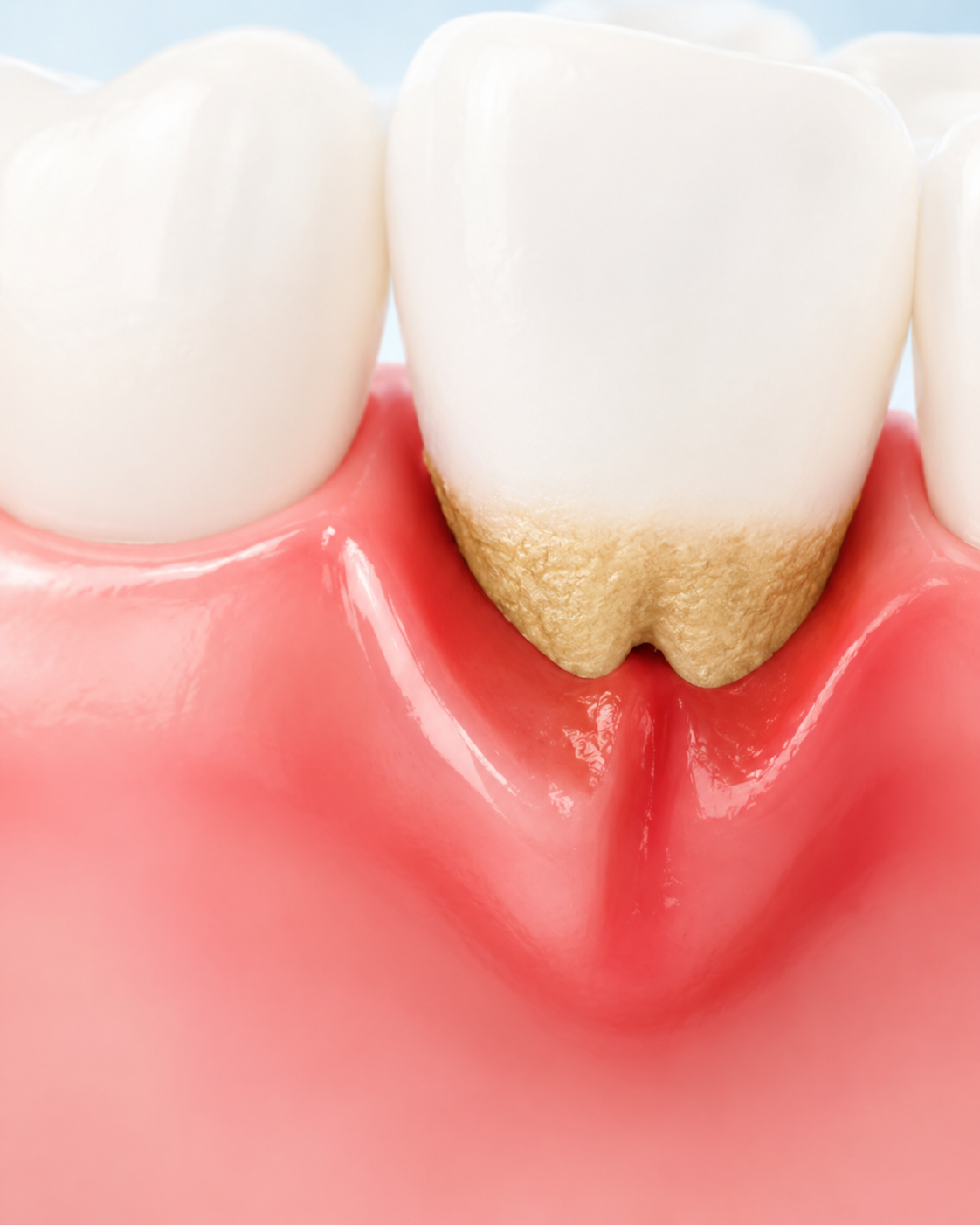
The insured-schedule list is defined nationally and is the same at every clinic in Korea. For adult members it includes: examinations and X-rays(panoramic and intraoral); extractions, including surgical wisdom tooth removal at every difficulty tier; root canal treatment; gum treatment — scaling as part of periodontal therapy, root planing and gum surgery; basic fillings in amalgam or glass ionomer; one preventive scaling per year from age 19; and emergency management of dental pain and infection. For each, your share is 30% of the schedule fee at a clinic.
Figures help. Under the schedule, an enrolled patient's share for a wisdom tooth runs from the low ₩10,000s for an erupted tooth to the ₩50,000s–90,000s for a fully bony impacted one; a molar root canal's canal work usually lands in the upper ₩10,000s to around ₩100,000 across its visits. Our wisdom tooth cost and root canal cost guides take each apart. These are schedule-driven, revised yearly, and written down at your examination.
| Treatment | NHI status | What you pay at Baro Dental |
|---|---|---|
| Exam, X-rays, extraction, root canal, gum treatment, basic filling | Covered | 30% of schedule fee (enrolled); full schedule fee (not enrolled) — written at the visit |
| Preventive scaling, once per year, age 19+ | Covered | 30% share; additional cleanings in the year ₩60,000 published |
| Dentures / two implants, members 65+ | Covered | 30% share; standard implant otherwise ₩800,000 published |
| Sealants (first molars, under 18) / resin fillings (under 12) | Covered | 30% share; otherwise quoted on request |
| Crown, inlay, implant (under 65), orthodontics, whitening, night guard, CT | Non-covered | Published prices, same for every patient — e.g. zirconia crown ₩500,000, CT ₩30,000 |
Covered items follow Korea's national fee schedule, revised yearly; non-covered items are from our published list, current at time of writing.
What stays non-covered — and what it costs here
Korea's insurance deliberately leaves aesthetic and “elective” restorative treatment off the schedule, and this is the list that catches people out: crowns, inlays and onlays, implants for members under 65, orthodontics (braces and aligners), whitening, night guards, veneers, and CT imaging. Composite resin fillings for adults are also non-covered — only amalgam and glass ionomer are on the list — which is why a resin filling has a published price here (₩100,000–200,000 by size) while the insured alternative does not.
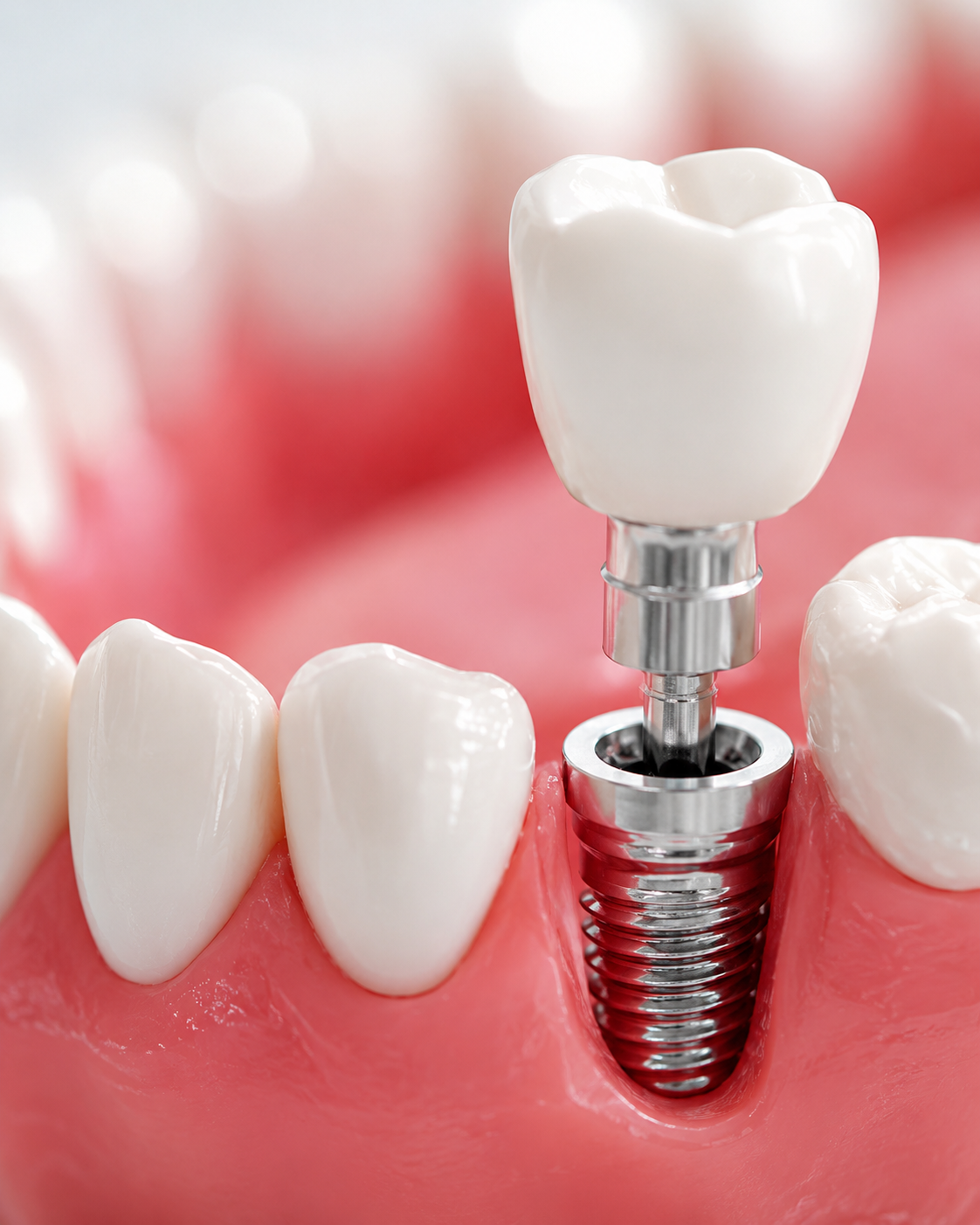
For non-covered items, every clinic sets and must display its own prices, and the figures do not change with enrolment: a zirconia crown is ₩500,000, a DIO implant with crown ₩800,000, a night guard ₩300,000, a CT ₩30,000, whether you hold NHI, a tourist visa or a Korean passport. The whole list is on our pricing page, and the guide to reading a Korean dental price list explains the 급여 / 비급여 columns you will see displayed at any clinic.
The once-a-year scaling benefit, explained
Since 2013, enrolled members aged 19 and over are entitled to one insured preventive scaling per calendar year — the benefit your colleague called “free”. It is not free, but it is inexpensive: your 30% share is a modest sum, and the entitlement resets each January regardless of when you last used it. It is also tracked nationally, so if you had an insured scaling elsewhere in Korea this year, the system will show it and the second cleaning is charged at our published ₩60,000 instead.
Scaling that forms part of gum treatment — for diagnosed periodontitis — is a separate insured item and is not limited to once a year. The distinction, and why it matters for your bill, is the subject of our scaling vs gum treatment guide. For most people, the practical advice is simple: use the insured scaling every year, and let the examination that comes with it decide whether anything else is needed.
Want to know your figure before you come? Tell us on WhatsApp whether you are enrolled, what you need, and your dates. You will get the insured or uninsured picture in writing — and the published prices for anything insurance does not touch. Message us on WhatsApp →
Members aged 65 and over: dentures and two implants
For enrolled members aged 65 and over, NHI covers complete and partial dentures(once every seven years per arch) and two dental implants per lifetime, each at a 30% patient share under the insured schedule. The implant benefit applies to a fixture with its crown, in a jaw that still has some natural teeth, and the two can be used at different times. Beyond those two, implants follow our published tiers from ₩800,000.
Enrolled older foreign residents are entitled to this on the same terms as Korean nationals, and we apply the benefit where it fits the plan — including, where relevant, as a contribution towards a larger reconstruction. Our full-arch implant cost guide shows how the two insured fixtures interact with a bigger quote.
Children: sealants and resin fillings
Two benefits are specific to children. Sealants on the permanent molars are covered for members under 18, and resin fillings on permanent teeth are covered for members under 12 — resin being the exception here, where for adults only amalgam and glass ionomer are insured. Children enrolled as dependants of a subscriber receive both. Where a child is not enrolled, ask us for the fee before the visit. The children's dentistry guide covers the first visit and timing.
Not enrolled? Visitors, new arrivals and travel insurance
If you are not enrolled — a visitor, a short-stay business traveller, or in your first months before the threshold — insured-schedule items are charged at the full schedule fee rather than the 30% share, roughly three and a third times the enrolled figure. That is still the nationally published rate, not a foreigner price; a Korean citizen without coverage pays the same, and the guide to foreigner pricing addresses the myth directly. Non-covered items, as above, do not change at all.
Many visitors carry travel or international health insurance that reimburses emergency dental treatment, and some employer plans abroad cover routine care anywhere. For those, we issue an itemised English receipt, a treatment statement and copies of X-rays on request, at no charge. The guide to receipts and documents for an overseas claim lists what most insurers ask for. And whether or not any insurance applies, the rule at Baro Dental is the same: nothing is treated before its figure is written down, and the written figure is the one on the receipt.
- Enrolled means 30%: employees from day one, residents of six months or more, students on a reduced premium — all on the same terms as Koreans.
- The ARC is the key: bring the card or know the number; a passport alone does not pull up your enrolment.
- Covered: the essentials. Extractions, root canals, gum treatment, basic fillings, X-rays, one scaling a year, and dentures and two implants from 65.
- Non-covered: the published list. Crowns, most implants, orthodontics, whitening, night guards and CT — the same price for every passport here.
- Not enrolled? Still no foreigner price: the full schedule rate for insured items, written before treatment, with English receipts for claims abroad.
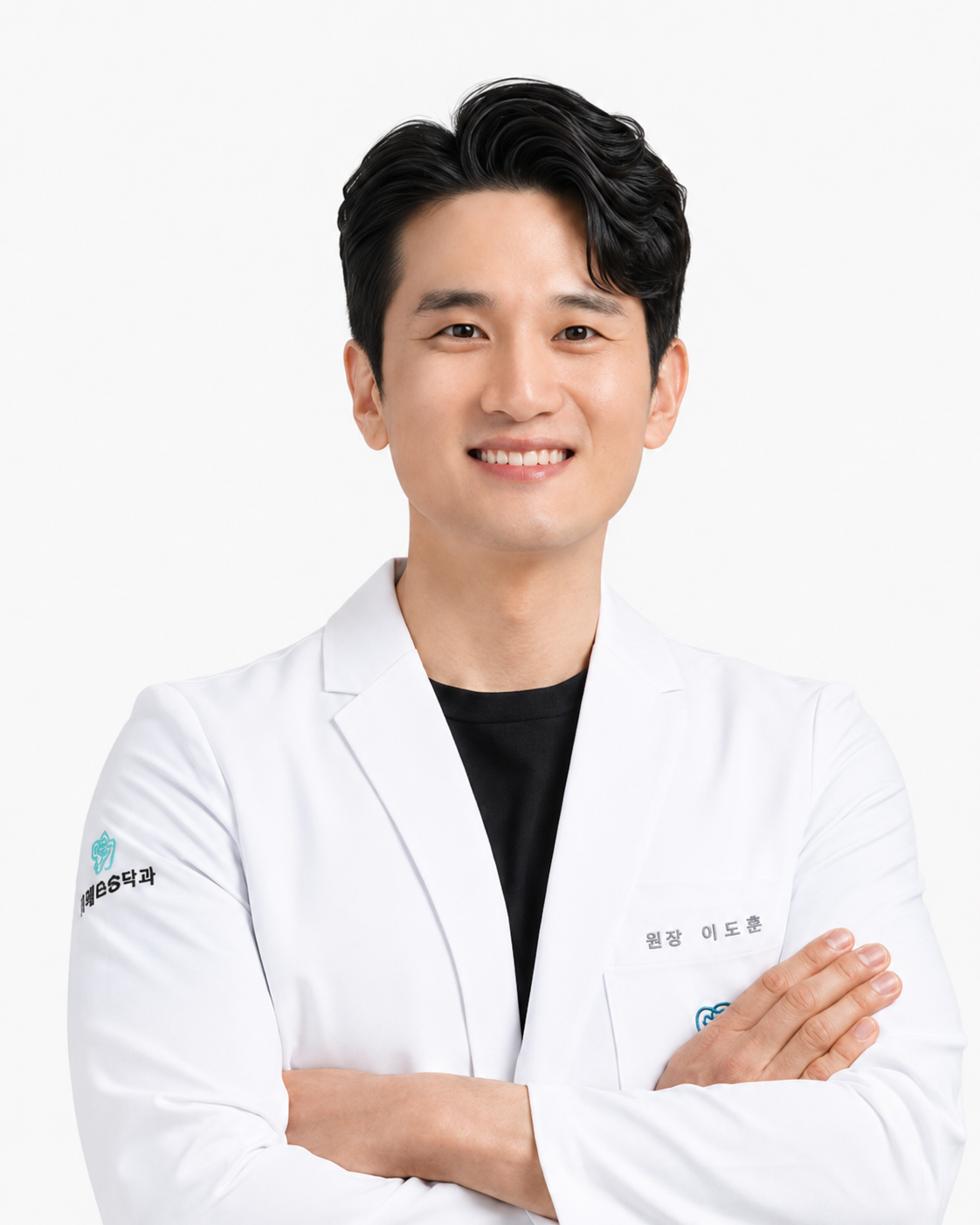
The dentists behind every guide on this site
FAQ
Not automatically. The ARC is the identifier your enrolment is linked to, but enrolment itself comes through your employer or, for stays of six months or more, through the regional subscriber system. Your payslip or premium notice confirms it; so does our front desk in seconds when you give the card.
Dental is included. The insured list covers examinations, X-rays, extractions, root canals, gum treatment, basic fillings, one preventive scaling a year, and dentures and two implants for members 65 and over — all at a 30% patient share at a clinic. Crowns, most implants, orthodontics, whitening and night guards are non-covered.
Enrolled members aged 19 and over receive one insured preventive scaling per calendar year, on the same terms as Korean nationals. It is not free — you pay the 30% share — but it is inexpensive, and the entitlement resets every January. A second cleaning in the same year is charged at our published ₩60,000.
No. Enrolment requires employment in Korea or residence of six months or more. Visitors pay the full schedule fee for insured items and the published prices for non-covered ones; our English itemised receipts support claims to travel or home insurers.
No. Insured-schedule fees are set nationally, and your share depends only on enrolment, not nationality. Non-covered prices are published on our pricing page and are identical for every patient. The written estimate before treatment is the figure on your receipt.
Scaling & Check-up in Busan
The once-a-year insured scaling, and the ₩60,000 published cleaning.
Wisdom Tooth Removal
An insured-schedule procedure — your share depends on tier and enrolment.
Published Prices
Every non-covered figure in KRW, the same page for every passport.
Do foreigners pay more at a Korean dentist?
Related guide in this series.
How to read a Korean dental price list
Related guide in this series.
Receipts and documents for an overseas insurance claim
Related guide in this series.
Read enough? Start the thread.
Tell us whether you are enrolled, what you need and when you can come — the reply is the insured or uninsured picture in writing, plus the published price for anything insurance leaves to us.
Medical information in this guide is provided for general education and does not replace an individual examination and diagnosis. Prices shown are current at the time of writing; insured-schedule items follow Korea's national fee schedule and are quoted in writing at your visit. This clinic does not provide 24-hour service. Individual results vary.