Protruding teeth & open bite in Busan Seomyeon — bringing the front teeth home.
Front teeth that stick out too far, or don’t meet at all — two different problems with one shared theme: the front of the bite out of position. Cerafin aligners retract protrusion and close open bites, with the honest limits stated up front.
Ask about your front teeth.
Tap what fits — we’ll open WhatsApp with your message ready to send.Nothing sends until you press send in WhatsApp. A profile photo and a bite photo help us give an honest first read — tray-sized or braces-sized.
Can aligners in Busan pull protruding teeth back — and close a bite that doesn’t meet?
For tooth-level cases, yes to both. Protruding front teeth are retracted by tipping and guiding them back into the arch — using space made by IPR or by moving side teeth rearward. Open bites close as the front teeth are guided toward each other vertically. Cerafin treatment runs ₩3,000,000–6,000,000, fixed in writing at diagnosis (₩100,000, credited).
The honest boundaries, stated early: heavy protrusion that needs a tooth’s width of retraction is extraction territory, which belongs with fixed braces — and open bites driven by an active tongue-thrust habit will reopen unless the habit is addressed alongside the trays. Your diagnosis measures the millimetres and names the drivers before anyone commits to anything.
Two problems, one neighbourhood.
Both live at the front of the bite. Protrusion is horizontal: upper front teeth angled or positioned too far forward — the “sticking out” that shows in profile, catches on the lip, and in fuller versions pushes the lips themselves forward so the mouth won’t rest closed without effort. Dentists measure it as overjet: how far the uppers sit ahead of the lowers.
An open bite is vertical: when the back teeth close, the front teeth never meet — a gap stands between them even at full bite. Biting noodles or lettuce with the front teeth simply fails; some sounds pick up a soft lisp through the gap. Causes range from tooth eruption patterns to long childhood habits — thumb-sucking, and above all the tongue resting or pushing forward against the teeth thousands of times a day.
They share a page because they share mechanics and often each other’s company: a protruded front segment frequently doesn’t meet vertically either. And they share a treatment logic — both are corrected by repositioning the front teeth relative to everything behind them, which is why the space question (“where do the millimetres come from?”) decides both plans. That question gets its own section below, because it’s the honest heart of this consultation.
Six patterns at the front of the bite — which is yours?
Upper teeth angled forward
Core retraction caseThe classic protrusion: upper incisors tipped outward, showing in profile and photos. When the cause is tooth angle, aligners upright and retract them — among the most satisfying tray corrections to watch happen.
Lips that won’t rest closed
Often improves with retractionWhen protruding teeth prop the lips apart, resting your mouth closed takes conscious effort. Retracting the teeth removes the prop — many patients find their lips simply meet again, though we assess honestly how much is teeth and how much is lip anatomy.
Protrusion with gaps
Efficient double fixFlared teeth with spaces between them — a gift of a case, mechanically: closing the gaps supplies the very space the retraction needs. Two problems funding each other’s solution.
Front teeth that never touch
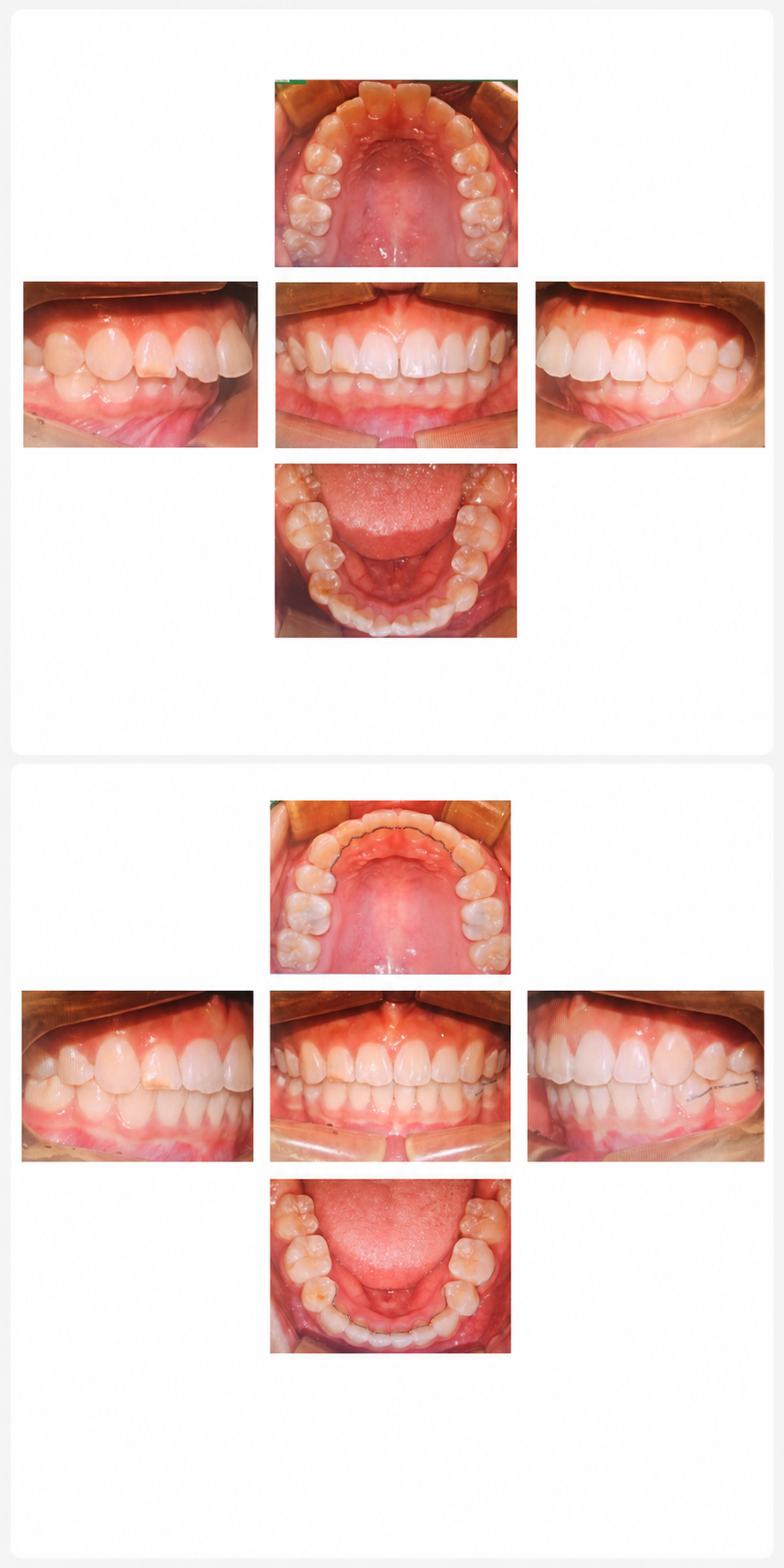
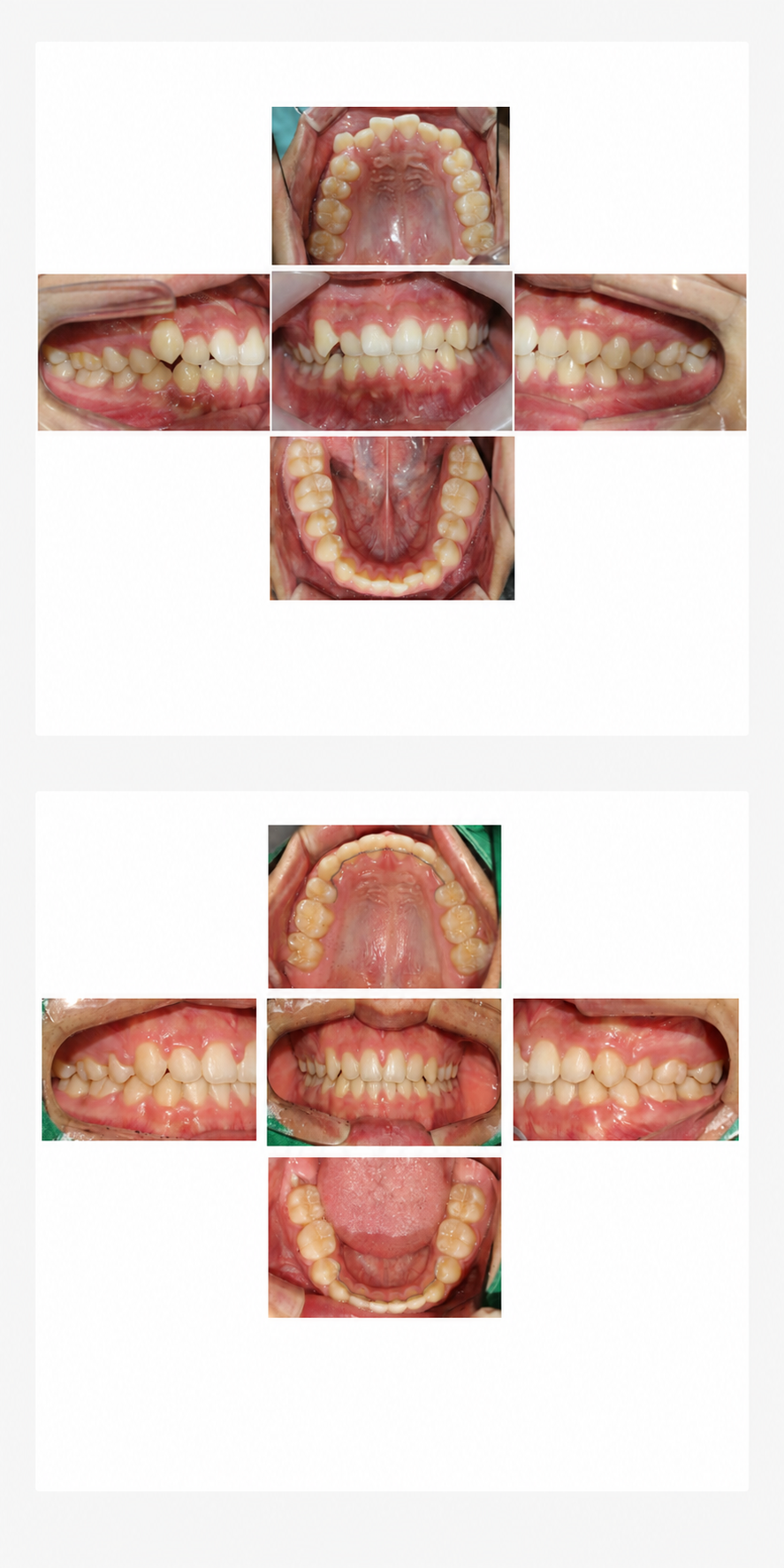
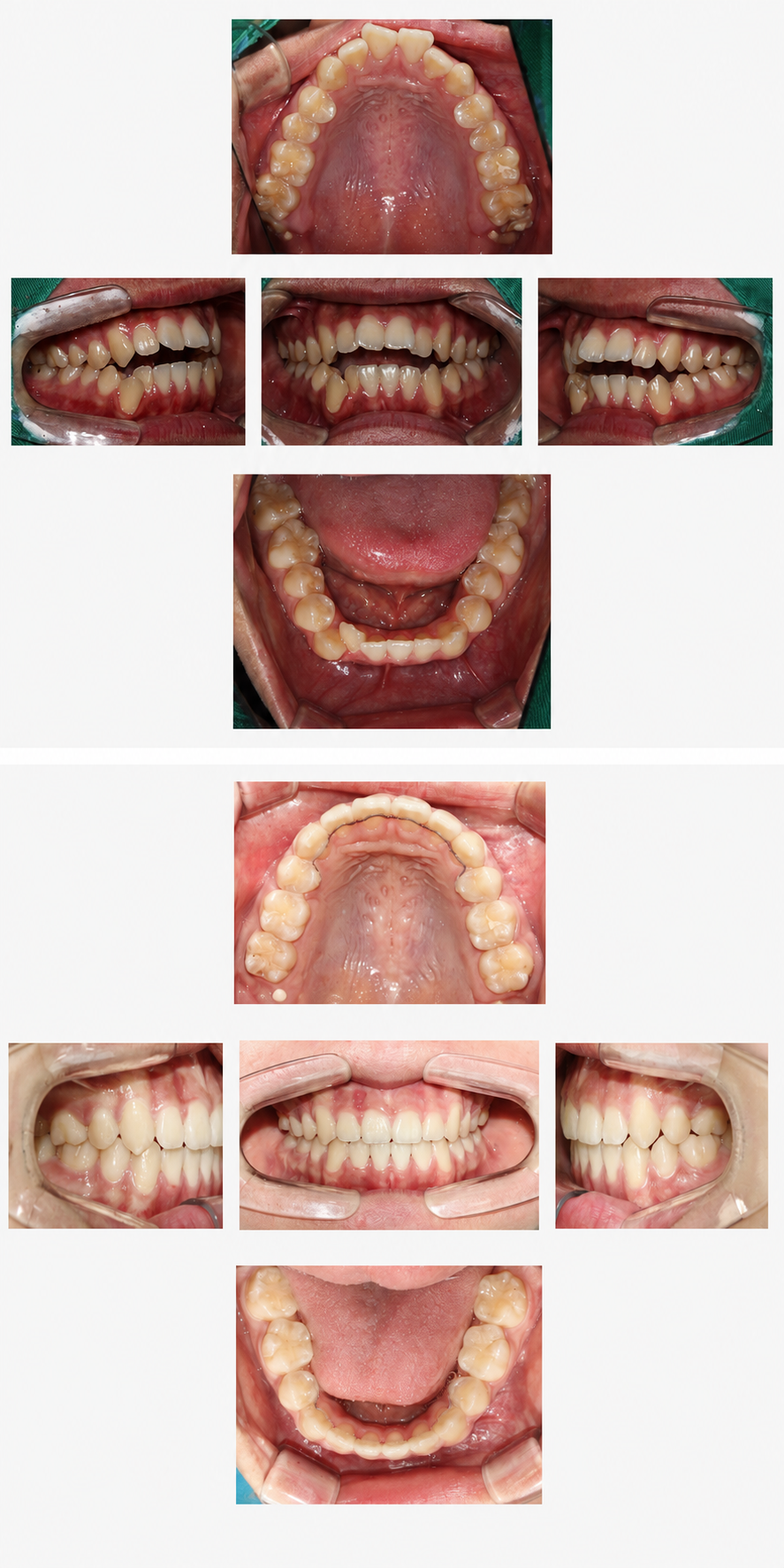
Anterior open biteBack teeth closed, front teeth apart — biting sandwiches with the side teeth, a soft lisp on some sounds. Tooth-level open bites close as trays guide the front teeth together vertically; the case below shows one done here.
Open bite with a tongue habit
Treat the cause tooA tongue that rests or pushes forward against the teeth reopens what trays close — the habit made the gap and can remake it. Honest plans pair correction with habit retraining; trays alone are half a treatment here, and we say so.
Jaw-level protrusion or open bite
Measured, told straightWhen the jaws themselves project forward or diverge vertically, tooth movement improves the dental share and no more. Your imaging draws that line at diagnosis — and heavy retractions needing extraction space belong with fixed braces, quoted honestly.
Where the millimetres come from — the space math of retraction.
Teeth can’t retreat into space that doesn’t exist. Every protrusion plan is an accounting exercise — here’s the ledger, in the order we check it.
Existing gaps — free space
If your protruding teeth have spaces between them, the budget starts full: closing the gaps retracts the flare in the same motion. These are the shortest, most efficient plans in this category.
IPR — fractions, honestly counted
Polishing fractions of a millimetre from between planned teeth buys small, real amounts of space — enough for mild retractions, specified tooth by tooth in your written plan, never improvised chairside.
Moving side teeth rearward
Aligners can walk upper side teeth backward (distalisation) to open room for the front segment to follow — slower, staged movement that modern tray plans handle in sequence, and the workhorse of moderate retractions.
When only extraction adds up
Heavy protrusion can need close to a premolar’s width of retreat per side — more than sources 1–3 supply. That’s extraction-assisted orthodontics, which we treat with fixed braces, not trays — and if your millimetres point there, you’ll hear it at diagnosis with the braces quote (Clippy-C ₩5,100,000), not after a year of underpowered plastic.
How correction actually goes.
Measure & classify
Overjet in millimetres, vertical gap if any, tooth angle versus jaw position — scan, photos, CT where indicated (₩30,000). Habit screening for open bites happens here: tongue posture, swallow pattern.
Run the space ledger
Gaps, IPR allowance, distalisation potential — totalled against the retraction your case needs. The verdict (aligner case or braces case) is shown to you on your own numbers, with the written price either way.
Stage the movements
Side teeth move first where distalisation leads; front retraction or vertical closure follows into the opened space. Attachments give trays grip; elastics may join for open-bite closure — small bands you learn to place in seconds.
Watch the profile change
Retraction is the aligner correction most visible from the side — lip posture eases as the prop retreats. Open-bite patients get a humbler milestone that means more: the first meal where the front teeth actually cut.
Finish, retrain, retain
Contacts settle, habit retraining continues where tongue posture drove the gap, and retention begins — clear ₩100,000 or fixed ₩150,000–200,000, first-year adjustments covered. Open bites especially are kept closed, not just closed.
Mild, moderate, extraction-level — the honest sorting.
| Mild protrusion / open bite | Moderate | Extraction-level protrusion | |
|---|---|---|---|
| Looks like | Slight flare or a small front gap; lips close easily | Visible projection or clear open gap; lip effort to close | Strong projection; lips propped well apart at rest |
| Space source | Existing gaps, light IPR | IPR + distalisation, staged | A premolar’s width — beyond tray sources |
| Tool | Cerafin aligners — shortest plans here | Cerafin aligners — fuller staging, elastics where needed | Fixed braces, extraction-assisted |
| Price signal | Lower end of ₩3M–6M | Mid-to-upper range, fixed at diagnosis | Metal ₩4,300,000 · Clippy-C ₩5,100,000 |
| Extra honesty | Habit screening still matters for open bites | Tongue retraining runs alongside where relevant | Sold as trays anywhere, it’s a year of disappointment — we won’t |
The sorting is arithmetic, not opinion — millimetres needed versus millimetres available. That’s why the ₩100,000 diagnosis (credited toward treatment) precedes every promise on this page.
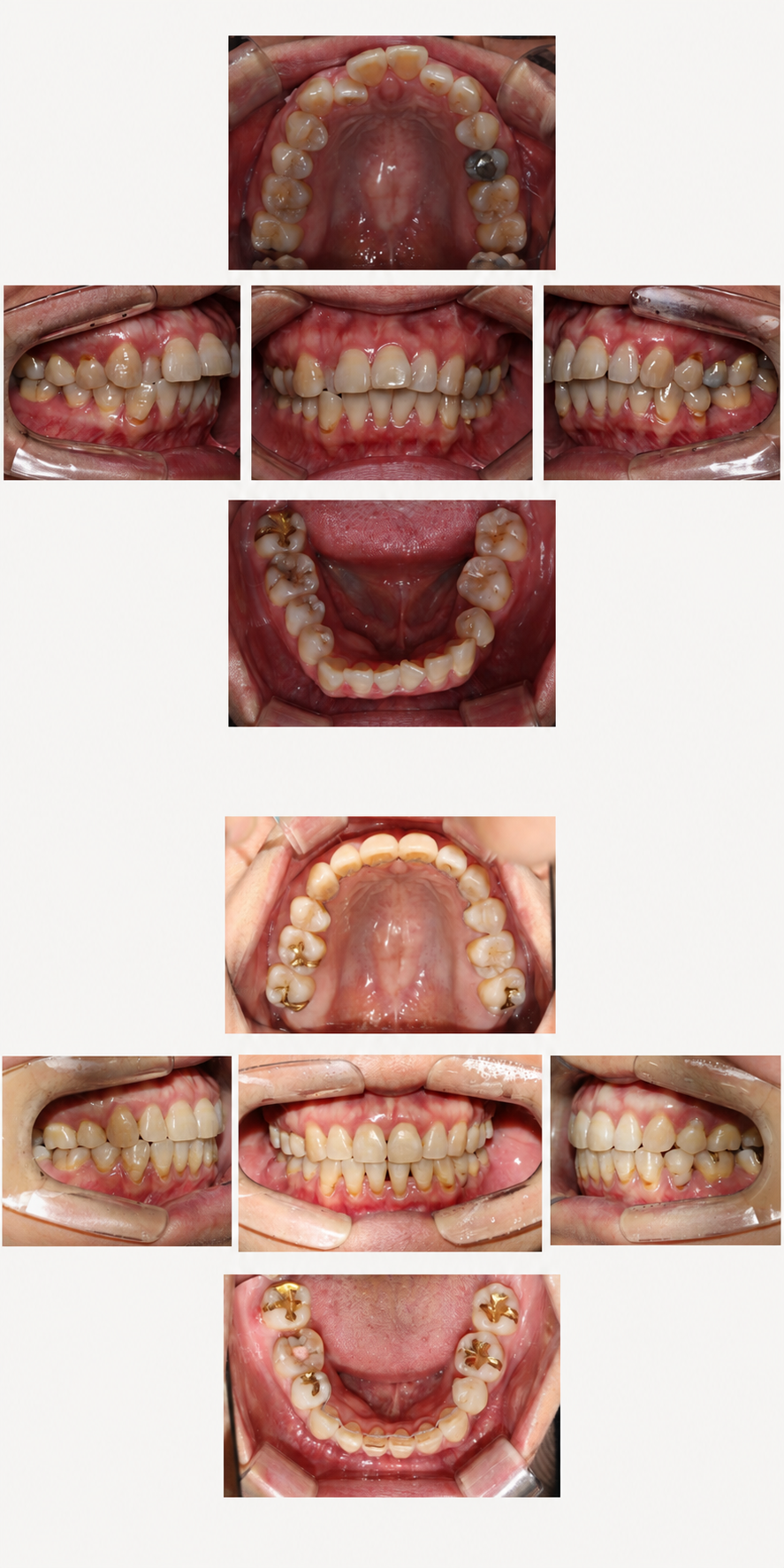
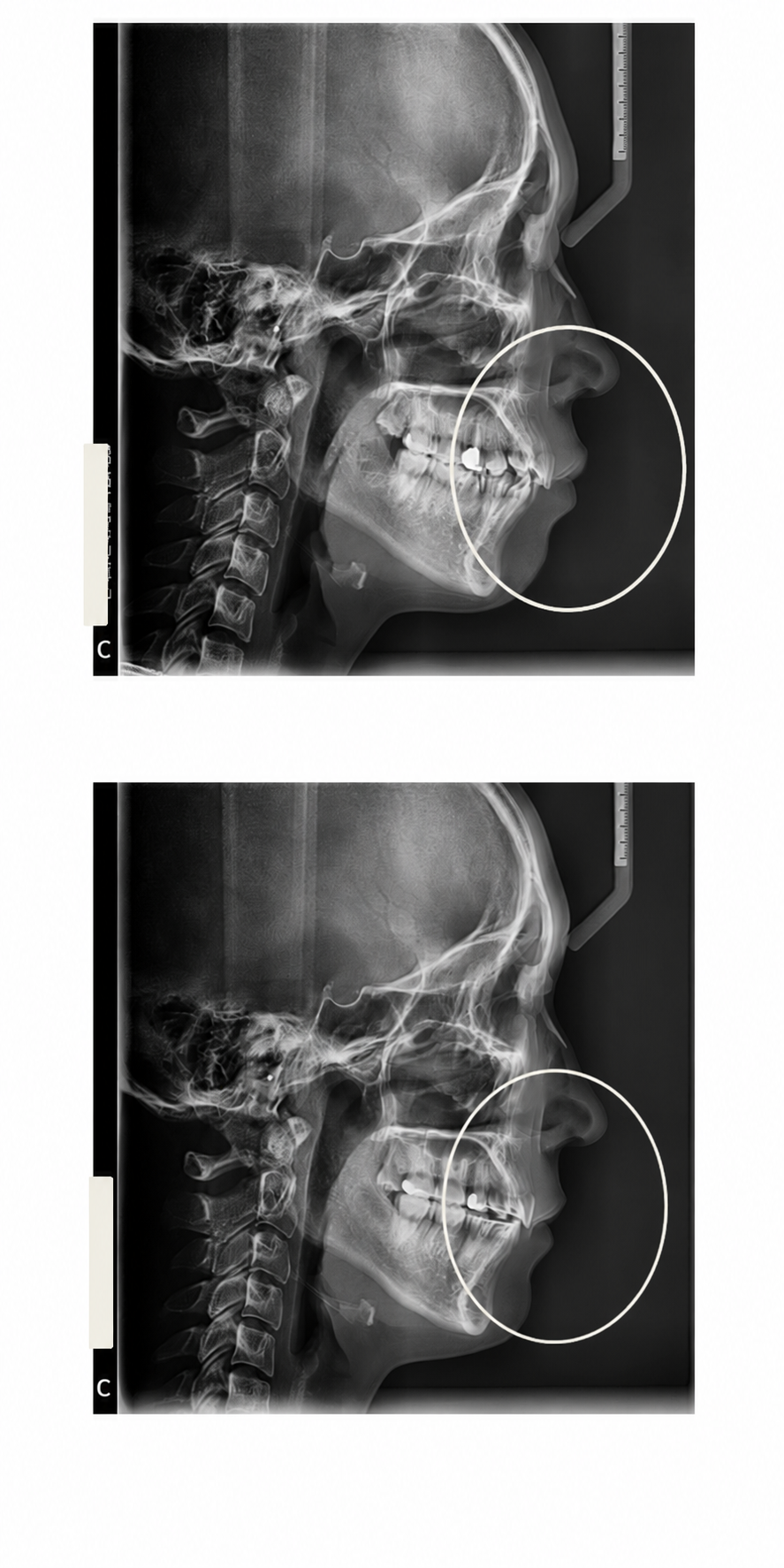
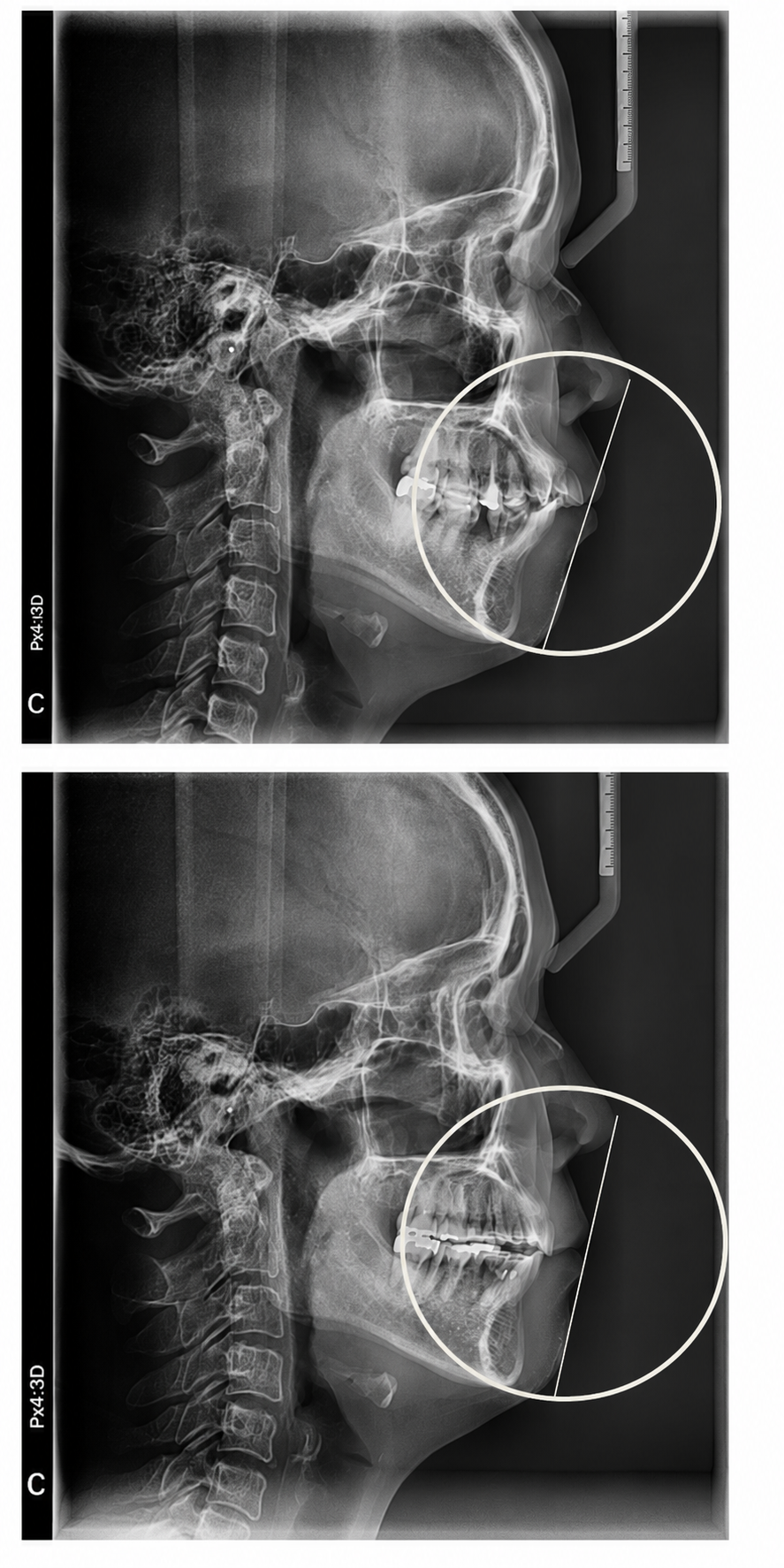
Protrusion & open bite — before and after.
Treated at Baro Dental with clear aligners, photographed the same way before and after. Shown with patient consent; every case is individual and results vary.
Can aligners fix protruding teeth without extractions?
Mild and moderate cases, usually yes — the space comes from existing gaps, planned IPR and moving side teeth rearward, totalled honestly at diagnosis. Where the ledger can’t cover the retreat your profile needs, extraction-assisted braces are the truthful answer — and hearing that at the ₩100,000 diagnosis beats discovering it after a year of trays that couldn’t.
Will pulling my teeth back change my lips or profile?
Retraction is the aligner correction most visible from the side: teeth that propped the lips forward retreat, lip posture eases, and resting your mouth closed stops being work. The honest ceiling: tooth movement changes what teeth were doing to your lips — not your lip thickness, nose or chin. We’ll show you on your own scan how much of your profile is tooth-driven before anyone promises anything.
Why don’t my front teeth touch when I bite?
That’s an anterior open bite — back teeth meet, front teeth stand apart. Causes split into tooth eruption patterns(trays correct these well) and tongue habits — a tongue resting or pressing forward thousands of times daily, which both causes gaps and reopens closed ones. The diagnosis screens for the habit specifically, because treating the gap without the tongue is half a plan.
How much does protrusion or open bite correction cost in Busan?
Within Cerafin’s published ₩3,000,000–6,000,000 — gap-assisted mild retractions sit low; staged distalisation and elastic-assisted open-bite closures sit higher. Fixed in writing at diagnosis (₩100,000, credited). Extraction-level protrusion is quoted as braces instead: Metal ₩4,300,000 / Clippy-C ₩5,100,000 — same clinic, same published-price principle.
What are the elastics some open-bite plans use?
Small rubber bands stretched between hooks on upper and lower trays, adding vertical pull that plastic alone can’t generate — you place them yourself in seconds and change them daily. Not every plan needs them; where yours does, they appear in the written plan from day one, not as a mid-treatment surprise. Their effectiveness, like the trays’, runs on wear discipline.
Will my open bite come back after treatment?
Honest answer: open bites are relapse-capable when the tongue habit that made them stays on duty. The gap closed by trays can be reopened by a tongue pressing forward at every swallow — which is why habit screening happens at diagnosis and retraining runs alongside treatment where needed. With the habit addressed and retention worn (clear ₩100,000 / fixed ₩150,000–200,000, first-year adjustments covered), closed bites stay closed.
Care by board-certified specialists in Seomyeon
Both directors are board-certified specialists in Advanced General Dentistry, so your cosmetic treatment is planned with your overall dental health in mind.

- Board-certified specialist, Advanced General Dentistry
- M.S. in Orthodontics, Kyungpook National University
- Focus on natural, alignment-led smile improvement
- Conservative, tooth-preserving approach

- Board-certified specialist, Advanced General Dentistry
- DDS, Dankook University College of Dentistry
- Restorative & aesthetic resin filling work
- Focus: natural, durable results
Small truths about front-teeth position.
- Protruding front teeth chip first. Teeth standing proud of the arch take the hit in falls and sports — a protection argument for retraction that has nothing to do with photos. (Already chipped? Cosmetic resin repairs it — ideally after the teeth retreat from the strike zone.)
- The lip-strain test takes five seconds. Relax completely and notice whether your lips fall closed or rest apart. Effortful closing — a flattened chin, tension at the corners — is the classic protrusion companion dentists call lip strain.
- Open bites announce themselves at lunch. If you’ve always torn sandwiches with your side teeth or can’t nip a thread, that’s the functional signature — many patients realise in hindsight they’d adapted for decades.
- Tongues are stronger than trays. A resting tongue pushes on teeth thousands of times a day — more total force than any aligner applies. That’s why habit retraining isn’t a footnote in open-bite plans; it’s load-bearing.
- Retraction and whitening pair at the end. Newly aligned, newly visible front surfaces are the ideal canvas — many patients finish with whitening (from ₩165,000) once the position is settled.
When trays bring teeth home — and when we’ll say braces.
Aligners are the right call when…
- protrusion is tooth-angle driven and the space ledger covers the retreat
- gaps accompany the flare — the retraction funds itself
- the open bite is tooth-level, with any tongue habit screened and addressed
- you’ll wear elastics as planned where vertical closure needs them
We’ll say something else when…
- the retreat needs a premolar’s width — extraction-assisted braces, quoted at diagnosis, not discovered later
- jaw projection or vertical growth drives the pattern — the dental share improves; the skeletal share is named honestly on your imaging
- an active tongue-thrust goes unaddressed — closing a gap the habit will reopen sells you a relapse
- the true concern is lip or chin shape — tooth movement won’t deliver that, and we’d rather say so than take the case
Protrusion & open bite FAQ.
Overjet is the measurement; protrusion is the look. Overjet counts how far the upper front teeth sit ahead of the lowers horizontally — everyone has a little, and excess overjet is what reads as protruding or "buck" teeth. It's a different axis from overbite (vertical overlap, covered on our deep bite page). Your diagnosis measures both, because plans treat numbers, not nicknames.
The standard tray pressure — snug for a day or two per switch, concentrated where movement is working. Distalisation phases feel it in the side teeth; elastic wear adds a stretchy awareness the first days. Most patients manage with nothing; ordinary pain relief covers switch days for the rest. Sharp or persistent pain isn't part of the plan and warrants a message.
Prolonged sucking habits past the toddler years can hold the front teeth apart while the back teeth erupt into contact — the classic childhood open bite. The encouraging part: stopped early, growing bites often self-correct substantially. If the habit persists as adult teeth arrive, an assessment is worthwhile — our children's orthodontics page covers the early-intervention toolbox.
It's exercise therapy for posture — learning to rest the tongue against the palate rather than the teeth, and to swallow without pushing forward. Simple drills, practised daily, gradually replacing a lifetime's pattern; we guide the basics and monitor at check-ins. Unglamorous, and for habit-driven open bites, as decisive as the trays themselves.
Often the movement does concentrate on the uppers — but the lowers set the wall the uppers retreat toward, so the bite is planned as a system even when one arch does most of the moving. Upper-focused plans exist and cost accordingly; whether yours can be one is a scan question, answered with the written plan at diagnosis.
Yes — the structure matches our other aligner care: diagnosis and fitting in-clinic, scheduled tray switches wherever you live, WhatsApp check-ins between Busan trips. Two honest notes for this page's cases: elastic phases need your consistency without supervision, and staged distalisation makes these mid-length plans — the visit rhythm is mapped to your real travel pattern at diagnosis.
Correction across visits.
Send a profile (side-on) photo and a bite-together front photo on WhatsApp — protrusion reads best from the side, open bites from the front. You’ll get an honest first read before booking anything.
Overjet and vertical measurement, habit screening, the space ledger run on your numbers, 3D plan and written price (₩100,000 diagnosis, credited; CT ₩30,000 where indicated). Aligner-or-braces verdict happens here, transparently.
Trays switch on schedule; elastics, where planned, travel flat in a pocket tin; progress photos flow through WhatsApp. Distalisation stages and refinements are grouped into Busan trips.
Contact settling, habit-retraining sign-off where relevant, and retainer fitting (clear ₩100,000 / fixed ₩150,000–200,000, first-year adjustments covered) — timed to a trip you were making anyway.
Run the space math on your own teeth.
Send a profile photo and a bite photo on WhatsApp — we’ll tell you honestly whether your case reads tray-sized or braces-sized, and what the diagnosis would settle. In English.
Message us on WhatsAppBaro Dental Clinic · 5F, SJ Medical Building, 698-1 Jungang-daero, Busanjin-gu · Seomyeon Station Exit 2, 4 min
Explore the options in Busan.
Clear Aligners Hub
How Cerafin treatment works, every case type, and the full pricing picture.
Explore →Deep Bite Correction in Busan
The other vertical problem — when front teeth overlap too much, not too little.
Explore →Aligners for Gaps in Busan
Spacing on its own — and the free fuel it gives retraction plans.
Explore →Fixed Braces in Busan
Metal ₩4,300,000 · Clippy-C ₩5,100,000 — where extraction-level retraction lives.
Explore →Medical information on this page is provided for general education and does not replace an individual examination and diagnosis. Whether clear aligners suit your protrusion or open bite — and your plan, space sources and exact fee within the stated range — are confirmed at diagnosis with appropriate imaging. Before-and-after photographs show real patients of this clinic, published with consent; individual results vary.